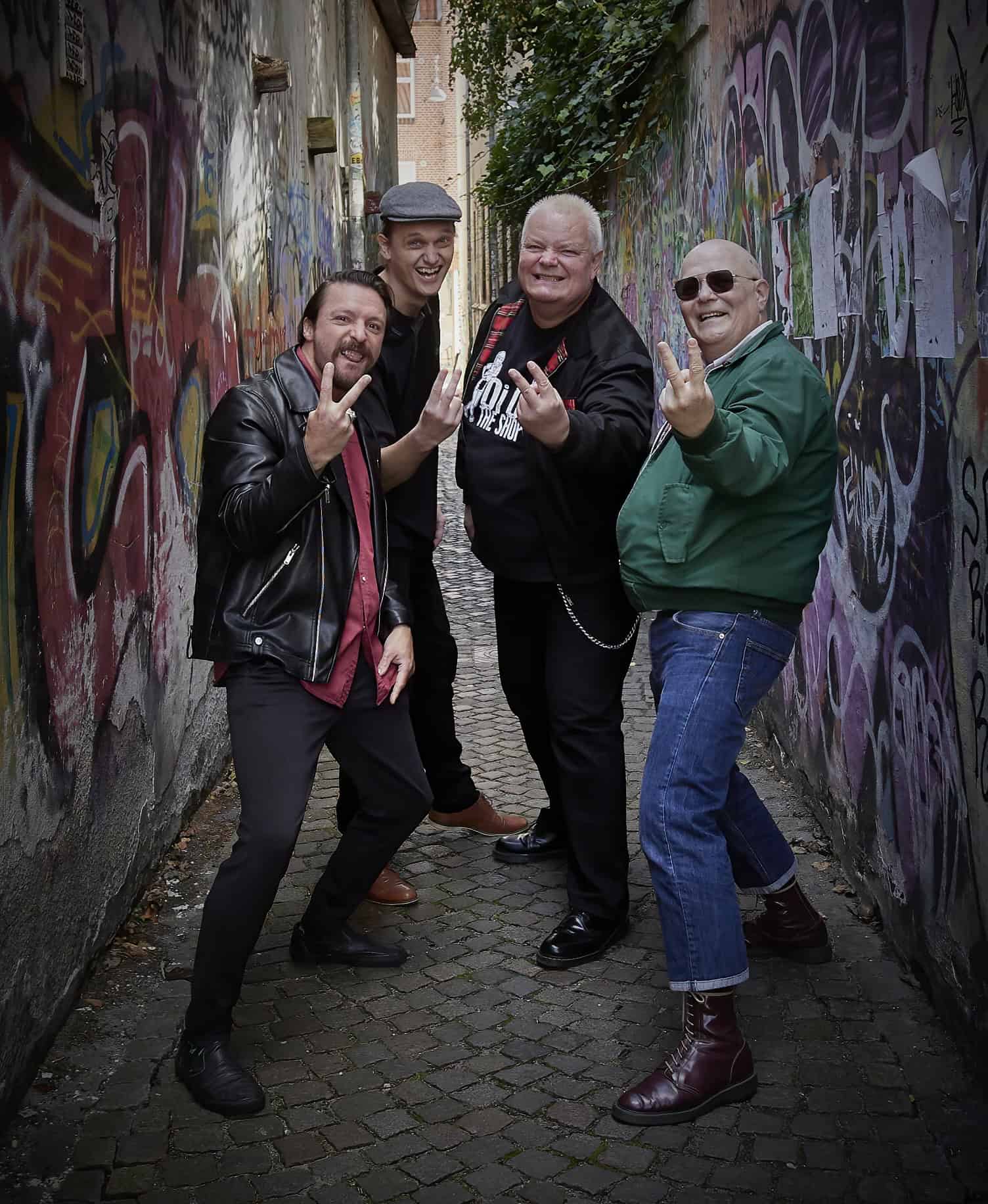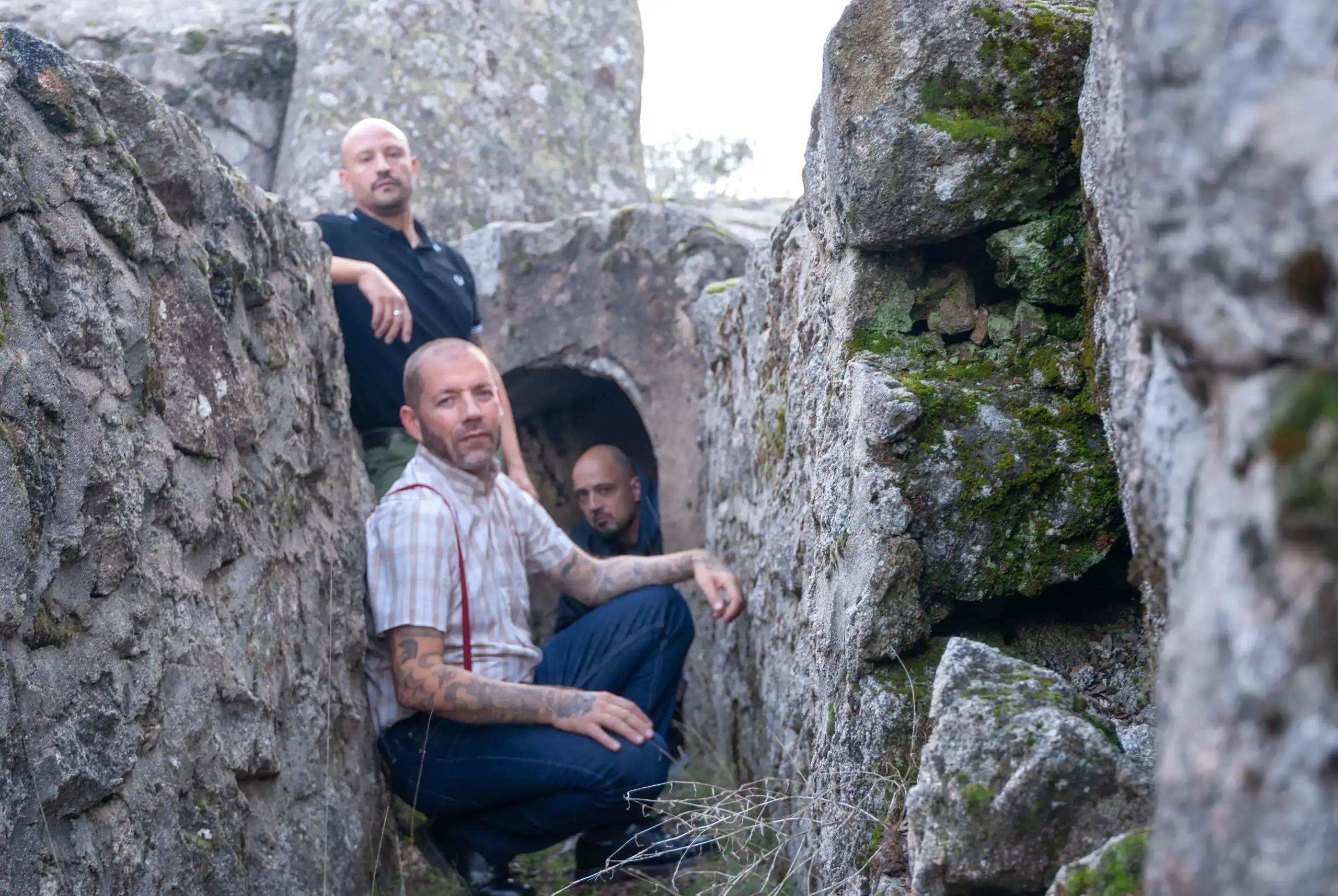
Fearless Veterans are one of those bands that have never relied on trends or a carefully crafted social media image. Their music is rooted in Oi!, punk, hardcore, and skinhead reggae, but above all, it is built on more than three decades of living the scene. Their lyrics weave together memories of the wild 1990s, loyalty, friendship, violence, growing up, and the clash between youthful ideals and the realities of adult life.
In this in-depth interview, we talked about the Madrid skinhead scene, how it has evolved over the years, and the differences between then and now. We discussed the band’s beginnings, their musical influences, their relationship with vinyl records, fanzines, and the digital world, as well as why they believe that a person’s greatest enemy is often themselves. We also covered the current Spanish scene, their recommendations for bands worth checking out, memories of the 1990s, and how their perspective on the subculture, friendship, music, and life has changed over the years.
If you’re interested in an honest perspective from people who have been part of the Madrid scene for more than three decades and continue to follow their own path, you’ve come to the right place.
Your name says „Veterans.“ How long have you guys been part of the Skinhead subculture? Do you remember the exact moment you laced up your first pair of Dr. Martens?
Hi lads, first of all, thanks for your time making this cool interview and thanks for be patient. We have very busy lives and sometimes it is not possible to set a meeting to answer some questions.
Well, we started as teenagers in the 90s. Back in the days, music was an important thing for all subcultures in our towns. I (David) begun with well-know hitting hard bands in trash hardcore and punk scenes. They were local and foreign bands. Later I discovered 2 tone bands and some compilations as Skandal were you could find top bands as Mr. Review or No Sports (one of my favourites) and many more… It was the first time in skinhead culture and we went deeper with English OI! Classics and skinhead reggae, ska and rocksteady bit by bit.
It was more than 30 years ago…
Toni remembers first time he laced up a pair of boots hehehe. It was vandalising the county court.
Was it the music that got you first, or were you drawn in by a crew causing trouble on the streets?
I (David) can say music got me first. Thanks to music we met each other, sharing zines, LPs and live. We were lucky to live a time of life where impressions and experiences were in a street level. This was the origin of local crews and firms. And the chaos begun heheheh ….
Our city was plenty of subcultures and to mix between us was nice You could belong or not to skinhead subculture. We all stay together but in different gangs or crews. Some members progressed in the skinhead scene.
In your song „90s Oi!“, you talk about that decade as a „romance.“ How was the Madrid scene back then compared to how it is today?
Probably Iñaki Will give you more info about it. He wrotes the lyric but lyrics are to interpret them. In my opinion (David), 90s were a decade of romance. Loving your age your energy and determinate to conquer the world bounded to skinhead culture.
It cannot be compared neither to the current scene nor the city of Madrid, even to us because nothing is the same.
Iñaki says: ” The song talks about Oi! Music and the love to our subculture and how we lived it. A pure impact music without markets acceptance or commercial use. Our relationship started in the 90s when music and era distilled violence and elegance. We went out to the streets well dressed and neat as proud lower-class brats.
Regarding to Madrid’s scene… It was a very violent scene in the same way than our lives. A hostile city fed a hostile scene plenty of mental and funny people without feeling affection for life. In that environment we got real camaraderie.
Which bands shaped you the most in the early days? Were they localnMadrid bands or the foreign classics?
I’d say both. Back then, foreign bands felt like a sort of guide to learn from, and you’d go crazy trying to get their stuff and any information you could find. At the same time, we were building our own scene, and we were also learning from the people who came just a bit before us in the 80s. Bands like Decibelios, Skatalà, Zakarrak, and all the Basque and Catalan punk had a huge influence on us. I guess you know what I mean, I’m talking about the bands that came mainly from the Basque Country scene in the 80s. Among all of them, the ones that influenced me (David) the most at the beginning were RIP, Hertzainak, Zarama, Vomito, Cicatriz, and Soziedad Alkoholika.
On a local level, our sound was shaped by those bands but also by the ones from Madrid, like Larsen, Commando 9mm, La UVI, Parálisis Permanente, Delincuencia Sonora, Kañamones, 37 Hostias, and at the same time the English classics started coming in as well.
And then came the era of the Oi! demos with Quinta Asamblea, Puñetazo, Highlanders, Remences, and later on Pilseners, Opció K-95, Non Servium, Suburban Rebels, Steelcap, Oi! The Arrase, and many more.
In the song Remember, you mention that back then, you „felt like gods.“ Is it hard to hold onto that feeling as you get older?
Hahaha, yes my friend, it’s very hard. Up until your forties you feel invincible, and then the flaws start showing up, some more intense than others. But hey, as you deal with the hits, your forties go by more or less fine, and with the same young spirit of wanting to keep going. And beyond work and family obligations, our biggest passion is staying involved in this whole musical world in every possible way, just like we’ve always done.
You formed in 2018. How did the band actually start? And at what point did you realize you were a „real“ band and not just some mates drinking beer in the rehearsal room?
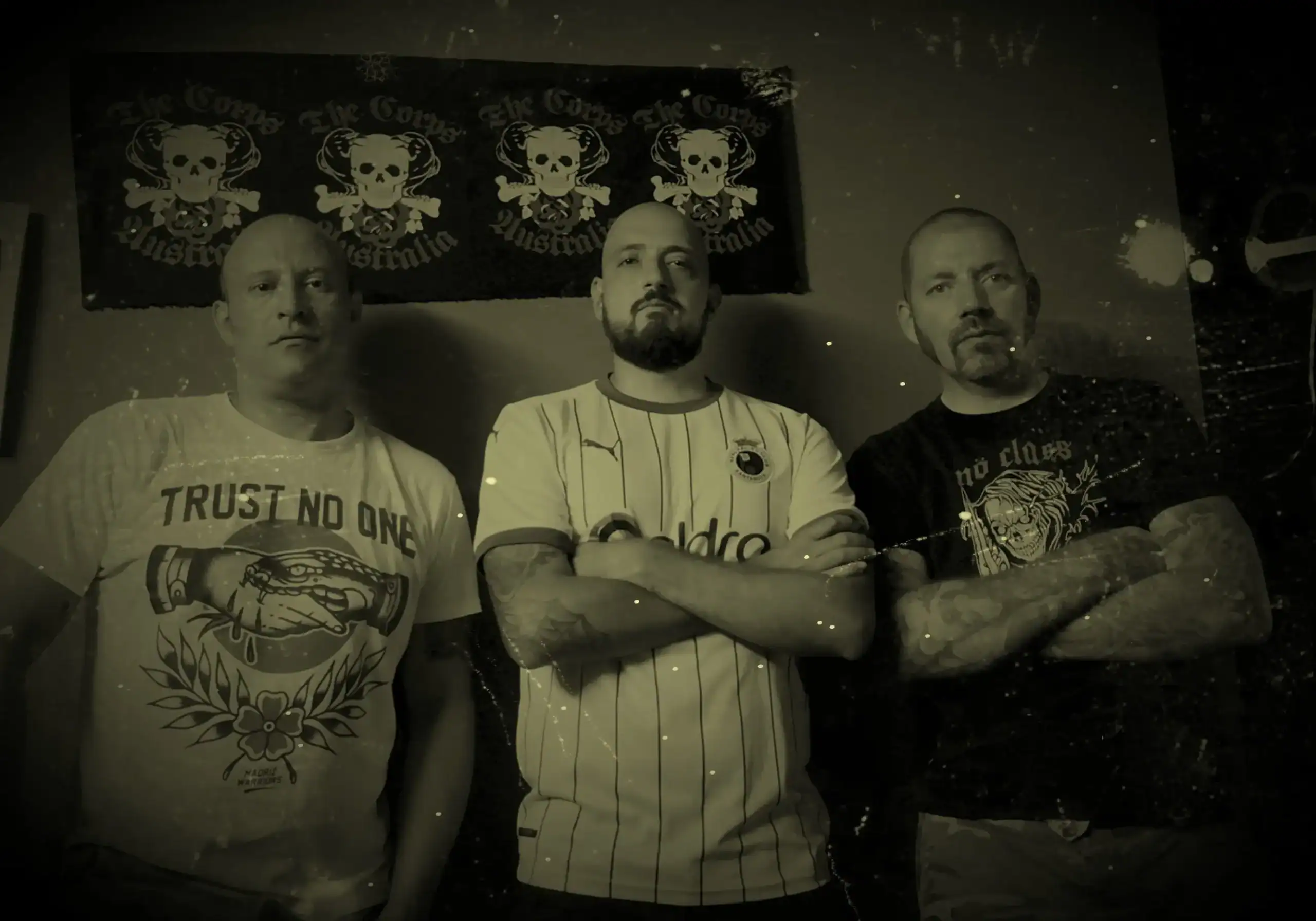
We’ve known each other our whole lives and we’ve played in different bands and lineups over the years, and this was just another one — a project that Iñaki and Toni started in the rehearsal room, and later David joined in without any particular goal. But little by little, powerful songs started coming out. Eventually, we played our first show in a legendary heavy metal bar in Alcorcón, our hometown, together with another band of lifelong friends, and that’s where everything began.
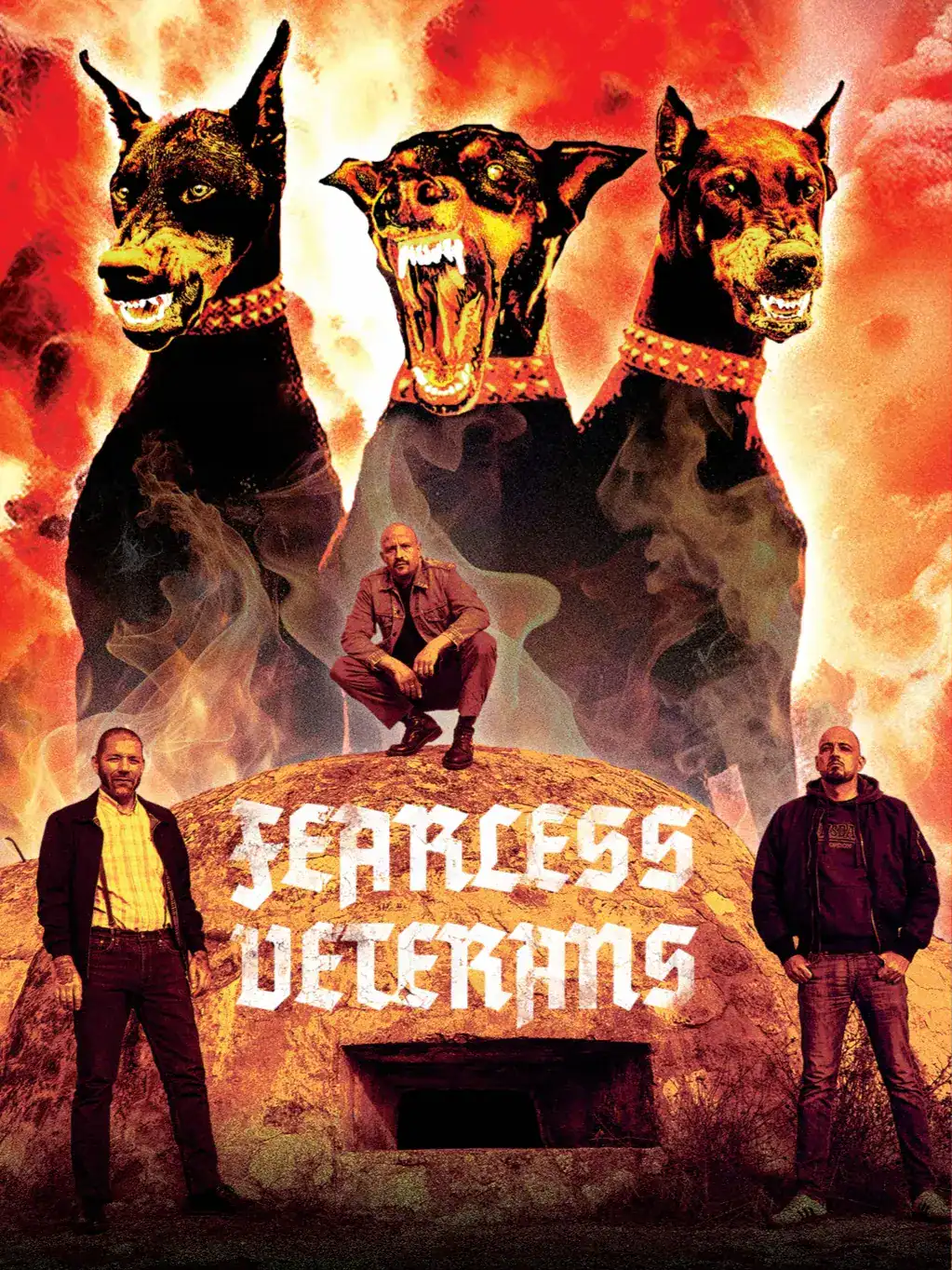
Why the Doberman imagery? What does that specific breed mean to you?
The Doberman also came up by chance. Toni, our drummer, had a Doberman, and when it passed away he went through a really tough time. At the beginning, it meant as a tribute to his friend, but it eventually became the logo and the character of our band. We found an image by an artist that we really liked, bought it from her, and later modified it with the chain and other details for the band. Say hi to the dogs!!
You describe your sound as a „home-made brew you either love or hate.“ How would you describe it yourself, and what’s the most important ingredient of the Fearless Veterans sound?
Our sound has always been very personal. We’ve never followed the usual songwriting standards, and many times we end up with songs that, as we say, either you really love or they don’t hit you at all, but what’s certain is that they’re not the usual thing. We haven’t invented anything, of course, but we each have a huge and very different range of influences, and then you mix that with each person’s own vision, which is usually pretty hard to combine. That leads to periods where it’s harder for us to write or we get stuck, and then suddenly one day things move forward and the three of us end up satisfied.
The real ingredient is how stubborn we are, plus that wide range of influences filtered through our own impressions. And we couldn’t care less about what people think of the band.
What kind of vibe or feeling should a fan take away from your gig?
We’re not here for a model contest and we’re not a hype band. We have our own attitude, and we’re here to show you openly who we are and what we feel. We’re not a commercial product and we’re not trying to please anyone. You’ll just see three guys doing what they love, after all these years of being devoted to this sound, with all the power and aggression that three people can deliver on a stage.
Let’s dig into the lyrics. You write in both English and Spanish. How do you decide which language fits a specific song?
There’s no special formula. Iñaki can tell you about his own way of writing, since he’s the main lyricist in the band. Most of the songs are brought in fully written by him, and in other cases we sit down together to throw ideas around, decide what the song should be about, and then he puts everything together in his own style.
As for the language, in my case (David), I usually think and write the ideas in Spanish first. I shape them, give them form, and then I translate them into English. It’s normally easier to fit the lyrics in English, and they tend to sound better. Iñaki says that the sound or the depth of the text often influences which language the song ends up being sung in, although sometimes it just happens naturally.
The track „Traitors“ is very aggressive. Is the „knife in the back“ still a common issue within the skinhead scene in Madrid today?
It is not a common issue in our scene it is about life. Once in a while you have to clean your enviroment from rats and human trash.
Anyway… we have more aggresive lyircs than traitors hehehe.
In for destructionsounds quite nihilistic. Is self-destruction an essential part of rock’n’roll, or is the song more of a warning?
First of all I (Iñaki) would say that dont like to talk bout lyrics. A good lyric is alive and it depens on you too not just the writter.
This is a proper example of what im talking about you can get a nihilistic view or a very violent meaning, too but in my metaforic view it talks about built from the void and self-improvement. so… What is the reality, mate? i would say all of them.. but who knows?
On the other hand, there’s always a bit of self-destruction in rock and roll, because you have to live to rock and to live leaves scars.
In „Strength thru Oi!“, you mention „new tracks, old labels, and backstreet tales.“ Are you vinyl collectors? Which record in your collection is the most essential to you?
Yes, all three of us have been vinyl collectors since we were kids. In my case (David), when I started collecting music I remember we didn’t really have much money to buy many records, but we used to trade and record a lot of tapes, so I have great memories of the first albums I ever bought. Essential records, the ones that marked that period of discovery and have a special connection with you, beyond whether they’re the best or worst albums by those bands.
Records that were essential back then, and therefore still are now, would be Master of Puppets by Metallica, Coma of Souls by Kreator, Seasons in the Abyss by Slayer, No Te Muevas by RIP, Larga Vida al Oi! by Zakarrak, Caldo de Pollo by Decibelios, Amets Prefabrikatuak by Hertzainak, Skinhead Anthems by Last Resort, Cause for Alarm by Agnostic Front, One Step Beyond by Madness, Successfools by No Sports, Keep the Fire Burning by Mr. Review… all of this is indispensable, my friends, hahaha.
In my case (Iñaki), I don’t consider myself a vinyl collector as if they were trading cards, I just like having good records,which made good memories and some new hits, why not? but the rest you can sell it.
Carne cruda is an attack on the media. How do you see the digital age? Does it help the scene, or is it killing it with that „pornography of misery“?
Sometimes interesting sometimes very boring. It is good for music addicts obviously cause you can discover new bands every day but live music is the real deal and it is not easy for promoters to keep bringing top bands when people stay at home.
In the end, it’s about knowing how to use it to learn, grow, expand yourself, and leave aside whatever doesn’t add anything.
In Remember, you talk about the „real enemy.“ Who is that enemy in 2026?
In Remember, the “real enemy” isn’t something specific or a single person. In 2026, just like back then, the real enemy is everything that tries to destroy you from the inside: fear, frustration, routine, anxiety, all the problems of real life that slowly kill your spirit. The song talks about those days when we felt like gods on the streets, neds, hoolies, hoods, violence, loyalty, brotherhood. Every corner had a bloody story, but what really mattered was never hide, never run, and being proud of where you belong. All of that shaped who we are today.
For us, the real enemy is anything that makes you forget who you are and where you come from. Remember is about fighting against that, holding on to your scars, your memories, and your people, so you don’t let your spirit die. Because the same life that gives you scars is the one that gives you the most real and the most free moments.
What’s your songwriting process? Does it start with a lyric, a riff, or is everything born out of the chaos of the rehearsal room?
It’s a mix of everything. A song can come from a riff that someone brings from home, from something that comes up in the rehearsal room, and then maybe some lyrics we already had written suddenly fit perfectly with it. And sometimes one of us shows up with almost the whole song already done, and we just have to polish the music and the lyrics a bit.
The cover of „Hard as Fuck“ features a map of Madrid. Which neighborhood do you call „home“?
The album cover represents a map of Madrid and the southern area. Our home will always be the backstreets of Alcorcón and Móstoles.
A new song will say:”Good and evil on 13th streets, free minds or total underclass. If you want, you could run away. we call it HOME.”
If I came to Madrid for a weekend, what is the one place I absolutely shouldn’t miss?
The main places we can mention right now are Potencial Hardcore Shop, Let’s Go Rock! venue, Liquidator Shop, Nueva Numancia Market, Urban Pub in Móstoles, and Siempre a Tope Pub in Alcorcón.
There was a time when there were many more spots, but we also have to admit that nowadays we spend less time hanging around the streets and we mostly go out to specific events.
What’s a typical Friday in Madrid like for the Fearless Veterans? Is it still „chaos, pogo, and alcohol“ like you sing?
The three of us in Fearless Veterans have lived through plenty of chaos, pogo, and alcohol for many years, my friend. The rest of the band can tell you their own stories, but in my case (David, bassist), those “typical Fridays” you mention have been gone for quite a while now, except for very specific occasions. Why? I work rotating shifts, and sometimes I get three weekends in a row where I have to wake up extremely early. Add family, real-life responsibilities, and health, and you end up leaving some habits behind. But hey, it’s all about adapting and accepting that the years go by and responsibilities get heavier.
But the spirit is still there, when there’s a good gig, a special night, or the scene calls, we show up. Growing older doesn’t kill the fire, it just changes the schedule.
You have a Split EP with Ofensiva. How did that collaboration happen? What are your relations like with other Madrid bands? How is the scene in your city right now, and what’s the situation in Spain in general? Which cities are the wildest, and which bands should we definitely check out?
Ofensiva is a great band, and we’ve got good friends in their lineup. Musically they do things really well, a very classic, powerful Oi! sound with strong, catchy, shout-along vocal melodies. The connection started through our singer Iñaki and their former bassist Daniele. They’re both strong personalities with a lot of passion for what they do, and it was clear from the beginning that they had to work together. When the project was presented to us, we loved the idea of bringing together two bands from two scenes that are usually quite separate, Catalonia and Madrid. It’s great to see two scenes that used to feel far apart now working together naturally. And on top of that, we’ve known Juan (their singer) and their current bassist Lluis for many years from crossing paths in the scene.
Recently we played some shows together in Madrid and Euskadi, and the connection was fantastic. We got to know the rest of the band, and they’re serious people, the kind you’d sign any future project with.
Our relationship with other Madrid bands is generally very good. After so many years, and with only a few rare exceptions, most of us are good friends. Adrenalina, Knock Out, Belial, Bardeo, Sangre Salvaje, La Cruz, Hetairoi, Casus Belli, Tanke and Porntuck are just a few examples of great bands you should check out.
Outside Madrid, we have a special connection with a band you really should listen to if you don’t know them already: Social Combat from Valencia. And another band we’ve met recently and absolutely love is Sindy Berbenas from the Basque Country.
The current situation isn’t too bad. As we said, there are quite a few bands creating music, and even though some legendary venues have closed, you can still find places and interesting things happening, like Chaos in Madrid.
As for the wildest cities, it’s hard to say, but we always have a great time when we play in Gijón, in the north of Spain. Barcelona has a strong scene with great shows. Madrid is our home and we love it, and then you have places like Murcia or Ourense where people work hard to keep the scene alive with good concerts.
And we’d also like to mention our peninsular brothers from Fatela Sónica, Miguel Newton from Maloio, Matarratos and company, who organize an annual festival that turns the town of Fatela into the wildest and most welcoming place you can imagine.
What’s your take on the „new blood“ in Madrid? Are the young skinheads as wild as the veterans were back in the day?
Unfortunately, there isn’t much new blood. The “new generation” are already guys close to 30 years old. These are very different times, and the streets we grew up in have nothing to do with the ones they’ve found themselves in. On the other hand, kids who are 12, 13 or 14 nowadays are drawn to a completely different lifestyle, very far from ours. The social context has a lot to do with that, although there are probably just as many reasons now as there were back then for our scene to rise again.
“Iñaki says”: Anyway, there is a hard core small crews around bands like Bardeo and Tanke which we proudly can call them “a new breed” Listen them!
In „90s Oi!“, you call out „poseurs.“ Who, in your opinion, is the typical poseur of today?
Nowadays, it’s mostly people constantly trying to get attention on social media (although there are plenty like that outside of it too), covered in tattoos with wallets full of cash and done for the sole purpose of looking like the “biggest and best skinhead.” Shame on you! If they decide to start a band as well, then we’re really fucked.
You sing about a „life of disobedience.“ How do you balance that rebellion with everyday jobs and the responsibilities of adult life?
At the end of the day, we all have to work, pay bills, and keep moving forward like everyone else. Rebellion isn’t about being drunk and lying in a ditch in your forties, it’s about not becoming just another soulless cog in the machine. We still hold onto our ideas, our way of life, and our loyalty to the people who have always been there for us. Adult life changes a lot of things, but it doesn’t have to tame you completely. It even affects the band itself, family and work commitments stop us from having the kind of activity we could’ve had when we were 20 years old.
What’s your opinion on fanzines in 2026? Does it still make sense to print on paper, or is it just more practical to have everything on a phone?
I think that in 2026 it’s more important to look at what each format brings to the table, the coexistence of both can actually be necessary. For us, the printed zine is really important because we grew up with it, and we were involved as writers in some of them. Even today it still has a weight that digital formats simply can’t replicate.
A printed fanzine is an object, a physical piece of the scene. You collect it, you trade it at shows, you keep it in boxes that someone will open twenty years from now, you carry it on the bus, you leave it anywhere, even in the bathroom. It’s also a way of finding information that feels more real, and the perfect complement when you’re ordering records from a distro. It’s almost a ritual, and this format deserves to be supported so it doesn’t disappear.
At the same time, the digital format brings things that paper can’t offer: immediate reach, accessibility, zero cost, and the speed to publish interviews or reports that need to come out right away. That also strengthens the scene, especially for younger people who might find it strange to collect or keep physical fanzines.
Do you prefer sweaty dive bars or big festivals?
Luckily or unfortunately, most of us haven’t played on the big festival stages as musicians, but from our experience, especially as part of the crowd, nothing beats a good small venue where you’re close to the people and everything feels more intimate.
What’s the craziest thing that’s ever happened to you during a show?
Honestly, we’ve had some really good and curious moments on stage. Maybe not “crazy” in the wild, chaotic sense of the word, but definitely situations you never forget. Like realizing you’re presenting an album, and a very special song in Berlin together with one of the singers you used to listen in the 90s, so many years later. Or being at a festival in Portugal, at Fatela, and watching one of your kids jump off the stage and fly over the crowd.
Another one was playing a song that I used to play more than twenty years ago in a different band, this time for a local football firm, and seeing young fans singing it, kids who weren’t even around in football back in the days and are now the ones running the whole thing. Or sharing the stage with bands that include members I played with in other projects many years ago.
They’re moments you carry with you, the kind of memories music gives you. And hopefully it keeps doing so.
Any plans for touring outside of Spain?
We have several ideas in mind; it’s just a matter of coordinating dates with our jobs and personal commitments. We’d love to do a few shows in Serbia with our friends from Fitz, South America with Sudor obrero friends and we also have a couple of other proposals that we hope to shape into something solid for this winter.
It’s been a while since „Hard as Fuck“ came out. What’s next? Are you working on any new material for a new record?
Right now we’re writing new songs for our next studio recording. We’ve got a good amount of material that we want to keep working on and eventually release, but we can’t move as fast as we’d like because, as we mentioned before, our work and family lives condition us a lot, especially when it comes to playing live shows. That means we have to divide our limited rehearsal time between preparing the setlist and working on new material.
If you could share the stage with any band (even one that doesn’t exist anymore), who would it be?
Although the three of us have pretty different tastes, each one pulling in a different direction, which is part of the fun, when it comes to choosing a band we’d love to share the stage with, two names always come up without hesitation: Motörhead and Rose Tattoo.
We’re nearing the end—I’d love to hear a good „veteran“ skinhead story. One of those that gets better every time you tell it…
We’ve lived enough weekends to fill a book, but there’s one “veteran story” that always gets better every time we tell it. In the early 2000s we opened a small bar in our hometown. It was summer, scorching hot, and of course the air conditioning broke down on opening night. The beer company had given us several kegs for free, the place barely held thirty people… and more than a hundred showed up, spilling out into the street. By the time the kegs were gone, the level of joy was dangerously high and the local police had to shut down the whole block. First night, first fine. Not a bad start.
The bar kept giving us material. Undercover cops would come in, order a beer, take one look around, and leave without even finishing it. One night a group of drunk idiots tried to start trouble, got thrown out, came back with knives for revenge, and got thrown out again. That was the rhythm of the place. The whole adventure lasted one year.
And then there was the trip to France for an Oi! gig where Last Resort were playing. We barely made it twenty kilometers before the police stopped us. The trunk was full of boxes of beer as “luggage,” and the officers started calling each other over just to look at it.
“Where are you going with all this beer?”
“To a concert in France, officer.”
“Ah, so there’s no beer in France, right?”
That was the beginning of another beautiful weekend of chaos and stories.
Is there a question you’ve always wanted to be asked in an interview but never were? Now’s your chance. What’s the question, and what’s the answer?
More than a question we’ve always wanted to be asked, it’s simply an interesting one: “Do you think all parts of the scene value each other as they should?” Our answer would be: we wish they did, but not always.
For us, a healthy scene is an ecosystem where bands, audiences, media (zines, radios) and record labels all have the same level of importance. Each piece supports the others. Without an audience there are no shows. Without bands there’s no music. Without media there’s no exposure. Without labels there are no releases. Everything is connected.
What we’d like, and we say this with the utmost respect, is that no one within the scene feels “above” anyone else. Not because of followers, numbers, seniority or posture. From the band, we’re infinitely grateful for any kind of support or collaboration, wherever it comes from.
And finally—any last words for the readers of our fanzine?
To all the readers and to everyone who makes this fanzine possible, thank you for keeping this culture alive.
Fanzines have always been a bridge between bands and the people who truly care about music, and we’re grateful to be part of that.
We’re a band that comes from years of playing, learning, failing, rebuilding and staying connected to the underground spirit that shaped us. We don’t pretend to be anything we’re not, we just play the music we love with honesty, energy and the same passion we had in the 90s. If our songs reach you, means a lot to us.
Keep supporting underground artists, keep discovering new sounds, and hopefully we’ll meet somewhere on the road soon, whether in Spain or in your city! Join us! Join the dogs!!!
DISCOGRAPHY:
Fearless Veterans EP (Radikal 1977 Records, Crom Records, Clockwork Punk Records 2021)
Fearless Veterans / Ofensiva: Split EP (Oi! Fin Del Mundo Records, Bar Crew Records, Radikal 1977 Records, Tough Ain’t Enough, Common People Records, Crom Records, Laketown Records 2022)
Hard As Fuck LP (Crom Records, Still Burning Records, Laketown Records 2022)