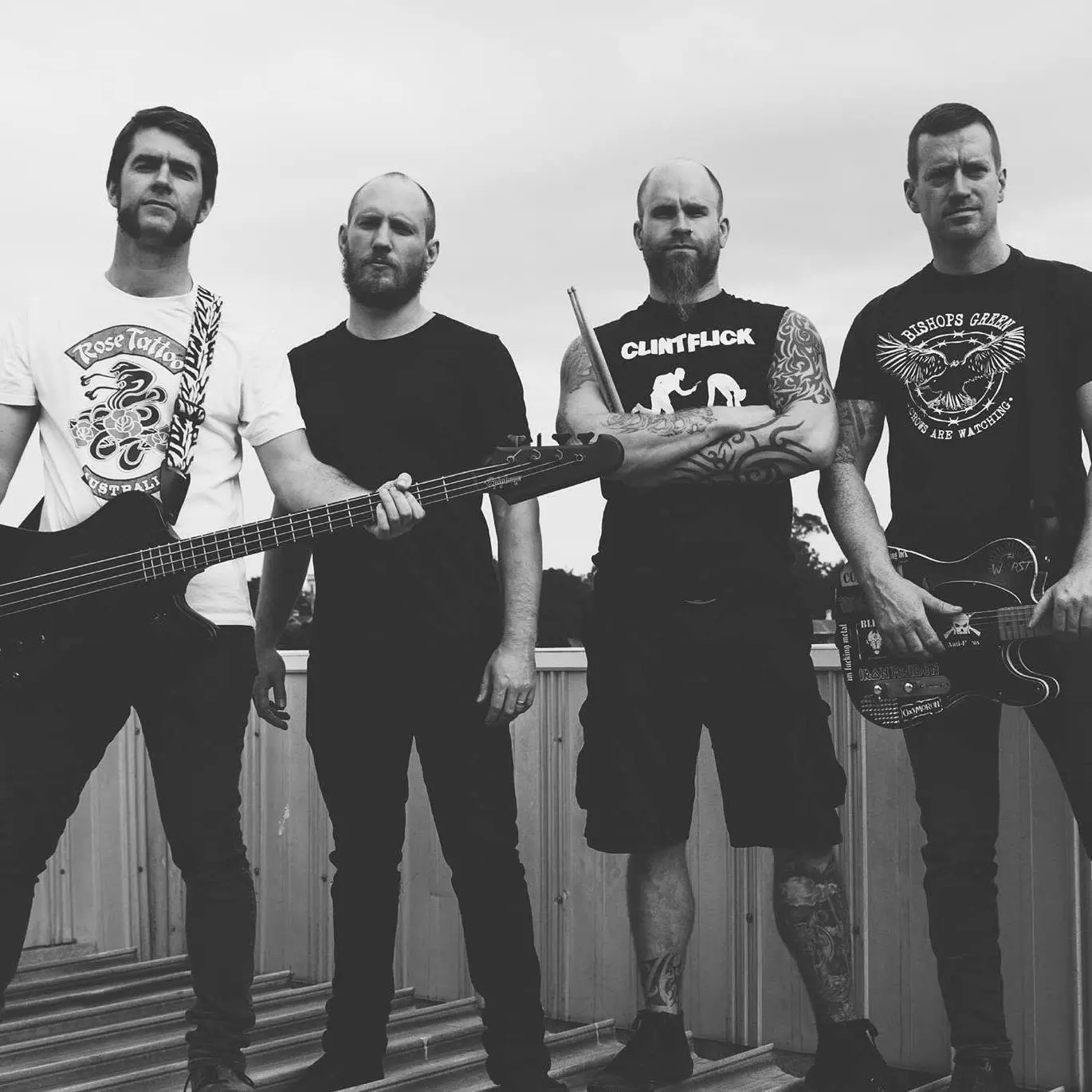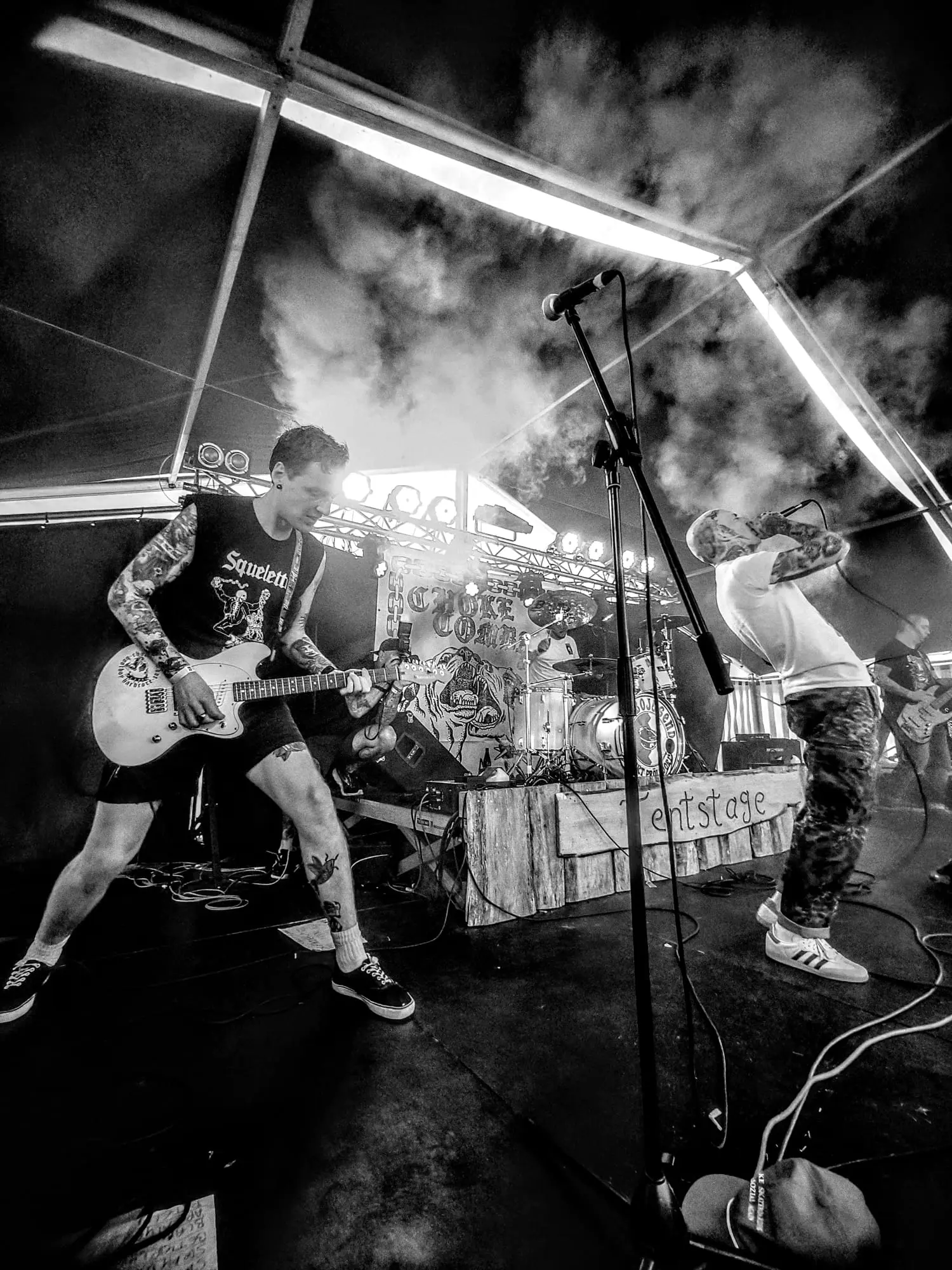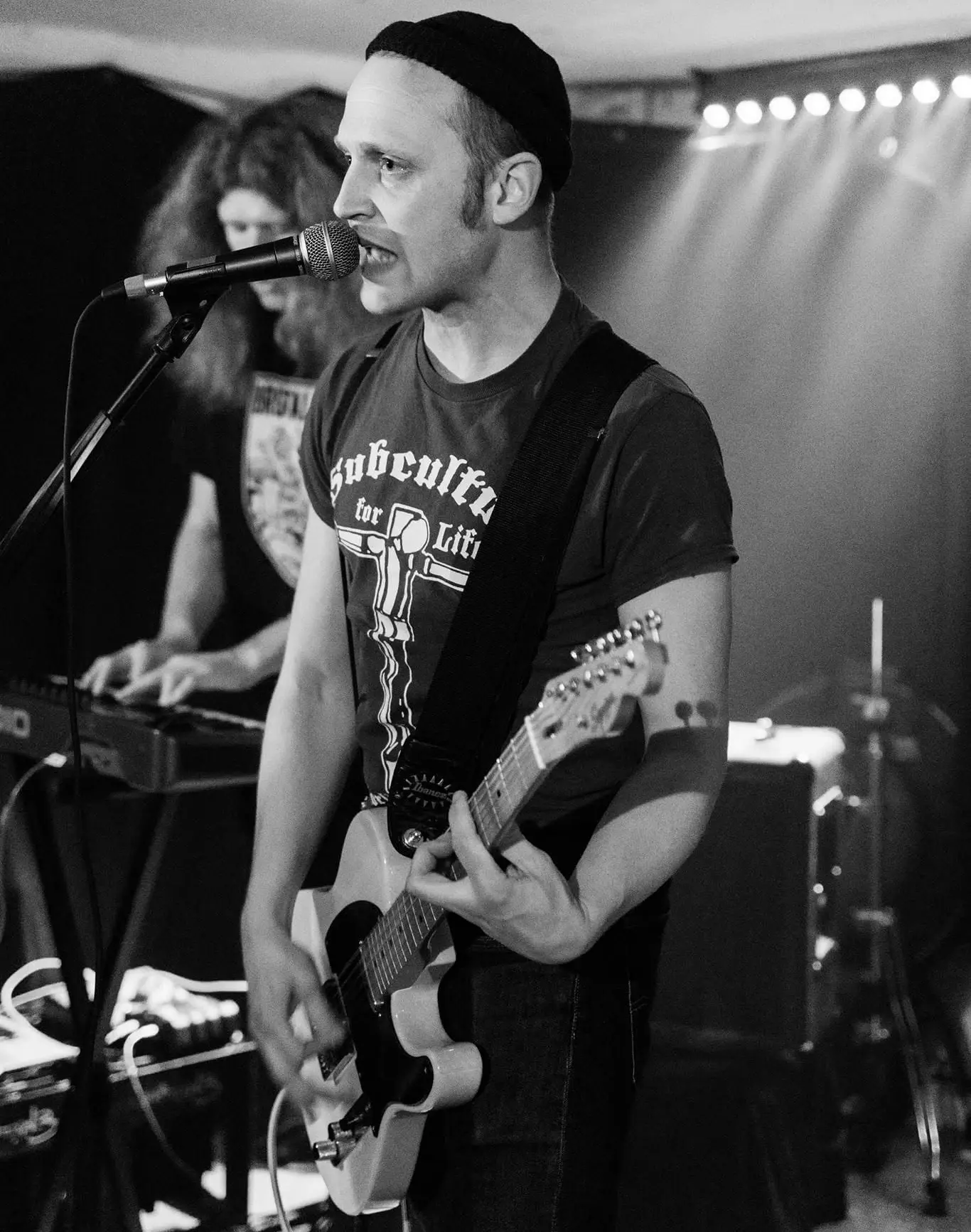
We’re still eagerly waiting for the highly anticipated vinyl edition of Nonchalant – When I Lost My Heart to arrive at Contra Records, but you can already spin the digital version. And what better time to take a closer look at this German band? In this interview, Christian answers our questions about the band’s first punk experiences, skateboarding and teenage years, the local scene around Freiburg and Lahr, the DIY approach and the workings of several bands whose members are practically one big family. Naturally, we spend plenty of time talking about the new album, its nostalgic atmosphere, personal lyrics, power pop melodies and the search for identity somewhere between adolescence and adulthood. But there’s also room for nostalgia, tolerance, individuality and the reasons why playing punk rock still makes sense, even when you have to get up for work on Monday morning.
Let’s start right at the beginning. How did you guys actually get into punk and Oi!? Do you remember the moment when you first realized, „Yeah, this is our thing“?
I remember very well when I first lost my heart! It was when I was around fifteen. Back at that time, skateboarding was a big thing (it still is for some of us today). We were a small group of outsiders and loved to distance ourselves from everyone else, not only on a personal level but also in terms of music. For me personally, it was when I discovered The Misfits, but also raw stuff like Loikaemie. I was fascinated by the aggression of the music on the one hand and by its clear and honest values on the other. That contrast made me lose my heart, and I haven’t found it again ever since, haha!
What was it about punk that attracted you when you were younger? Was it mainly the music, the energy, the lyrics, the clothes, the people around you, or simply that feeling of finally finding a place where you belonged?
As already mentioned in my previous answer, I’d say it was a mixture of all the things mentioned in your question. To be a bit more precise, I loved the contrast between the roughness, frustration and aggression on the one hand and the clear attitude of the music and the people in the scene on the other. Somehow, I’ve always had the feeling that everyone around me was trying to play the role of someone they weren’t. It seemed like there were fake smiles all around me, without anyone making room for all the fucked-up shit inside and outside of us. I wasn’t able to find a scene that was so honest about how we feel and how hypocritical our society is. So, to put it in a nutshell, it was the authenticity that attracted me.
Do you remember your first gig or the first band that really blew you away? What did it leave you with?
Hard to say. I was at a Die Toten Hosen show when I was eight. That surely had an impact on me. But I’d say the really infectious shows were at the Walfisch in Freiburg. I saw Loikaemie and The Last Resort playing there when I was around fifteen, and it finally felt like I’d found a place where honesty still played a role.
When you look back at yourselves as teenagers who had just discovered punk, what is still left of those young guys in you today?
I’ve always been a person who longs for an intense life. Punk filled that blank spot back in the day, and it definitely still does. Punk music still gives me goosebumps. Good shows still give me the feeling that I know where I belong. Punk is one of the major parts of my life that fulfil and satisfy my need for intensity (besides beer and wine, haha).
A lot of people leave punk after a few years. You guys stayed and are still starting bands, recording records and going to gigs. What has kept you going after all these years?
Why give up on something that gives you a sense of self-efficacy? I’d say I’ve always known what’s good for me and what isn’t. I’ve never been a big fan of trends, though. Instead of going along with what the people around me are doing, I’ve always found it more tempting to stick to what I chose because it was the most fulfilling for me.
Moreover, all of us have kind of settled into a typical daily routine by now. Jobs, kids, family… I love being more grounded nowadays. There aren’t that many questions anymore about who you are, who you want to be, etc. Still, I’ve always found life boring without some madness in it. And I can tell you that being in bands, recording records and going to or playing gigs is pure madness, haha.
How would you describe the current punk and Oi! scene around Lahr and Freiburg to someone who knows nothing about it? What makes your local scene special?
Well, to be honest, I’m rather pessimistic about the Freiburg and Lahr scenes. We do have a few people who keep coming together in new projects, which obviously attract people around us in some way. But there’s no real attraction to punk rock music in Freiburg anymore. Therefore, we’re left with a few people who are really into it. I’d rather have a few passionate people than a big, anonymous scene.
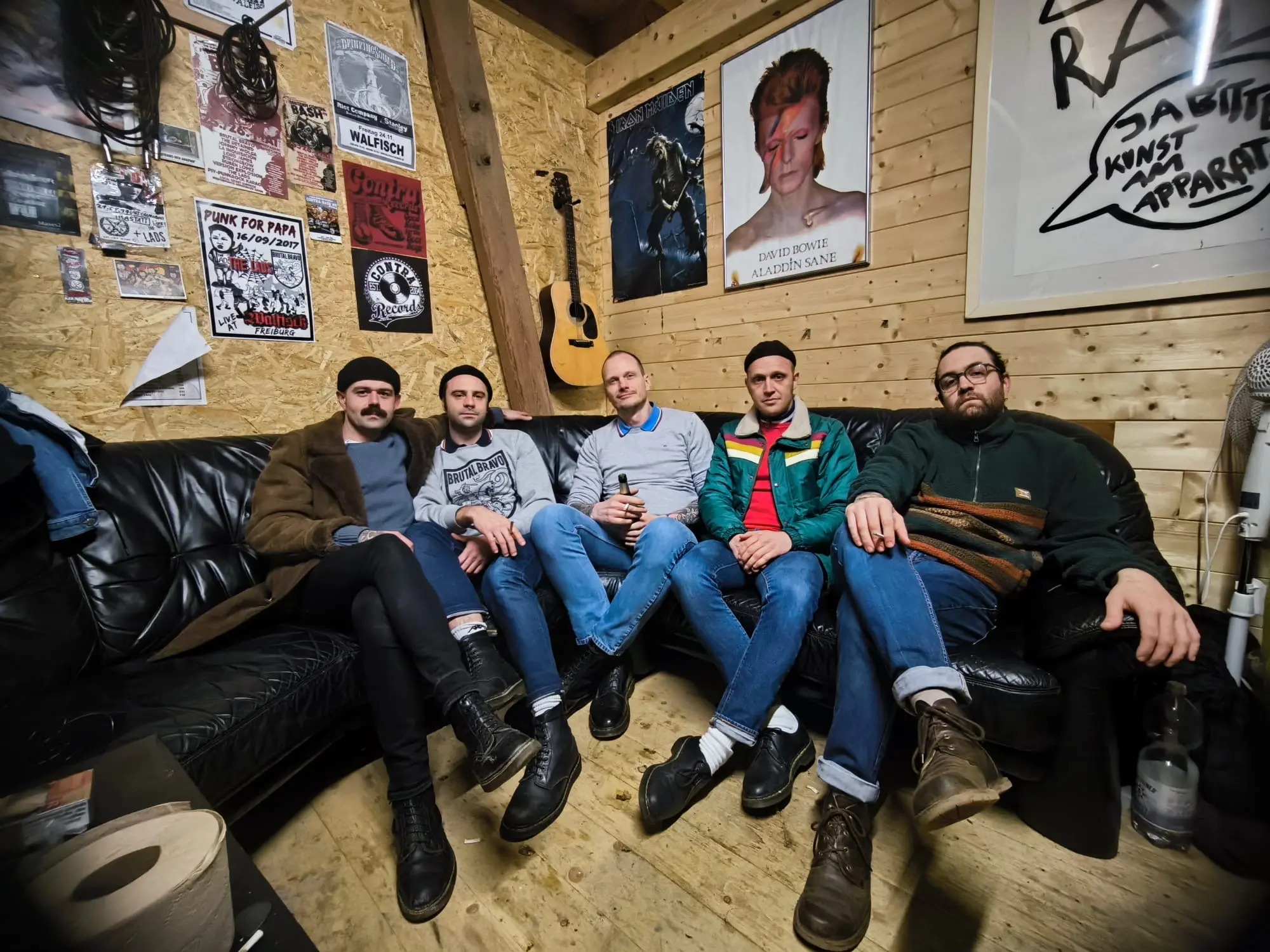
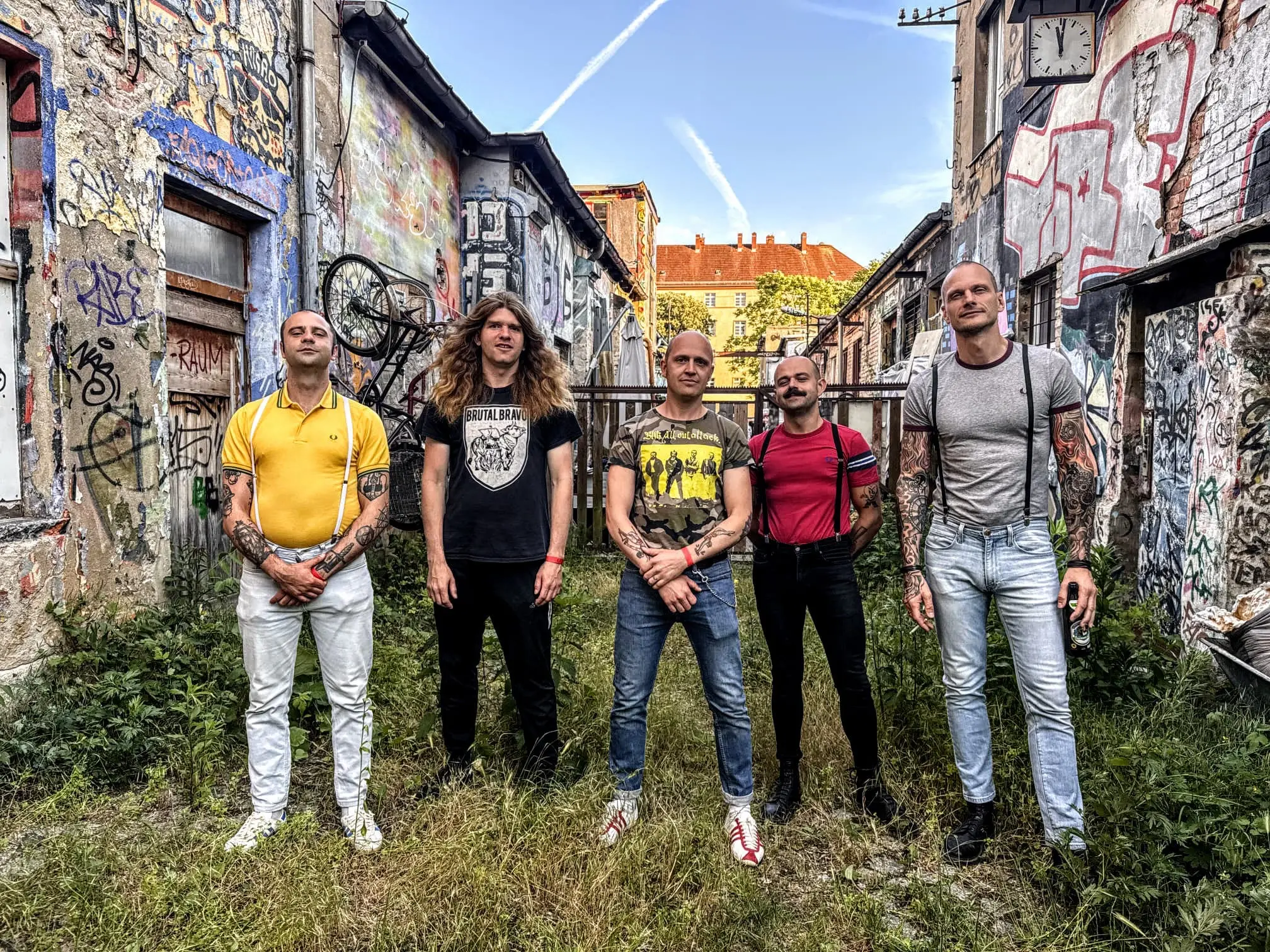
When you look at the bands around you, you keep running into the same people – Drinking Squad, Nonchalant, The Lads, Nowitschok and others. Is the punk scene more like a big community for you, or has it become almost like a second family?
Definitely a family! An incestuous family, haha. There are about four or five different bands, but also only about four or five people playing in them. Anyway, I have the privilege of getting to know a lot of people through playing in a band. What I really appreciate about these people is that I can truly be inspired by them. When I meet someone, I’m not really impressed if that person is a reflection of myself. If you’re always looking for similarities, you limit yourself.
The people I have the honour of knowing and playing in bands with are aware of the importance of individuality. And, even more importantly, there’s no need to force our perception of individuality upon others. I’m quite allergic to dogmatism!
You’ve been around punk for quite some time now, so you must see a huge difference between the scene you entered and the one that exists today. What do you think has changed for the better, and what do you miss from the old days?
When I entered the scene, being „non-political“ was quite in vogue. The scene has become more political nowadays. I’d say this is an aspect that has changed for both the better and the worse. We definitely live in different times now than when I entered the scene. And I think the time has come for everyone to take a stand and take responsibility in the face of people who try to take away our ability to live individual lives. The majority of the scene takes on this responsibility and draws a clear line between what is tolerable and what isn’t. That has changed for the better.
Still, I have to admit that a large part of the scene takes this responsibility far too seriously. Punk has always been anti-dogmatic. Somehow, there seems to be a new generation interpreting punk as a dogma and trying to force its own ideals upon others. „Tolerance“ only seems to be legitimate if it aligns with one’s own ideals, which doesn’t work in my eyes. The punk scene is an expression of individuality and diversity. Ironically, those demanding diversity seem to be just as intolerant as the people they criticise.
I interpret tolerance as accepting something even if it’s not exactly what you believe in yourself. Somehow, we’ve unlearned that constructive discourse only works if you take several perspectives into consideration. Still, of course, tolerance has its limits, too. Needless to say, what those limits are at this point!
And what really pisses you off about today’s scene? On the other hand, what still makes you believe that the punk scene matters and isn’t just nostalgia for the past?
I think it has become quite clear from my previous answer what pisses me off. But let me talk about why punk isn’t just nostalgia for the past. Just take a look at how many new bands are emerging right now. I’ve seen kids at the skatepark blasting punk from their speakers. I think the scene has become quite progressive and more open-minded in a way. This era brings a lot of innovation, including influences from the wave scene. I’ve always loved experimental stuff, and I’m glad that punk and Oi! no longer impose such strict limits on themselves. The punk scene still matters, and I see it as continuing to grow. I’m quite excited to see where things will go. I hope our projects contribute in some way to what the scene is all about.
How important is the DIY side of punk to you? Could it work without the people around you – gigs, labels, zines, friends and this whole infrastructure?
It’s the basis of everything. Our projects would never have become what they are without the network behind them. I’ve tried organising gigs myself every now and then, but I’ve had to realise that I definitely don’t have enough talent for it. It’s quite comfortable to just arrive at a gig, set up your stuff, get some food and beers, and have a place to sleep. That’s a huge privilege.
Still, the long hours on the road and having to work on a Monday morning while still being kind of hungover take their toll. We need all kinds of people in the scene, each contributing in their own way. As long as you’re not just a passive consumer who complains about everything, I’m quite happy!
Do you think it’s harder to build a real community today than it was twenty years ago, when there were no social media and you actually had to go out and meet people?
That’s hard to say. I’ve got to know a lot of people through social media before even meeting them in person, and things usually turned out as expected. I think it’s essential to pay close attention to people and have a certain understanding of their personalities. Of course, social media helps people connect, but finding „the real ones“ works just the same as in real life. You learn quite quickly who’s authentic and who’s just a poser.
Nonchalant are closely connected to Drinking Squad in terms of the people involved. Tell us a little more about that. And what other projects are you involved in – go on, show off a little!
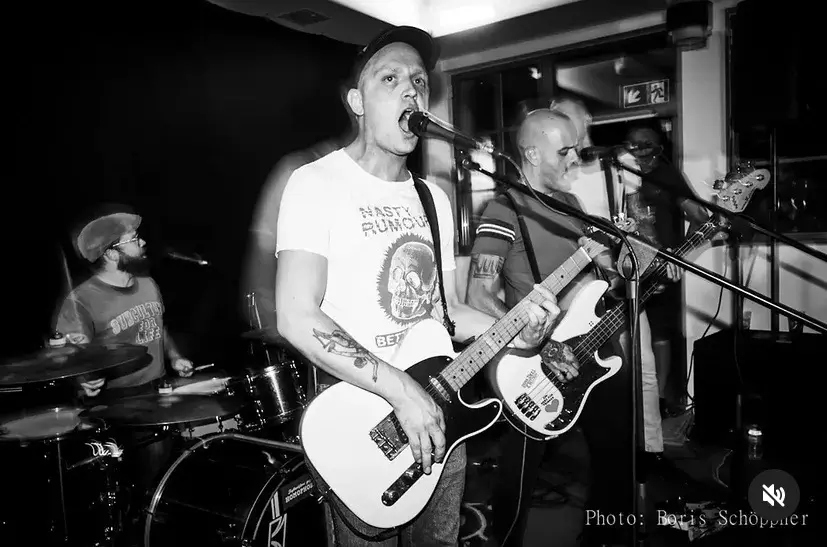
In fact, our line-ups haven’t changed much since we started making music together. We didn’t really have many opportunities in Lahr, our hometown, so we were forced to manage things on our own. In the meantime, most of us have moved to Freiburg, and three out of five of us are also active in Nowitschok. Nonchalant is quite clean and has more of a pop sound, which is why Nowitschok is a very important project to me, as it’s much rougher and more aggressive.
Kostja and I have also started a New Wave project, and we’ve finished three songs. Somehow, we’ve never really managed to release them because we’re stupid idiots. Moreover, Simon is the guy who records and mixes all our stuff. Our whole circle of bands owes him a lot.
The bands I’ve been involved in include Drinking Squad, The Lads, Proto, $.A.D, Nowitschok, Bomber 19, Brutal Bravo and Gewohnheitstrinker.
When you’re involved in several bands at the same time, can you separate different parts of your personality between them, or do all your bands eventually overlap in some way?
It’s not really a question of personality. I think we’re more or less the same people in every project. It’s rather about the profile you give yourself as a band as a whole, in terms of sound, looks, lyrics or just aesthetics in general. In the end, I can’t deny that our projects still overlap in some ways.
Nonchalant sound much more melodic, sensitive and sometimes even more romantic than the other bands you’re involved in. Was that difference intentional from the beginning? Is there something you can say or express through Nonchalant that wouldn’t work in your other projects?
To be honest, we couldn’t stand playing the Drinking Squad songs anymore, and The Lads had broken up at that point due to personal differences. So it was the perfect time to start a new project in 2021. Power pop has always been my guilty pleasure, so I think it was quite intentional to give the band a different profile and sound.
Of course, a genre dictates your sound to some extent. A song like „Prettiest Girl in Town“ would never work for Nowitschok. Still, we never really limit ourselves just because a genre gives us certain basic structures. There are some quite serious and melancholic songs on the new album, which isn’t really typical of power pop. Whenever I have to play too many happy songs, they start to piss me off at some point.
Did Nonchalant come about because you wanted to do something that simply didn’t fit anywhere else? What were you missing in music back then?
I’d say Nonchalant started primarily as a contrast to Drinking Squad and The Lads. We didn’t really have a clear idea of why we wanted to start Nonchalant.
Do you still see Nonchalant as a side project, or is it a full-fledged band with its own character and its own life?
I’d clearly say the latter. The same goes for Nowitschok, our other active band!
What does the name Nonchalant actually mean to you? Why that particular word?
Well, power pop doesn’t really have that serious a feel to it and might even be carefree in a way. You know, that feeling you had as a child, without any responsibilities or worries? We try to sound a bit self-ironic with Nonchalant because we still act like inexperienced teenagers who haven’t learned a thing and aren’t willing to admit that we grew up a long time ago. By the way, „nonchalant“ wasn’t a word teenagers used very frequently back in 2021, but it’s kind of ironic that they do now.
When you started Nonchalant, did you already have a clear idea of what the band should sound like, or did you figure it out through the first rehearsals, gigs and songwriting?
The latter! We had some influences, such as The Reaction, but we see Nonchalant as an ongoing process, which is why I think the first album sounds very different from our current material.
Your music sits somewhere between Punk ’77, Power Pop, rock’n’roll and Oi!. Which bands were the biggest inspirations for you when Nonchalant started, and which bands influence you today?
As I’ve already mentioned, we were inspired by The Reaction, but definitely also by The Undertones and Conmen (who aren’t really well known, though…). Nowadays, Coeur á l’index are quite inspirational to me. It’s such a pity they broke up.
When writing songs, is a great melody that immediately gets stuck in your head more important to you, or the lyrics – something people can actually see themselves in?
Since a melody leaves much more room for personal interpretation, I’d say it’s more important in the first step. But in the end, it’s obviously about a clever combination of both.
There’s one particular contrast I really like about Nonchalant – the music is often catchy, upbeat and energetic, while the lyrics can be much more serious, personal or pissed off. Is that contrast intentional?
I’m happy that someone listens to our songs closely enough to notice this contrast, haha. Yes, it’s intentional, and as I’ve already mentioned, I love experimenting rather than imposing limits on myself because of a genre. Otherwise, we’d only hear the same old shit.
Let’s dig a little deeper into your lyrics. A lot of them feel very personal. When you write, do you draw from real situations and people, or are the lyrics mainly a way of getting your own feelings out of your head?
The majority of the lyrics are very personal and autobiographical. Still, we try to create a narrative perspective that differs somewhat from our own. I love drawing inspiration from the way other people perceive the world around them, so I try to observe feelings, moods and expressions and then write a song about them. The song „Underneath Your Skin“ should be a good example of this.
„Teenage Heart“ feels like a perfect example of what Nonchalant are about. Is it nostalgia for being young, or more of an admission that some things never completely disappear from inside us?
Yeah, „Teenage Heart“ is the secret title track and reflects the concept of the album. It’s both about nostalgia and about how our teenage years continue to shape us today. From a psychological perspective, you can never really discover who you are without taking a close look at who you were when you were young. The process of identity formation reaches its peak during your teenage years, and we see the album and the song as an invitation to reflect on who you were and who you are today.
In „Teenage Dreams“, you go back to skateboarding, running from the cops, youthful carelessness and that feeling of freedom. When you look back on those memories, do you miss a particular period of your life, or do you miss the people and the people you were back then?
Well, some days, many of us probably miss our teenage years. Of course, those years are idealised in the song, but in the end, it’s just a narrative perspective on who we were back in the day. To be honest, I often found being a teenager quite annoying. So many questions, so many heartaches, and no clear idea of what to do with your life. Maybe we really have grown up after all, haha.
Luckily, most of the people from back then are still around me, and a lot of new faces have crossed my path. I feel blessed to know them.
Do you think it’s possible to stay „young at heart“ without getting stuck in the past? Where do you think healthy nostalgia ends and living in the past begins?
That’s the critical danger you’re pointing out here! Of course, being stuck in the past can become quite frustrating at some point, since you’re chasing times that simply don’t exist anymore. But as I’ve mentioned before, I think you can learn a lot about yourself by trying to understand who you were and who you are now, or who you want to be.
„I Hate Mondays“ is completely different – everyday frustration, not enough sleep, work, nerves and Monday morning. Is punk still a way for you to get the things that piss you off in everyday life out of your system?
Definitely! Who doesn’t know that typical Monday morning when everything and everyone pisses you off? People tend to push their frustrations and problems aside. You might be lucky enough to have people around you who really understand your frustrations in a sensitive and empathetic way (which is quite uncommon, unfortunately). Or you might simply express your frustration in a song like „I Hate Mondays“!
„Let You Go“ is a very personal song about relationships. Is it harder for you to write about your own relationships and vulnerability than about anger or social issues?
I like both, to be honest. Drinking Squad was much more political, I’d say, and maybe it was time to simply change the subject matter with Nonchalant.
„The One“ carries a completely different emotion – the desire to find someone you want to share everything with. Do you think punk can be just as much about love as it is about anger, politics or social bullshit?
Well, I could give a standard answer here and say, „Punk doesn’t come with any rules, and you can sing about anything you want to.“ Indeed, you can sing about love just as much as about anger, but it’s about the attitude and authenticity that come with it. It’s certainly very important how creatively and progressively you approach it, rather than simply reproducing what has been said a thousand times before (which can be quite difficult sometimes…).
„Hate Overflow“ and „Psycho Killer“ are much darker and more aggressive. Where does the exaggeration end and genuine anger begin in these songs? And does music actually help you get those kinds of emotions out?
We all have some kind of dark side within us. Most of us successfully push that side away in everyday life. These two songs are about that dark side, and punk has always been a way of dealing with it by expressing frustration through lyrics and music.
Is there an older Nonchalant song that you see completely differently today than you did when you wrote it? Has its meaning changed for you over time?
There have always been songs we’ve liked more than others. I’d say that’s a pretty natural process. I don’t really think I see any of the songs differently today, but I sometimes feel that I wouldn’t release some of them nowadays simply because I don’t really like them anymore.
You released Teenage Dreams in 2023, and now you have a new record, When I Lost My Heart. When you put the two albums next to each other, where do you hear the biggest change?
We put ourselves under too much pressure when making Teenage Dreams. When I Lost My Heart was a much longer process. The biggest change is definitely that we had recorded When I Lost My Heart in its entirety as a demo on GarageBand beforehand, which gave us plenty of opportunities to add new ideas, and everyone knew exactly what to do during the recording sessions.
In terms of quality, I think that made a big difference, and the songs had much more time to mature. I think it’s pretty obvious that there’s a significant difference in quality between Teenage Dreams and When I Lost My Heart.
You’ve changed as musicians and as people during that time. Has that change found its way into the new songs?
Yeah, definitely! What you experience always finds its way into what you do, feel, perceive, etc. Everyone in the band has been through some tough times since our teenage years, just as everyone goes through difficult periods in life. You could even say that the album tries to reflect that very change as a process.
Do you feel that When I Lost My Heart is still the same Nonchalant as on Teenage Dreams, or do you feel you’ve ended up somewhere completely different?
In my eyes, there has been quite a change when you compare the two albums. My previous answers might give you an idea of how and why that’s the case!
Even the title When I Lost My Heart sounds quite personal and a little melancholic. What does that title mean to you? Is there a particular story, person or period of your life behind it?
I have a specific period of time and even some clear images in mind because it was at the age of fifteen that I first lost my heart. To me, losing one’s heart doesn’t necessarily have to be melancholic. Of course, it is in a way, but the title is rather meant to emphasise that there haven’t been many events or people that have had such a powerful, life-changing impact on my life.
Anyway, at the age of fifteen, it was all about girls, skateboarding and feeling exclusive. Life was nonchalant back then, but things started to become more serious as soon as my heart was broken for the first time. That’s the concept of the album in a nutshell, haha.
Can you introduce the new album to us a little? What can we expect from it, what will it sound like, who is releasing it and when exactly is it coming out? And is there a particular song you’re especially proud of?
Let me copy the promo text for this one:
„This album tells the story of our hearts. Our teenage hearts. Of losing our hearts to passion and music, to beautiful human beings, some of whom bitterly disappointed us, while others still stand side by side with us. It tells the story of naïve teenagers (which we mentally still are) experiencing the struggles of growing up and learning how to cope with reality and their own identities. It tells the story of hearts breaking and falling apart. You are cordially invited to join the journey and hopefully realise that you are still a teenager at heart, too.“
The digital version was released on September 11, and the physical copies will hopefully arrive at Contra Headquarters by mid-October.
What I like about the sound is that the organ and the lead guitar work really well together. The lead guitar has a wavy sound, and the combination with the organ is intended to evoke the sound of the ’80s.
There isn’t one particular song I’m especially proud of. The album as a whole follows a concept and a structure, just as a band needs a profile. It’s quite challenging to create an album in which the songs, lyrics and artwork are all connected by a central idea.
When you compare the first Nonchalant recordings with the new album, what would you say you’ve learned along the way? And is there something from that original energy that you never want to lose?
Nonchalant was the direct response to Drinking Squad, which you can clearly hear in the rougher vocals and sound. Meanwhile, we no longer desperately try to keep the rough punk sound alive, at least not with Nonchalant, since it simply doesn’t really fit our sound. As I’ve mentioned before, we love experimenting, which is why we even tried mixing some wavy effects into the sound. Still, it might well be that we’ll want to return to a rougher sound for the next release! Who knows?
And the final question. Why do you still do it? Why keep rehearsing, writing songs, recording records, playing gigs and putting your time and energy into it when you could simply stay at home?
We keep asking ourselves the same question whenever we get stuck in a traffic jam on a Sunday afternoon after a gig, knowing that we have to be at work early the next day, haha.
Seriously, quitting has never been an option. I became a father a few months ago, which is why we haven’t been playing or rehearsing that much lately. It’s a very special time, and I don’t want to miss a thing when it comes to watching my son grow up.
Still, I realise that I don’t want him to know me without one of the main things that make up my identity, which is simply music and punk rock. And that’s your answer to why we don’t stop: it has become a major part of our identities, and we would always feel incomplete without it.
The final words are yours. If there’s anything important we didn’t talk about, now’s your chance. Tell us anything I didn’t ask about. Thanks!
Well, we’d like to thank you for your passionate work on Tighten Up Zine! The questions must have taken a very long time to put together, and the same goes for all the reviews. Answering all your well-thought-out questions was quite inspiring and made me reflect on certain aspects of the band and the new album once again. I’d like to leave it at that and thank you for giving us the opportunity to express ourselves in this interview!
DISCOGRAPHY:
Nonchalant EP (Punkrock Boys Records , 2022)
Teenage Dreams LP (Punkrock Boys Records , 2023)
When I Lost My Heart LP (Punkrock Boys Records, Contra Records 2026)