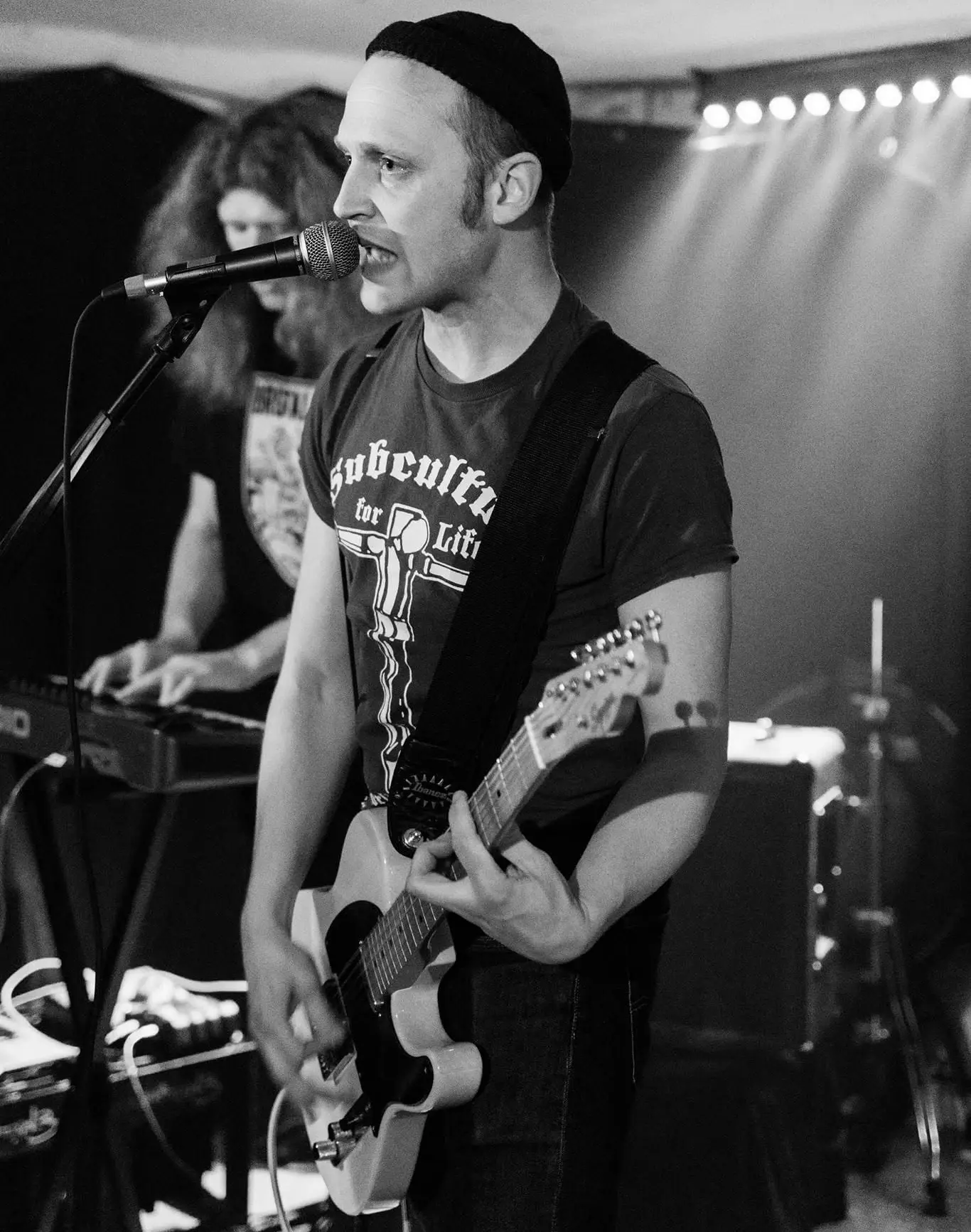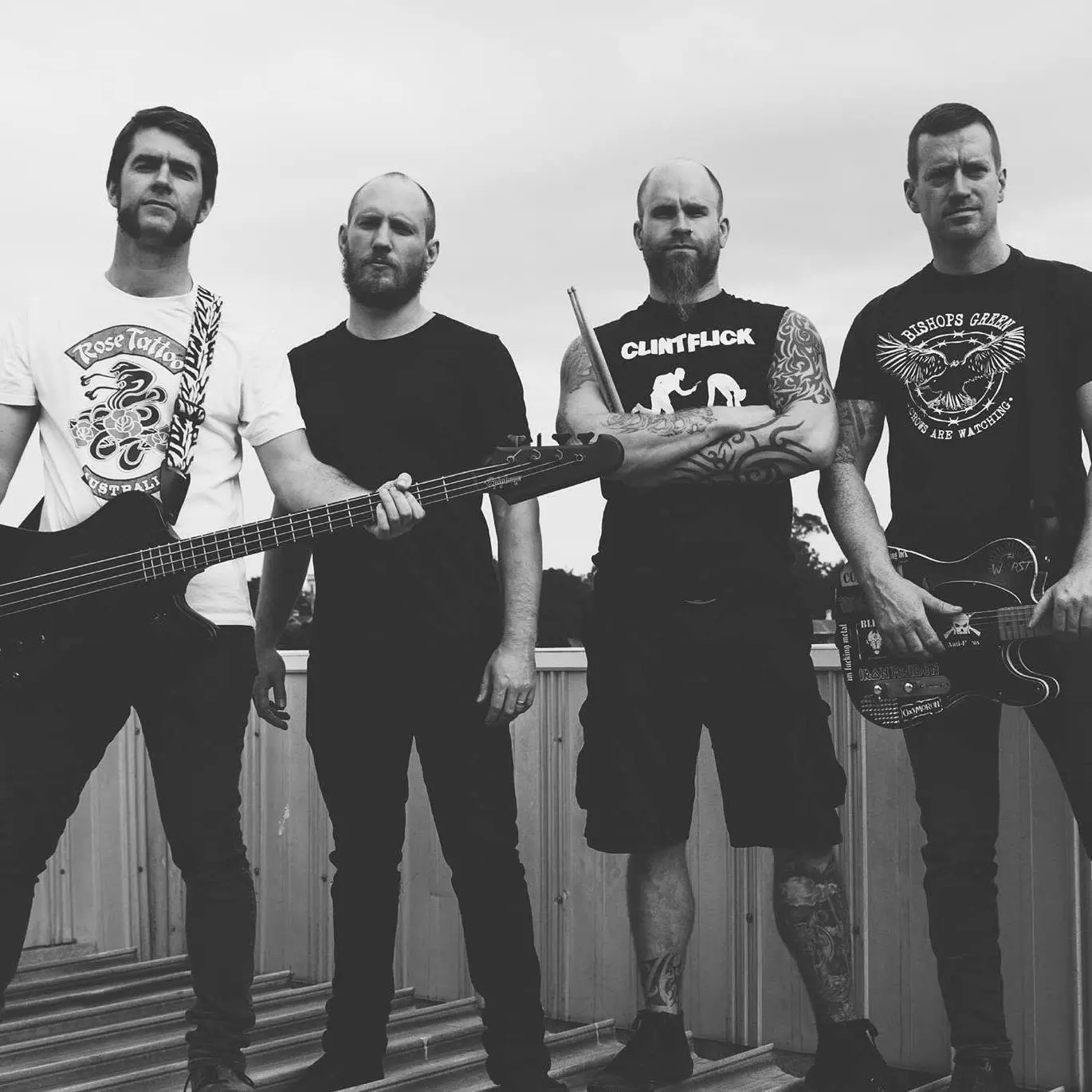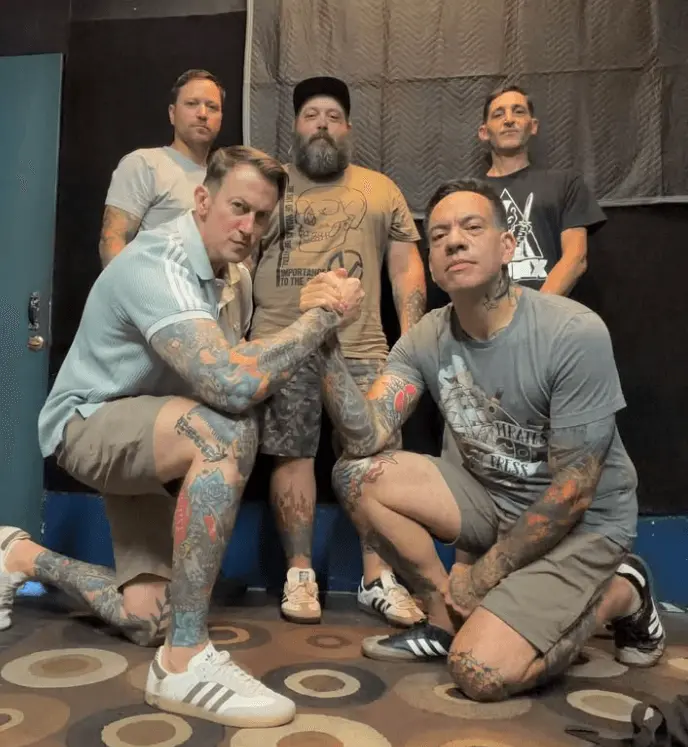
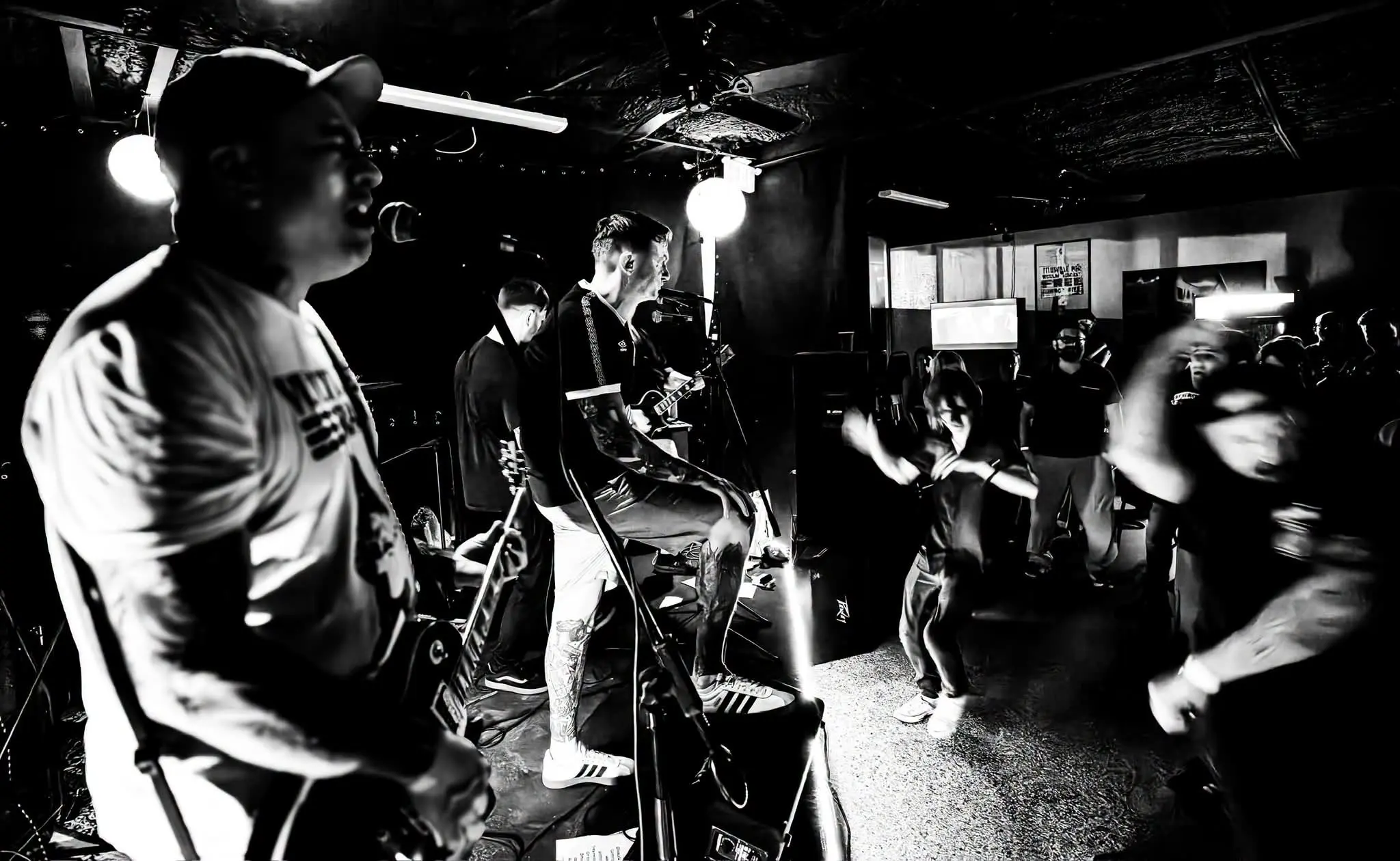
Some bands need a couple of records before they find their voice. NOi!se from Tacoma, Washington, never really bothered with the question. They started in 2009 in a tattoo shop and have spent the years since playing streetpunk that couldn’t care less about subgenre fences: Oi!, hardcore, soul and a pinch of 80s pop, and it still sounds like NOi!se. They’ve opened for Rancid and Cock Sparrer, finished a tour with Sick of It All, and when the band almost called it a day in 2023, they pulled through. This year Pirates Press Records released Fate of the Union, their first new full-length in a decade. In this interview we covered the beginnings, songwriting, years in the US Army, the road to sobriety and why punk shouldn’t dodge human rights. The answers are honest, sometimes funny and free of poses. Put on the record, read what NOi!se have to say, and remember: we need this music now more than ever.
How did the band NOi!se start and what were the very beginnings like? What did the scene look like in your area when NOi!se first started out?
NOi!se started in 2009 in a tattoo shop in Tacoma where we are from called Tsunami Tattoo. Nate and Miko (our first drummer) were artists there and I was a client. Nate and I became friends and discovered we had very similar musical interests. Nate asked if I would be interested in playing bass in a project he was starting with Miko. Justin and I met in a pub downtown and after he mentioned he played guitar, I invited him to come play with us. We recorded a 4 song demo (the songs that would later become „Walk Beside Us“). We played our first show shortly thereafter, and that was the birth of the band. The scene in Tacoma/Seattle was very unified. The first NOi!se shows always had a hardcore and punk rock presence on the bill and the people who attended were from all facets of the sub genre. We still love playing diverse bills. I honestly think those are the best shows.
Was it clear from the beginning that you wanted to play Oi!/streetpunk, or did you arrive at that style gradually?
Nate wanted the band to be very Oi! inspired, though we have never really sounded (or tried to sound) like a traditional Oi! band (clearly). The idea to have „Oi!“ in our name was Nate’s and somewhat of a tongue in cheek acknowledgment of our roots.
Is it important for you to stay within certain stylistic boundaries, or do you prefer to just make music based on feeling?
Absolutely not. Our sound has evolved over time which, I think, is a reflection of the expansion of our abilities. Nate and I decided very early on that we didn’t want to be constrained musically, just to stay within the confines of a specific subgenre. I write music that resonates with me and comes from the heart. If people enjoy it, that’s incredible and we are always grateful when it happens, but it’s never the driving force behind our writing.
How has the dynamic within the band changed from the first rehearsals until today?
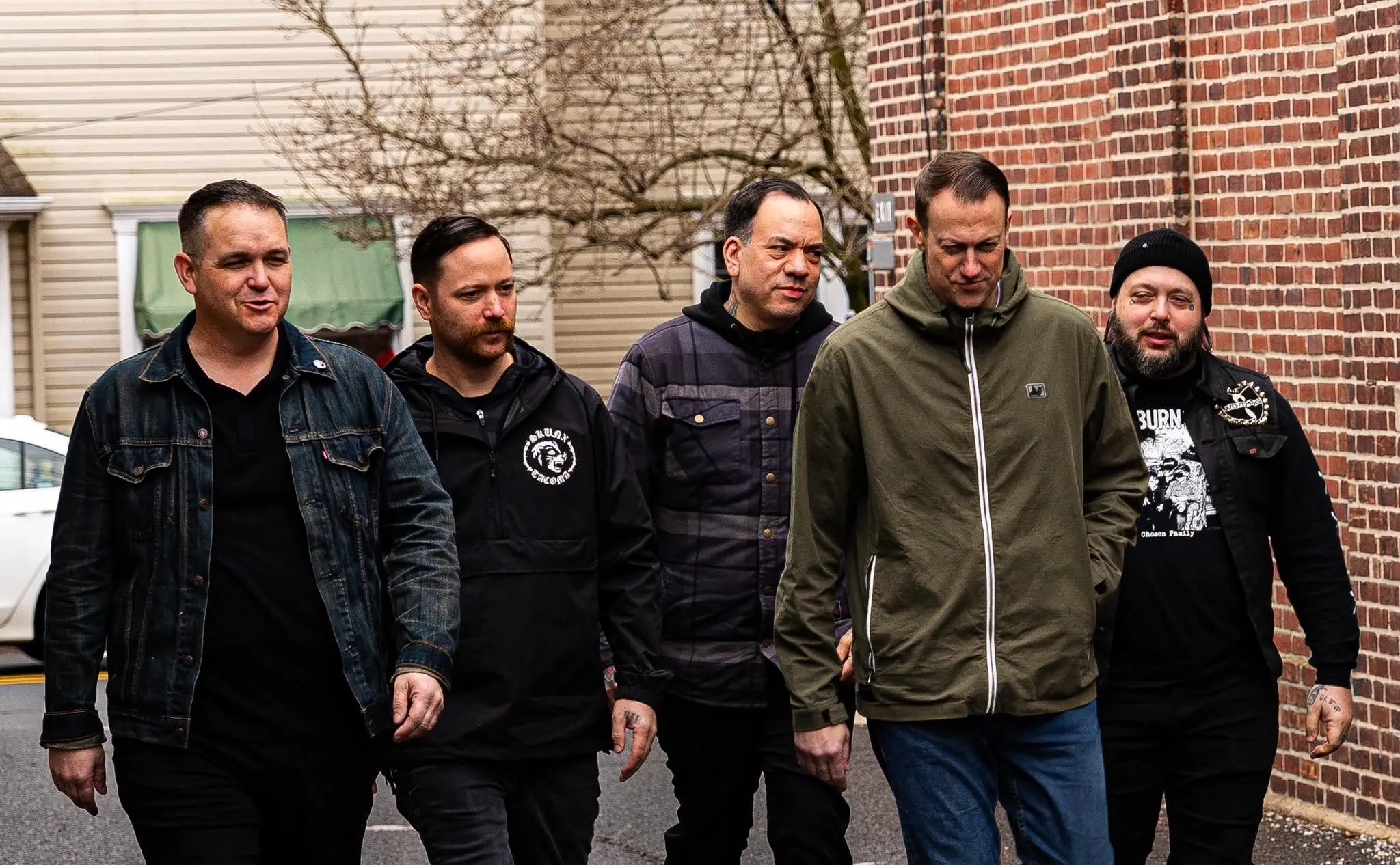
It has changed immensely and in almost every conceivable way. Musically, we have continued to progress and try to get better but the lineup changes and geographic separation have also presented us with challenges and new dynamics to navigate. Presently, Mike, Aaron and Kenny all live in Tacoma, Jesse lives in Arizona and I live in North Carolina, so writing and rehearsing are challenging, but we have developed a unique, but effective way of doing the best we can to stay (somewhat) proficient and share ideas for new songs. The common denominator during the band’s evolution has been that we want to use music as a vehicle to express how we feel and create something we can be proud of each time we record while putting on the best shows we can each time we play… and have fun doing it.
Is there an old show or tour you’ll never forget?
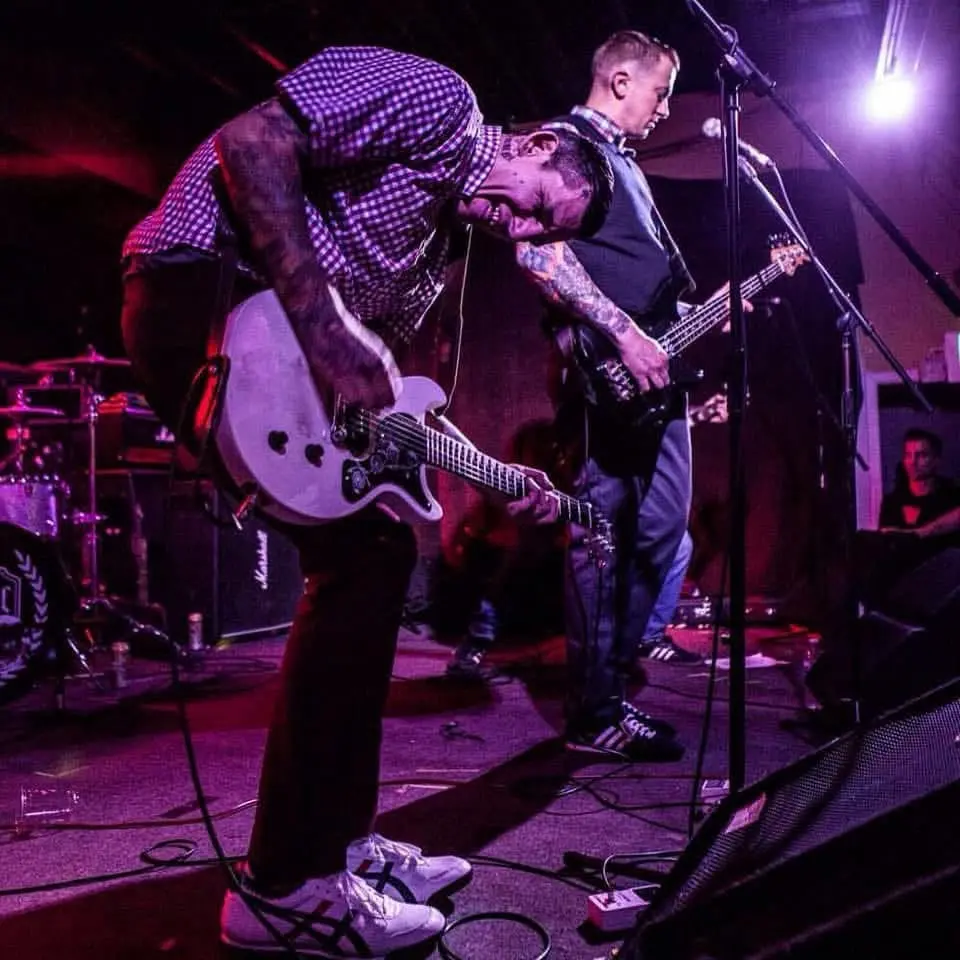
In 2012, I was in Afghanistan for work. Lars Frederiksen emailed me to let me know that we would be opening for Rancid and Cock Sparrer in San Francisco almost as soon as I got home. Kenny had just replaced Miko on drums and we hadn’t even played together yet. Playing that show was something that none of us had ever dreamed being possible when we started the band, so the experience was surreal. Playing with two of the bands whose music was so instrumental to my relationship with punk and Oi! was something I don’t think I can effectively put into words, but I still consider it the biggest show we ever played in more ways than one.
Which bands influenced you the most when you were starting out? Are there any bands outside of punk that influenced your sound or your approach to music?
I get asked this quite a bit and I think the reason it’s difficult to answer is because our influences are so varied and often indirect. I will hear a bassline, riff or vocal progression that I really like and sometimes it will influence a component of a song I’m writing, but very seldom have I heard a song and thought „I want to sound like this“. I think NOi!se is just as influenced by 80s pop, Hardcore and Soul as it is Oi! and Streetpunk and all of those sounds influence the different styles that each member plays. Regardless of how a song may start off in my head, the end result will always sound like NOi!se once everyone in the band puts their spin on it… and it’s one of the things I love about this band.
Looking back, what were the most important milestones in your history as a band?
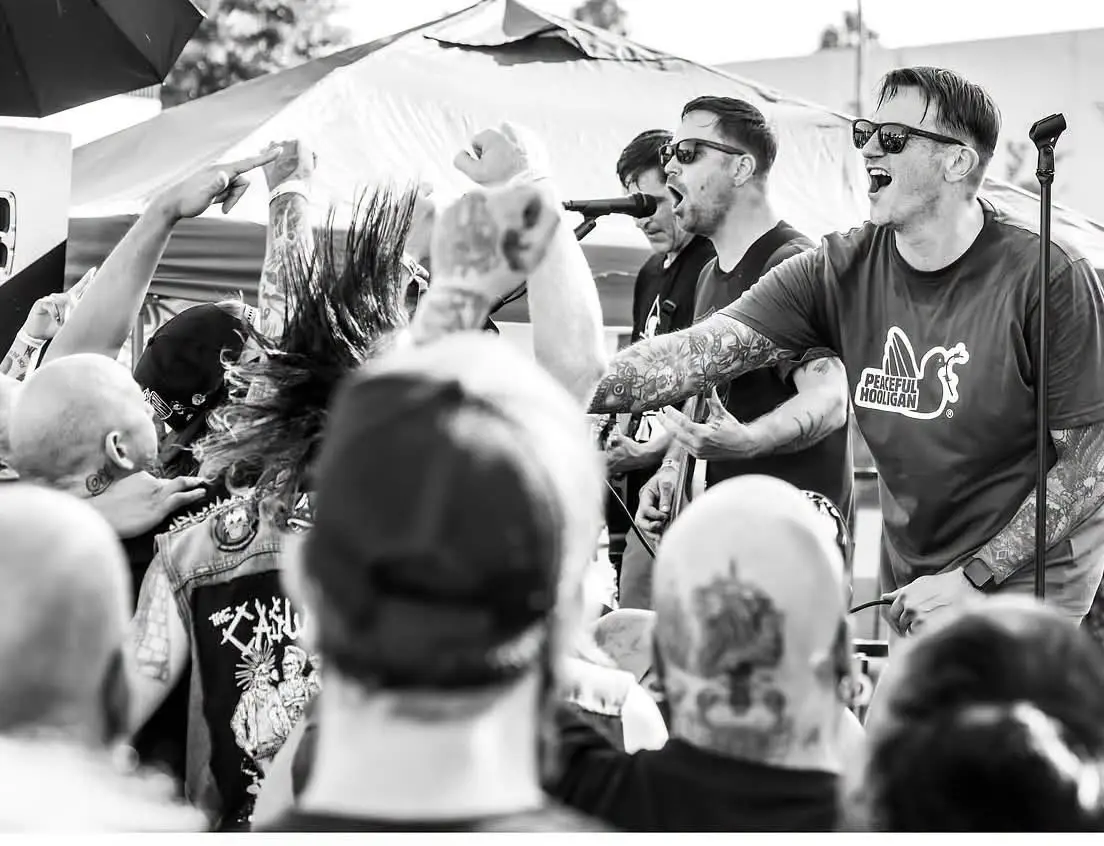
Several milestones: Playing our first show with a band we worshiped (Sick of It All… RIP Lou). I remember finishing our set and seeing that they had been watching our set. They even asked us to finish the tour with them, which was absolutely mind blowing and a dream come true. Releasing This Is Who We Are, Scars We Hide and Fate of the Union. Each record represents a distinct moment in the evolution of the band that I’m super proud of. My daughter, Faris, singing with the band. Watching my little girl sing along on stage to songs written before she was born represents a full circle in my life that transcends music.
Were there ever moments when you felt like quitting the band? What kept you together?
When Nate and Jesse both decided that they would be stepping away from the band to focus on family in 2023, I decided that NOi!se was over. Nate started the band and Jesse had been recording us even before he took over for Justin on guitar, so they were both instrumental parts of who we were as a group. Continuing without them made me uncomfortable. It was actually Nate, along with Mike Parker (who would become our drummer), who convinced me to keep it going. When we played Punk Rock Bowling in 2023 with the new lineup, it solidified my decision to keep NOi!se going, but I wasn’t sure we would ever record again… but we did and I am incredibly thankful we did.
Punk has always been connected with rebellion against society or established norms. Do you think today’s punk scene is still dangerous and uncomfortable, or has it become more of a safe space? Does that make it lose some of its power and urgency?
The punk scene I grew up in is very different from the one that exists today, but I don’t think that’s a reflection of an advance or decline, simply a change. The dynamic of older participants in something casting aspersions on the evolution or current state of what they used to belong to is absolutely nothing new and exists in every facet of life. Our grandparents called our parents spoiled, entitled and lazy, they called us the same thing, and on and on. Whether the scene is as tough or dangerous as it used to be when I was a kid is entirely irrelevant. What matters is that there are still kids coming to shows, starting bands, recording podcasts and keeping the genre alive. What they do with it and how it manifests in practical application isn’t up to me. The perpetuation of this music is more important to me than how similar the shows are to the scene I grew up in. This is a worldwide scene, so even if I felt inclined to bitch about how shows are now, it would only be based on my own, small perspective and not necessarily accurate, anyway. Who am I to judge?
NOi!se has fans among punks, skinheads, and hardcore kids. How do you see these different parts of the scene? Do you think there are bigger differences between these subcultures today, or is it the opposite?
That’s a great question. I think there are less overt differences simply because the internet has provided for more exposure and a cross-pollination of music to people who would normally only subscribe to one niche segment of the scene. I LOVE seeing diversity in the crowd. As I said, our influences are all over the place, so an audience that illustrates our music is resonating with people from those communities is amazing to see.
What role do you think Oi! and streetpunk play in today’s punk scene?
There are bands that are very clearly Oi! influenced but experimenting with their sound to a degree that I think expands their audience and, by extension, their role in punk. Bands like Mess, Bullshit Detector, Liberty and Justice have incorporated different components into their sound that I think appeal to a broader range of people who, after listening, may discover some more traditional Oi! bands and be super into them.
Do you think the scene today is more open than the one you entered years ago? Do you think punk still has the power to change people or society?
Without question. We need this music now, more than ever.
You’ve played shows in Europe. What differences do you see between the punk scene in the U.S. and in Europe? Is there a particular place or country where the scene surprised you the most?
We love Europe. Both times that we’ve come, it’s been hard to leave. We still have lots of places we want to play, but the places we have so far have all been incredible.
How do new songs come together for you these days—does it start with a riff, lyrics, or jamming together?
Usually, a riff will pop into my head. I will whistle it into my phone, using my voice recorder app. When I get home, I’ll use my guitar to finish the foundation of the song, then record it while whistling the vocal progression, then send it to the guys. They will then record a rough demo using a drum machine which provides enough for everyone to begin working their parts. Everything doesn’t really come together until we are in the studio.
What motivates you the most when writing music—personal experiences, frustration, or things happening around you? Do you feel that the way you write lyrics has changed as you’ve gotten older?
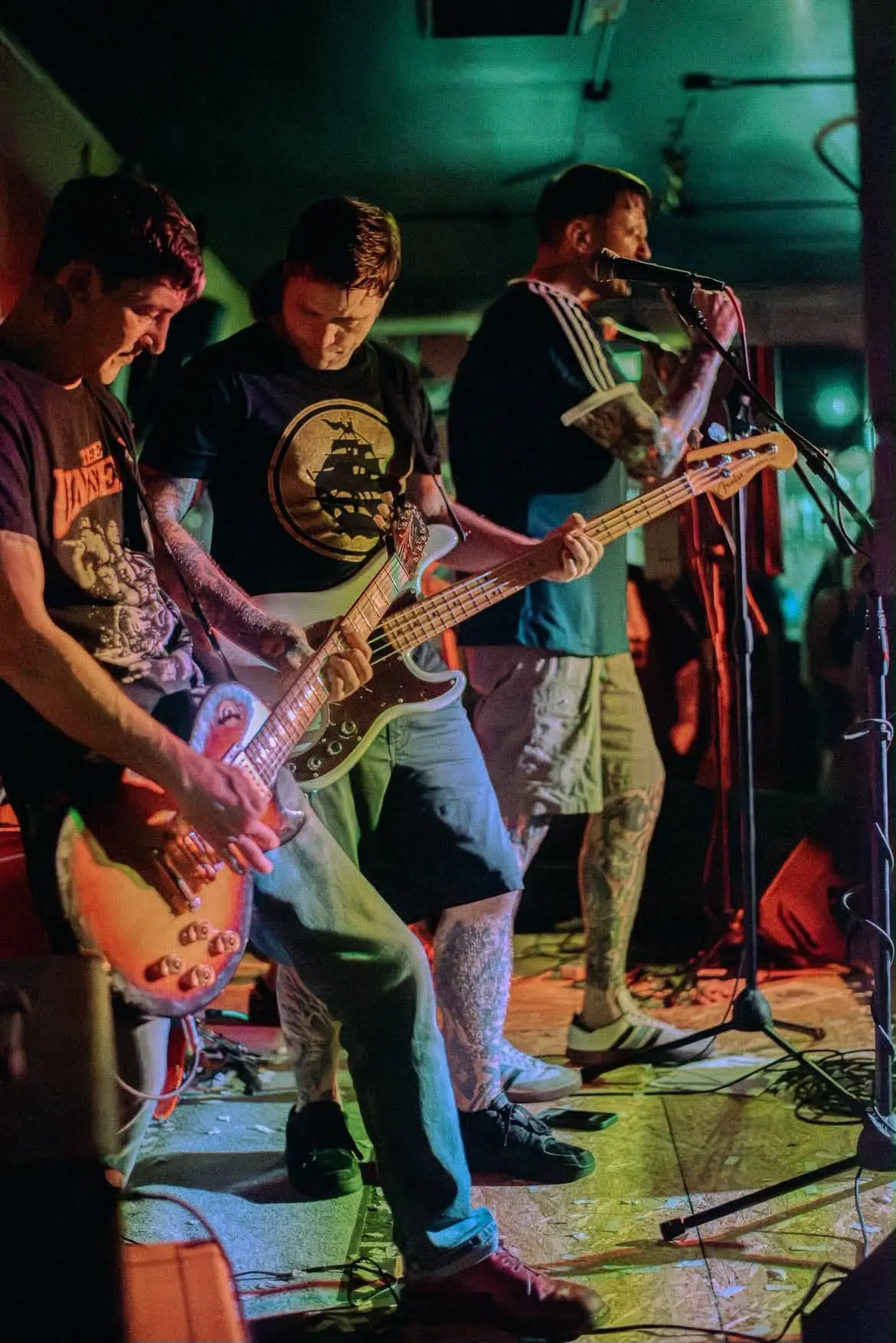
Lyrics are the most important part of a song, to me. Nate and I have always taken them very seriously and understand their importance to the message of the song. Sobriety has impacted the manner in which I write more than I think age or experience has… and in the best possible way. I’m able to organize my thoughts more and maximize every syllable to ensure what I’m trying to say is being relayed effectively. I will typically write topics that I want to cover and then listen to the songs to determine what music best suits each subject, then begin writing lyrics one line, sometimes one word at a time.
What frustrates you the most about the punk scene today?
There are a few things that bother me as it relates to the scene, but the best way to summarize everything is by describing it as negativity. There’s a demographic of people who never miss an opportunity to inject negativity into an otherwise positive experience or effort and I think it’s become more and more common and annoying. Simply living life provides enough negativity, so if people are trying to do something positive and not hurting anyone, I wonder why it isn’t possible for these people to either keep scrolling or channel their energy into creating something on their own, the way they’d like it done.
On the other hand, what still keeps you in it and gives it meaning for you?
Every time I am contacted by someone who tells me that our music resonates with them or that it has gotten them through a difficult time, it means the world to me and serves as a reminder of how important this music is to people, myself included. What gives me hope is that there are still kids out there who are picking up instruments and starting their own bands or coming to shows with their parents. I can’t effectively relay how happy it makes me when I see kids with their parents at our shows. I like to think that seeing my daughter up there with us shows them that they are just as capable of making this music as we were when we started.
How did you personally get into the punk or skinhead scene?
When I was 14, a friend introduced me to Minor Threat. Specifically, „Stepping Stone“ on their anthology CD. Initially, I couldn’t place where I recognized the song from, but then realized it was a cover of a song I had heard as a child watching the TV show The Monkees. The aggression of the music coupled with a melody I had heard early in life added to the degree with which it resonated with me and I was hooked. I started going to shows shortly afterward and my involvement in the scene ascended from there.
Do you remember the first show or band that completely changed your life? What inspires you more today—old classics or new bands?
The first band I saw live was Bad Religion. That show was my introduction to the punk rock scene, and it was unlike anything I had ever seen or imagined. The intimacy and lack of boundaries between the fans and the band were what struck a chord with me immediately, but as the show continued I began to feel the sense of community and unity present in the audience. It seemed like something I didn’t know I needed.
It’s no secret that you served in the military. How did you end up joining the army? Anti-militarism appears as a theme in some punk bands—how did people in the scene react when they found out you were serving in the military?
As with any other profession, there are many misconceptions regarding the military and why people join. Viewing military service members as mindless robots, implementing the will of their respective governments, is a very simplistic, albeit understandable conclusion that people unfamiliar with the profession come to. The truth is infinitely more complicated. I joined because I was at a dead end in life and had very few options, but I stayed in the army because I loved taking care of the people that I worked with. There are people in the United States Army from every ethnic background and every socioeconomic demographic. They all come to the organization of their own accord, based on their own perspective and for their own reasons. Ultimately, people are going to believe what they choose to believe but I believe the military serves to protect the ideals my country was founded upon, even when those principles may not be evident in the actions of my country. The Army is a place working-class Americans have gone to serve and provide for their families for over two centuries. To me, punk rock is working-class music and a vehicle for expression of thought, social commentary, and frustration.
I understand the objective hypocrisy associated with service to country and a presumed anti-establishment music, but I believe dichotomies exist in every human being. Assigning a binary, simplistic explanation, so that they fit a narrative, is a very common theme, especially on social media. I’ve gotten plenty of shit for my former profession, but I refuse to apologize for it. My stance on civil and human rights has been made very clear and if my military service is just too much for people who would otherwise listen to our music… bummer. Don’t listen. What becomes bothersome is when people assume I owe them an explanation for what I used to do for a living, although I guess I’m kind of doing that now… but this doesn’t count.
What was the biggest thing the army taught you about yourself? Did military service teach you anything that later helped you in the band or on tour?
Another great question. Military service taught me an incredible amount of things, but I would say the most important would be putting other people before myself and understanding that my perspective is not the only one that exists. The Army is such a diverse organization that it’s impossible to avoid developing an understanding that your perspective is very, very small. The world is infinitely larger than many Americans understand, and the military assisted me in learning that. As far as helping the band, my military experience definitely assists with planning and managing time.
Is there any kind of punk mentality that actually helped you survive your time in the army?
PMA!
(*Positive Mental Attitude)
Did your military service influence your songwriting, your view of music, or the opportunity to travel with the band and meet people at shows?
I wrote almost all of The Rising Tide in Afghanistan. I wrote a lot of The Real Enemy in Korea. Being by yourself, away from your family for months at a time, definitely put me in a place mentally that elicits quite a bit of emotion that can be channeled into writing, if you so choose. That said, we have been very limited in our ability to tour because of my former and current profession. I spend so much time away from my family for work that it is difficult to justify doing so for music, as well.
You’ve spoken publicly about quitting alcohol. How has your life changed since then? What led you to give up drinking?
I am an alcoholic and chose a profession that encouraged alcohol use quite a bit but also demanded performance, so I developed mechanisms that made me an incredibly functional alcoholic. When my time in the army came to an end, the uncertainty regarding the future put me in a place mentally that was very dark and, although I had known I had a problem for quite a few years, I decided I could no longer go on drinking the way that I did. Sobriety has made my life better in every conceivable way, but the most obvious are the relationships with the people I care most about. I am a better husband, father, and friend, sober. I’ve been open about my sobriety in the hopes that it will help someone else who may be struggling and unsure where to begin the journey to get better.
Do you think that change in lifestyle affected your creativity, the way you experience music, or the way the band functions?
As I said, sobriety has definitely assisted me in my writing but also my voice has gotten much better the last few years, presumably because my vocal cords aren’t pickled anymore.
Which classic Oi! or punk records do you think everyone should know? What newer bands are you listening to these days that you’d recommend to our readers?
Blitz and Cock Sparrer are two of my all-time, so I’d say Shock Troops and Voice of a Generation for sure, but I’d say No Solution by Criminal Damage, Emergency: 1,2,3,4, Alternate Action: Thin Line. There are a bunch of new bands doing great things right now. I’ve already mentioned a few earlier in the interview, but Lost Legion, Taker, Empire Down, Pena Maxima, Hunting Lions, This Means War… There are so many! It’s great to see!
How did your new album come together? Was the process different from your previous recordings?
Fate of the Union started with a demo of 4 songs the guys did in an Airbnb and completed the way I described earlier. It was unique, for sure.
What was the main inspiration behind the lyrics on the new record?
There are several themes we wanted to address in the new record, but mostly we wanted to hold up a mirror to our experience for our listeners to understand.
How would you describe the album to someone who has never heard NOi!se before?
It’s a melodic Streetpunk social commentary for people who enjoy mediocre music.
Do you think social media has helped the punk—or underground—scene, or has it actually harmed it? And what impact do you think it has on society overall?
Social media obviously has its pros and cons, like anything else, but I would say the overall impact it has had on our music is positive. The ability to discover new bands and network has been made much easier with the advent of social media. Annoying comments are an unfortunate side effect, though.
Looking back on your journey from your first punk shows until today—what has surprised you the most along the way?
That I’m still alive.
Are there topics in the scene that you think should be talked about more, but people prefer to avoid?
Human rights. There are bands who have a tendency to claim that they are apolitical and I believe, in light of current events, it’s important for them to use their platform to message their stance on human rights so that marginalized demographics see them for what they are. If racists are coming to your shows, it should prompt you to wonder why. If bands who do this for a living, like the Dropkick Murphys, can consistently do a phenomenal job of messaging their stance on human rights and advocating for marginalized people to ensure the wrong people don’t show up to their shows… small bands like ours can, as well.
The last words are yours. Is there anything you’d like to say that I didn’t ask about? The floor is yours.
I really appreciate the support and the super well-thought-out questions. We continue to be humbled by the support we’ve been shown as a band and the response the new record has gotten. We understand what a privilege it is to play music for such amazing people and will continue to do our best to ensure that privilege isn’t taken for granted. NOi!se fans rule.
DISCOGRAPHY:
Walk Beside Us 7″ (Longshot Music, Contra Records, 2010)
This Is Who We Are 10″ (Longshot Music, Contra Records, 2011)
Split with The Gestalts 7″ (Oi! The Boat Records, 2011)
Rising Tide 12″ EP (GMM Records, Randale Records, 2013)
Scars We Hide LP (GMM Records, Randale Records, 2014)
Dull The Pain 7″ (Longshot Music, Randale Records,Pirates Press Records, 2016)
The Real Enemy LP(Pirates Press Records, Randale Records 2016)
On and On LP (Pirates Press Records, Randale Records2026)
Fate of the Union LP (Pirates Press Records, 2026)