The Upsessions are a band that fans of early reggae, ska, rocksteady, and classic reggae know very well—and rightly hold in high regard. They are among the key European groups dedicated to authentically interpreting Jamaican music while also pushing it forward in their own distinctive way. Their work isn’t just a tribute to the old masters; it’s a living, breathing testament to the fact that this music still has something to say today.
Over the years, the band has built a strong reputation not only through their recordings but also through their energetic live shows, grounded in tradition and driven by a genuine passion for the music. In addition to their own material, The Upsessions have performed and collaborated with several legends of Jamaican music, further cementing their position on the scene. This isn’t by chance—it’s the result of long-term dedication to the genre, a deep respect for its roots, and the ability to bring it into the present without losing its authenticity.
We spoke with Boss—the central figure of this Dutch band—about Jamaican music, the subculture surrounding it, the musical side of things, the joy of performing, and their experiences working with legendary names. The interview offers not only a glimpse behind the scenes of The Upsessions but also a broader look at the European reggae scene and its connection to Jamaican roots.

How did you first get into music with Caribbean roots? Was it mainly musical curiosity, or did you come to it through subcultures like skinheads, mods, or rude boys?
I was 12 when I heard the Dutch reggae band „Doe Maar“ for the first time. On my brothers cassette tape. Besides this band being Holland’s biggest band ever with sold out shows, big nr.1 hits and serious Beatles hysteria, I was thrilled by the reggae beats.
I loved music before that time, but never heard something like this. The groove of reggae and ska, the hypnosis of the rhythm. It was a revelation.
After that I listened a lot to Bob Marley’s hits, they were OK, but I missed something. Then I bought an LP by the Specials, another moment of pure pleasure, followed by the Selecter, Madness and the Beat.
Do you remember a particular moment or a specific record that really hooked you? Was it a classic Jamaican recording, or maybe British bands that brought this music to Europe?
A couple of years later I found out there was a band playing in Amsterdam doing the old Jamaiocan sounds. They were called ‚ Rude rich & the Highnotes‘. I was in the rehearsal room and during our coffee break I heard them playing. It was amazing. They were touring all over Europe & were looking for a double bass player.
I totally knew I wanted to be that new bass player, though I never played double bass before. I had two weekes till the auditions, borrowed my brother’s double bass and locked myself up. Played till my fingers bleed and got the job. A new chapter begun: with Rude Rich we toured Europe, played big festivals in Holland and were the backing band for Derrick Morgan, Alton Ellis, Dennis AlCapone and Rico Rodriguez.
What fascinated you the most about Jamaican music? Was it the rhythm, the sound of the bands, the aesthetics of old recordings, or perhaps the history and culture surrounding this music?
At first it was the aesthetics and sound of old recordings, the songwriting, but he more I got to know about the music and the lifestyle/fashion, the more I loved that as well; great artwork on sleeves, lovely culture and great fashion.

How did the idea to start The Upsessions come about? Was it a clear project with a specific musical vision from the start, or more a natural result of meeting people who shared a similar taste in music?
I remember sitting in the tour bus and I heard a skinhead reggae album by Derrick Morgan; when we backed him, he onkly did his ska songs. Same beats, same grooves, but only ska. But suddenly another musical shock was there, while listening to skinhead reggae: This is the holy grail. The grittyness of the recordings, the groove in the rhythm, the way of playing of the musicians, the songwriting ( simple but oh so beautiful) everything.
Aftert that we listened to ska and sweet rocksteady, but I was sick of it. Skinhead reggae was my new game; in my head The Upsessions were born. I left Rude Rich and together with Giel Mulder, a trombone player, friend and skinhead reggae lover, I started The Upsessions.
What was the band’s original musical intention? Did you want to stay as close as possible to the classic Jamaican sound, or were you already thinking about adding your own influences?
As I was totally in love with the old skinhead reggae sound, I knew I wanted to sound like that. But I also knew that playing covers would not fullfil my needs. I wanted to compose, bring new melodies, new songs to the world. Not repeating Money Man or The Israelites. But also try to mix other sixties vibes into Jamaican music; like surf guitars, mariachi trumpets and some instrumental funk.
Looking back at the early days of the band, how much have The Upsessions changed over the years? Are you still following the original direction, or has your sound naturally evolved?
Oh yeah, we changed. And you have to, to develop. Otherwise you record the same album again & again. But after recording an album with the Upsessions that contained only ska, I had to record a Boss Capone album full of gritty skineahd reggae only. In the end that’s my basis. Later I found out my favorite Jamaican years were in between 1965 and 1975. That makes the range a little wider when recording many albums. I don’t want to stick to skinhead reggae only. When I recorded the Boss Capone & Patsy album, Patsy’s voice was so beautufl, that I had to arrange strings in the songs. If you hear the early 70’s reggae songs, there’s strings on those recordings as well. But they used the ‚Mellotron‘, one of the first keyboards with strings on it. Very fake, but exactly what I needed. And when I wrote songs for Stranger Cole, I wanted the album to sound more 60’s ska & doo-wop. Cause that’s what he did in the beginning.
You have more than twenty years of history behind you. Could you describe the main stages of the band’s development? Were there periods when the band changed significantly?
When we recorded our first album The New Heavyweight Champion, the reactions were crazy; shows came in, tours came in. After the second album Beat you Reggae we defnitely were a serious headliner act. It was fantastic, but it had an other side as well; not all the musicians were ready to be on the road that much. Some had studies, some had families, some had hearing problems. So I had to change 4 members in once.
During those years, were there moments when you felt the band was at a crossroads — for example whether to continue, change direction, or put the project on hold?
Oh yeah, the „changing 4 members in once moment“ was heavy, but there were more moments that were tough; besides all the great shows, the success, the lovely people that came to our shows, the Upsessions songs being used in movies & series, recording albums with legendary Jamaicans, the touring and ‚living the life‘, there’s a downside as well. Drugs is never far away, touring can be heavy, fights between bandmembers happen during tour.
There was a moment when my ears were totally f**ked, I think it was 2017. I never used earplugs and slowly it killed my ears. I found out I was only writing music 5 % of my time, the other 95 % was organizing ( tours, agenda’s, etc etc). That’s when I felt I needed to put The Upsessions on hold. I wanted to write music again, not being on the road or organizing. Back to where the real magic happens; writing songs that were good. Back to sitting behind the piano, looking for that one magical piece of the puzzle that made a song magic.
Not using my brain for organizing stuff, but let the creativity flow. I had some income from royalties, so I took a long break. It was great and necessary. When I wanted to be back with my projects, I had to wait some more years because of the corona thing:) I bought some good earplus, and started to write, produce and release albums and wnet on tour again; I guess I really needed that break. Looking back, I was so focussed on touring & organizing, I forgot to enjoy it. Which I do way more now; feeling blessed for the thing we started and still do; playing for the loveliest people in the world, having great fun on stage, seeing many different places, people buying our albums and just being around the greatest people on earth; the ska & reggae scene!
How do you remember the very first The Upsessions concerts? Do you recall the moment when you realized this project might really have potential?
Our first show was in France, we were the support act for the goodbye show of Western Special. This band was huge in France and we played for 800 people. We were not ready for such a big audience:), we were totally impressed. It’s better to play for 25 people and then slowly build up to bigger audiences.
But I learned so much that night. I think 5 shows later, we were there; people loved our album, we got a lot of attention and we started touring and our live show was getting better; I knew we were growing, the future was ours.
How do new The Upsessions songs come together today? Does someone usually bring a finished idea, or do songs mostly develop collectively during rehearsals?
In a very easy way:) I write the songs at home on my guitar/piano, record a demo version where all parts are clear. I send the demo’s out to the musicians, we play it together and the songs are there.

One practical challenge for reggae and ska bands is the number of musicians and instruments involved. What are your experiences with finding the right people for the band and maintaining a stable lineup?
I changed over the years. I love touring and when The Upsessions play, I have to be there. But, like a soccer team, you have to have more players for every position. Touring needs to be fun for everybody. So there’s some guys that go on every tour, but I work with different organ players & bass players. It works. Some have a day job, so can only do 15 shows a year, some have other bands. Some like to do short weekends, some like to go on longer tours. So it’s always me, the drummer and the guitar player. The other musicians change, but they all know how to play skinhead reggae.
Oh yeah, first of all, you gotta like the music. And understand you don’t have to show how good you are on your instrument. Technical skills are not important, rhythm is indeed. When all musicians to the same thing all the time again and again, you get a groove. That’s what were looking for. We played with jazz musicians that were not able to do it, cause they didn’t understand. Guitar players playing endless solo’s or bass players slapping their bass guitars, drummers wanting to show their technical skills; thats for other acts, we’re not interested. Groove is the word always, it’s magic.
What advice would you give to people who love Jamaican music and would like to start their own band? Is it worth simply jumping in and learning through practice?
Exactly that! I’ve been working hard for the last 20 years to get here. The life of a musician can be hard, but it comes with reat rewards!
Do you see yourselves as a band with strong subcultural roots? I’m thinking of audiences from skinhead, rude boy, or similar scenes that historically have a close connection to ska and reggae.
Yes, The Upsessions would not exist without the scene of skinheads & rudeboys. In Holland music is really like the consumption of fastfood. Artists get super big, and one year later, they are forgotten. We have the luck that there is a small scene in every city. No matter how small it is, it’s there. The people we play for are super loyal, they come to our shows, buy our albums. And show us they love us. What more can we ask for?
How do you see the position of bands playing early reggae, ska, or rocksteady today? Is it more of a closed world of dedicated fans and collectors, or does this music still have the potential to reach a wider audience?
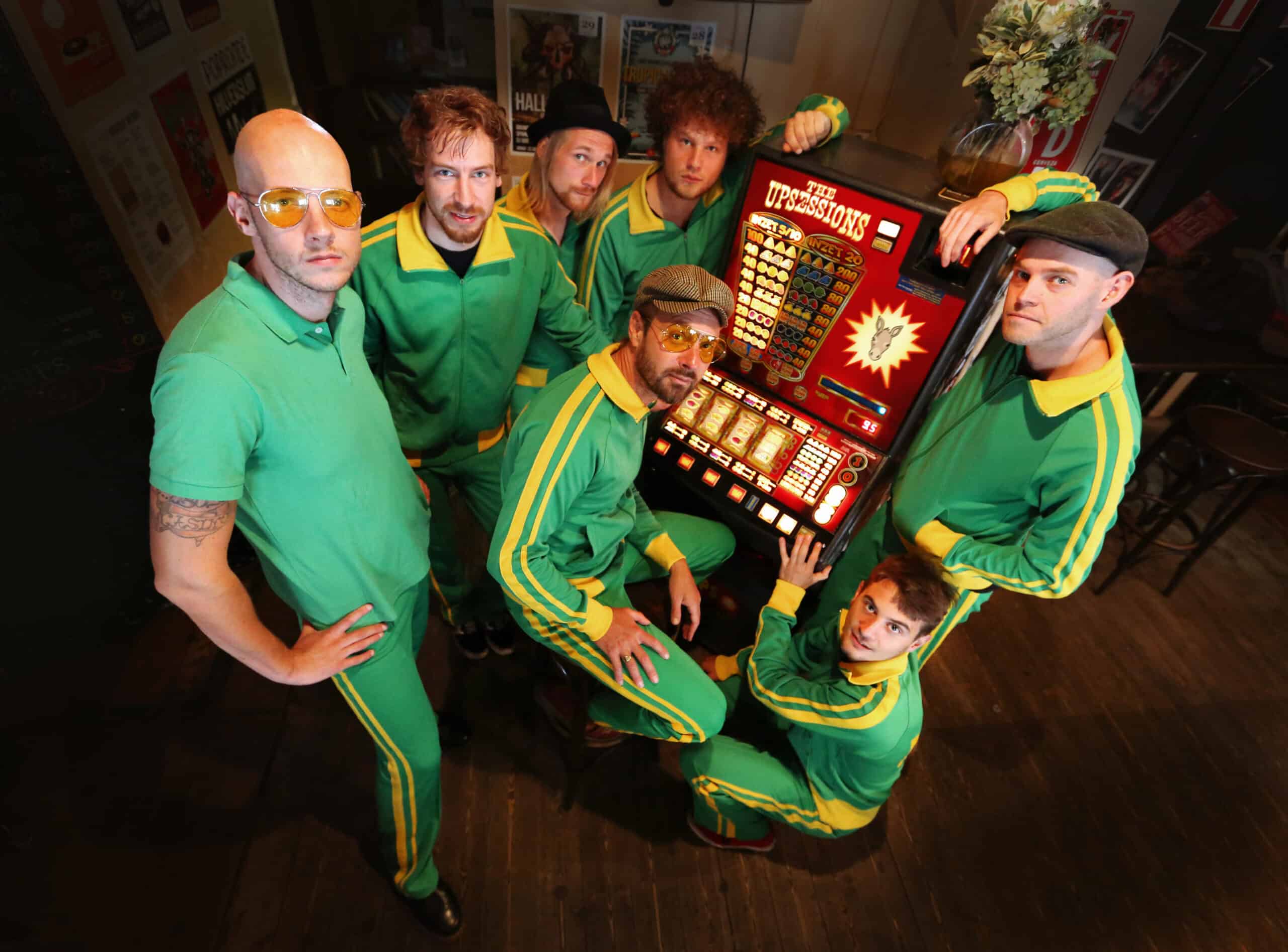
The funny thing is, that bands automatically get pushed to the scene, but if we play festivals in Holland for ‚regular‘ people, they like it as well. Weve done a lot of big audiences here, for all kinds of people. And they love it and dance as well. So I think it’s important for bands to be in the scene, but also show themselves outside of it. I totally don’t understand the ‚underground‘ feel of the music; everybody can dance to ska and reggae, especially if the bands wear green/yellow track suits!

Do you notice differences between audiences at reggae or ska shows and those at punk concerts? In what ways are those scenes similar, and where do they differ?
It depends, but in most of the places we play it’s the same audience. For some reason oi & punk mix up with old school reggae & ska for some reason. Especially in Basque country & Catalunya we did some Pioneers shows for punk audiences. The rest of the line up was way louder then what we did.
Do you think subcultures like skinheads, mods, or rude boys still play an important role in keeping this music alive?
Oh yeah, as said before, without skinheads, mods & rudeboys the Upsessions would never have survived. They are the reason we exist.
Do you think music with Jamaican roots still has a chance to break into the broader musical landscape today — for example into radio or larger festival lineups?
If the goal of a festival is making money, then they leave Jamaican music out of the line up. If the goal of the festival is to bring culture, the line up is diverse. I wrote a song and recorded it with Monty Neysmith. It was called ‚Reggae Christmas‘. It was out for 1 week and it got placed in a big commercial in the USA. It was exactly the tune they were looking for. Meaning to say; Reggae will never die, but for some people it’s just „nice feelgood barbecue music“ without having any special feelings for the music and the groove.
Or do you think a more natural path might be collaboration with bands from related genres, such as contemporary soul or rhythm & blues projects?
Well, for me personally, i’m not looking for bigger audiences. I’m super happy with what we have. I can write, record & play the music I love. That’s what I do it for. So I’m not really into collabs with other music styles.
Do you see certain countries in Europe where this music has particularly strong roots today? For example, I’ve always had the feeling that Germany created a wave of interest around the Grover label some years ago.
Oh yeah, Germany still is the place to go for us. We have a great audience there and Germany has got so many nice ska & reggae festivals like This is ska, Freedom sounds and the triple Mainz festivals.
Spain also seems to have a strong scene around The Liquidator label and bands like Los Granadians or The Pepper Pots. Do you follow those scenes?
Yes, we met those bands on tour several times. Los Granadians are so good! In november we will go on a 3 week tour through Spain, France, Basque country, Catalunya and Portugal. So let’s see how the scene is there!
How do you see the scene in the United States, where long-running projects like The Slackers or The Aggrolites have built strong followings?
I heard it goes up and down. Good stories and bad stories from European bands touring the US. I once played the SuperNova festival in the USA with Boss Capone & Patsy. That was so amazing! I felt like a mini popstar:) after the show many people came up to me, wanting to take pictures, signing their albums and telling me they were big fans of The Upsessions.
Of course a tour in the US is on my list, but I know it’s hard to go there, especially in this politically tough times. And regarding The Slackers and The Aggrolites; maximum respect to what these guys have built up!
What about the rest of the world? Have you discovered any interesting bands or projects outside Europe and the US in recent years?
Absolutely, I totally love the Travelers Allstars from Mexico. What they do, and the way they do it. Sometimes there’s something coming up out of nowhere. And these guys do that.
Which era in the development of Jamaican music is the most important for you personally? Is it the ska years, the rocksteady period, or early reggae?
It absolutely the 68-71 period. So much has been recorded in these years. I once heard that during those years there were only a couple of tape decks on the island, while some many songs were recorded. There should have been a tape recorder running every minute of the day and night. But next to that I love the ska years before and the early roots and dub reggae coming in the years after.
Which artists, producers, or studios would you name as your biggest inspirations?
Pfew. That’s a lot. But here we go: The Pioneers, Desmond Dekker, Symarip, Prince Buster, Derrick Morgan, Laurel Aitken, Lee Perry, The Upsetters, early Bob Marley, The Melodians, Dice the Boss, King Stitt, Uroy, Iroy, Prince Jammy.
Are there any lesser-known recordings or artists you would recommend to people who want to explore Jamaican music more deeply?
For me, the album Reggae Fire Beat by King Stitt was really orgasmic. The sound, instruments, way of playing, production, King Sttt’s voice. It’s so good! But also Long Shot by The Pioneers and Love me forever almost make me cry.

How do you see the third wave of ska from the 1990s, when ska was mixed with punk, pop, or even hardcore?
It was revelation during that time. I was young and I mostly hated the music on the TV/Radio. And then suddenly I got a CD called Give em the Boot, a sampler from Hellcat bands. Besides that there was No Doubt, Green Day, a different sound appeared. It were the first steps into finding the music I love. It made me listen to 70’s punk and ska.
On one hand that wave brought ska to a much wider audience, but at the same time it also created many commercial hybrids. How do you view that development today with some distance?
Every little thing that brings ska & reggae to a wider audience, although its commercial, could be a trigger for people to find good music. Bands like Hepcat might have started because of that wave.
The whole touring thing brings some magic. Being on the road, exploring new cities and their people. Being on stage, seeing people that like what we do Knowing noone will become rich out of it, but we all do it because we love it. Its really important for us.
Do you notice big differences between audiences in different countries when it comes to reggae or ska shows?
Not really. It seems people in the ska/reggae are nice, helphlful and kind everywhere. I sometimes wish the whole world was like the ska & reggae scene. People are in the scene because they are able to love, because they love music. And when you’re able to love, you make the world a nice place! ( Do I sound like a guru here?)
Do you have a particular concert or tour that was especially memorable for you?
I mostly remember the tiny clubs or the shows that were not attended so well. Having only 12 people in, but ending up as a great party. Or 15 hooligans that didnt let us leave the stage by creating a fence with their bodies together ( in a funny way).
You recently released a new album that features a collaboration with Monty Neysmith from Symarip. How did that collaboration come about, and what was it like working with someone who is part of the history of this music?
Two years ago my label (Aggrobeat) asked me to write & produce a reggae Christmas song with Monty on vocals.i wrote Reggae Reggae Christmas, sent it to Monty and it turned out really really well.
When I’m about to meet them, I always still have that SantaClaus feeling before meeting someone ‚important‘. But afterwards it feels like having a new friend.
The album is also inspired by the aesthetics of spaghetti westerns, something that occasionally appeared in classic reggae recordings as well. How did the idea of reviving that theme come to you?
The idea of a Western themed album for The Upsessions was always in my mind. But when I met Monty, saw him, I already knew I wanted his face on the cover. And when I had that cover in mind, it was easy to come up with songs. I wrote Sherrif Double Gun first, and I knew that was going to be the title track. And Monty would be that sherrif coming to town to kill someone.
We already recorded a lot of Western themed songs on other albums. I was always inspired by the combi reggae & Western. I could produce another 10 albums with that theme.
To finish, I’d like to ask for a personal tip: could you name five songs by contemporary bands that really impressed you in recent years? What do you like about them, and why should people check them out?
I hope The Moon Invaders are contemporary enough, but they are always in my list. The album Breakin‘ Free is still such a gem. So well played, great compositions, just a band where everything falls together.
The songs True & Big Love and Turn Off Your Television by the Two Tone Club are timeless ska hits.
Also check out Jim Murple Memorial from France. I saw them 10 years ago for the last time and will see them in june 2026 again: their approach to ska music is so lovely; double bass, a great drummer, lovely band sound.
The last words are yours. Is there anything you’d like to say that I didn’t ask about? The floor is yours.
Thanks for Tighten Up Zine! These contributions like this keep the scene together. Its really important. And your questions were great, I remembered a lot of things I thought I already forgotten.
Thanks for having me!
DISCOGRAPHY:
The Basement Brothers Feat. The Kitchenettes / The Upsessions – You Pick My Love / Yahamutsu EP (Rudeattack Records, 2006)
The New Heavyweight Champion LP (Moon Ska World, 2006)
The Chambermaid / Hold Your Whining EP (Conquering Ruler Records., 2007)
The Upsessions / The Fascinators – The Funky Shark / Bird Rok / 1001 Arabian Nights EP(Funky Shark Records, 2009)
Beat You Reggae LP (Grover Records, 2009)
Below The Belt LP (Grover Records, 2011)
Shake It! LP (Grover Records, 2014)
10th Anniversary EP(Grover Records, 2016)
This Is The Upsessions LP (Grover Records, 2016)
The Moon Invaders / The Upsessions – The Moon Invaders Vs The Upsessions EP (Badasonic Records, 2022)
Reggae Fever EP (Guerrero Records, 2022)
The Prince Of Rudeness Featuring The Upsessions / The Rocksteady Conspiracy Featuring Boss Capone – What A Big Thing / Trouble And Danger EP (Aggrobeat, 2023)
Boss Capone And PatsyFeaturing Tommy Tornado & The Upsessions – I Am The King EP (The Wishful Thinking, 2023)
Boss Capone And Patsy Featuring Tommy Tornado & The Upsessions – Kings And Queens LP (Aggrobeat, 2023)
The Upsessions And Monty Neysmith – Sheriff Double Gun LP (Aggrobeat, 2026)
INSTAGRAM: https://1url.cz/Qeere
FACEBOOK: https://1url.cz/KeBvQ
AGGROBEAT BANDCAMP: https://1url.cz/YeBvo
NEW LP AT AGGROBEAT SHOP: https://1url.cz/keBvH