SHAM 69: If the Kids Are United… They Will Never Be Divided!
The story of a band that created the soundtrack for the streets, factories, housing estates, and football terraces..
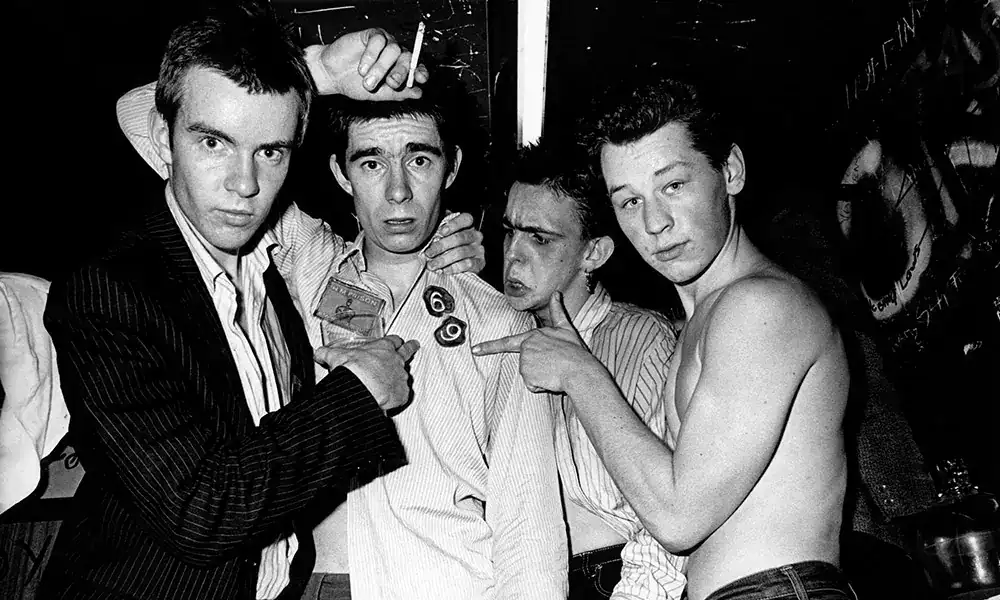
Title photo: Erica Echenberg/Redferns
Sham 69 became a subcultural legend and an inspiration, but as with every legend, their existence and work are often shrouded in fragmented information or repeated clichés. This article attempts to piece together the collected facts into a more vivid picture that captures the band’s music, its genesis, and at the same time the context of the era. Sham 69 were, and still are, a band that didn’t play for critics but for the people. This article is our attempt to trace their history, music, lyrics, and influence on two subcultures that the media often portrayed as enemies — punks and skinheads — who were united by a loud chorus: If the Kids Are United.
Sham 69 – Kids United from Hersham
Introduction
At the end of the 1970s, punk swept across Britain like a hurricane – but while the Sex Pistols provoked the establishment and The Clash experimented with reggae and political manifestos, in a neglected suburb southeast of London, a band was born that wanted to speak to ordinary people. Sham 69 weren’t art school students nor did they try to become fashion icons. They were kids from the streets, from an environment where football was played in parking lots, bar fights were a regular part of weekends, and the horizon of life often ended at the fence of the local industrial estate.
Frontman Jimmy Pursey had a clear goal – to create a band that people like him would listen to: workers, apprentices, street kids, skinheads, and punks. He believed that music could bring together people who met daily in the pub, on the construction site, or on the terraces. Their simple, catchy songs, full of football-influenced chanting choruses, quickly became anthems for the youth with no future, regardless of style or background.
Sham 69 stood at the crossroads of punk and what later came to be known as Oi! – street punk music with an emphasis on the working class, football culture, and collective experience. Even though the term Oi! wasn’t used back then, their influence on this subgenre is, in hindsight, fundamental. Sham 69’s lyrics often drew on personal experience: “Borstal Breakout” told the story of escaping from a juvenile detention center, “If the Kids Are United” was a manifesto of youth unity across styles, “Hurry Up Harry” celebrated pub nights and friendship, and “Angels with Dirty Faces” was a tribute to a frustrated generation of young delinquents.
But with popularity came problems. Their shows began attracting violent troublemakers, football hooligans, and political extremists. The band unwillingly found themselves at the center of a conflict between left-wing and right-wing skinheads, which ultimately had a major impact on their career. Nevertheless – or perhaps precisely because of it – their legacy remains alive today, whether on vinyl, in stadiums, or as inspiration for streetpunk bands worldwide.
Formation and Early Years (1976–1977)
It was 1976 in Hersham, an unremarkable town in Surrey, southwest of London, when a group of local lads decided to form a band. Jimmy Pursey (vocals), Neil Harris (guitar), John Goode (guitar), Albie Slider (bass), and Billy Bostick (drums) knew each other from the area and started playing together in garages and pubs. The name Sham 69 was inspired by graffiti on a wall – a remnant of the slogan “Walton & Hersham ‘69,” commemorating a local football victory.*
*Sham 69 got their name from graffiti remnants in the area, referencing the time when Walton and Hersham Football Club secured the Athenian League title in 1969. Wiki: https://en.wikipedia.org/wiki/Hersham
From the beginning, Sham 69 were different from other London punk bands. They didn’t chase big-mouthed media provocation but wanted to speak the straightforward language of the working class. Their first gigs were played in small clubs and school halls, often in front of audiences made up of local skinheads, mods, and punks. Musically, they relied on simplicity – three chords, fast tempo, and a catchy chorus that the whole crowd could shout along with the band.
In 1977, they released their debut single “I Don’t Wanna” on Step Forward Records – a small label run by Miles Copeland (later the manager of The Police). The song was pure punk protest, with Pursey rejecting being part of the system and bowing to authority. From today’s perspective, it’s a quintessential early punk single. The B-side featured the tracks “Ulster” and “Red London.”
I DON’T WANNA EP
The raw, three-chord blast quickly caught the attention of John Peel, who invited them to record a session for BBC Radio 1. This session included an early version of “Borstal Breakout,” its theme stemming from Pursey’s fascination with the lives of young offenders and the idea of escaping from youth institutions. The raw energy, absence of rock star posturing, and authentic lyrics instantly set Sham 69 apart from the “more artificial” punk bands.
A major label, Polydor Records, took notice of the band thanks to their success on the independent scene. Around that time, the lineup was changing, with Dave Tregunna taking over on bass, and the band began working on their debut.
Breakthrough Period (1978–1979)
1978 was the moment when Sham 69 transformed from a garage band into the loud voice of the British working class. Under Polydor Records, they released two essential albums within a single year – Tell Us the Truth and That’s Life. Both clearly showed that Sham 69 were not “punk for avant-garde artists” but music for the pub, the street, and the terraces.
Tell Us the Truth (February 1978)
The debut album is a curiosity in itself – half of the record consists of live recordings, the other half of studio tracks. Jimmy Pursey wanted to show how the band sounded “for real,” with the audience’s roar and the unpolished chaos of a gig. At the same time, it was a statement against the criticism that punk lost its rawness on records and drifted away from its original rebellious spirit. From this also came the occasionally used term “realpunk.”
The album was recorded with the lineup Jimmy Pursey – vocals, Dave Parson – guitar, Dave Tregunna – bass, and Mark Cain – drums. The record features a fast pace, simple chords, and choruses made for sing-alongs. The lyrics touch on themes of rebellion against authority, riots in Northern Ireland, the case of unjustly convicted George Davis, and the juvenile delinquent anthem “Borstal Breakout.”
That’s Life (November 1978)
The second record is considered a concept album – it follows an ordinary day in the life of a typical young working-class Englishman. Here, the band combines the rawness of punk with storytelling that carries an almost theatrical quality. Between the tracks are spoken interludes and sound effects, allowing the listener to hear “the whole story.” Musically, the album is more diverse – some songs are slower and more melodic, yet still charged with unmistakable terrace energy. The sound is cleaner than on the debut, which thrilled some fans and irritated others.
Thematically, the songs deal with frustration towards parents and the older generation, the acceptance of a harsh life, the struggle of daily survival in bleak financial circumstances, and another anthem of troubled youth, “Angels With Dirty Faces.” The album also reveals the band’s softer side, as in the song “Everybody’s Right Everybody’s Wrong.”
The Adventures of the Hersham Boys (1979)
The third album marked a major turning point – Sham 69 became a chart band. The sound shifted toward stadium rock – big choruses, more melodic guitars, and more accessible arrangements. At the same time, it also moved closer to what punk had originally set itself against. The commercial success was the greatest of all their records, but the album also received significant criticism, and problems with violence and extremist groups in the audience continued to escalate at concerts.
The title track “Hersham Boys” is a nostalgic tribute to the place they came from. Although the lyrics speak of a tough life and bleak backstreets, the chorus has an infectious, almost pop-like melody. The album also features what is probably the band’s biggest hit, “If the Kids Are United” – a call for unity among young people against divisive politics and media manipulation.
By the end of 1979, the situation had grown tense. Pursey was becoming tired of having to deal with fights and political provocations on stage instead of just playing music. Still, this era left behind three albums that are to this day considered the cornerstones of street punk and a source of inspiration for the first wave of Oi! bands.
The Game (1980) and the End of the Classic Era of Sham 69
The fourth studio album The Game, released in 1980, marks a special moment for Sham 69 – on the one hand, it is a musically mature record with more varied arrangements, but on the other hand, the band was deeply divided internally and increasingly associated outwardly with problems at their concerts. In the UK, the album was once again released on the Polydor label. It has a cleaner sound, with an emphasis on melody and layered guitars, less raw than the first three albums.
The Game contains a mix of social commentary, political themes, and more personal confessions. Musically, it reflects the influence of the mod revival and even a touch of new wave – the speed of punk blended with catchier choruses, occasional use of keyboards, and more melodic guitar lines.
Sham 69 were increasingly targeted by media attention due to violent clashes among fans, particularly because of the presence of far-right groups at their shows. Pursey’s frustration was growing – he wanted to make music that united people, not serve as an excuse for brawls. He repeatedly interrupted concerts and threw out skinheads who gave Nazi salutes or attacked other fans.
At the end of 1980, Jimmy Pursey announced his departure from the band. Sham 69 split up for several years, and Pursey briefly teamed up with Dave Tregunna (Sham 69’s bassist), Paul Cook, and Steve Jones (Sex Pistols) in the project Sham Pistols, which quickly came to an end.
Thus closed the first era of Sham 69 (1976–1980) – a period during which the band released four albums, defined the sound of street punk, and became a symbol of the voice of Britain’s working-class youth.
Return to the Scene: 1988–1992
After eight years apart, Jimmy Pursey and Dave Parsons decided to revive the name Sham 69. Punk at that time was going through a transformation – Oi! had established itself as an independent scene, hardcore punk dominated in the U.S., and new bands were emerging in Britain, drawing inspiration from the original wave. Sham 69 wanted to prove they still had something to say. The band moved away from raw street punk toward music closer to rock. The lyrics were less about football, less pub singalongs, and more socio-political, often with a global reach. Pursey sought to reflect the transformed post–Cold War world, while Parsons kept the guitar foundation rooted in punk. During this era, the following albums were released.
Volunteer (1988)
Released in the UK on Polydor, produced by Jimmy Pursey and Dave Parsons. The album has a much cleaner, more rock-oriented sound than the early recordings – less rough, with more mid-tempo tracks and elaborate arrangements. The themes shifted from street stories to broader social commentary.
Information Libre (1991)
This album marked a significant move toward alternative rock and even touches of the early ’90s indie sound. It was released on Legacy Records.
The A Files (1992)
This album was an experiment – a mix of punk, post-punk, and electronic effects. Fans of the old era were divided – some appreciated the boldness, while others considered the record a misstep. It was released on Dojo Records.
Revival and the Era of Two Sham 69 (2006–present)
After several years of sporadic returns to the stage, at the beginning of the new millennium Sham 69 became active once again. The audience was a mix of old fans, young skinheads, and people from the new punk wave. But in 2006 a major turning point occurred – two versions of Sham 69 emerged.
Leading up to this was the period from 2000 to 2005, when the band was releasing live and compilation material (Live at CBGB’s, Greatest Hits Live). They put out several new singles that stuck to the original street punk sound, but with a more modern mix. Pursey publicly criticized violence at punk events and tried to unite different subcultures.
Jimmy Pursey left in 2006 after disagreements with the other members regarding the direction of the band.In October 2006, the NME published a statement by Parsons that read: “Sham 69 have left Jimmy Pursey on the eve of their 30th anniversary. The band had become increasingly fed up with Jimmy’s lack of interest in playing live and continually letting down both promoters and fans by pulling out of gigs at the last moment.”
Since 2006, two versions of the band have existed. The first Sham 69 with original singer Jimmy Pursey – the original voice of the band. Their concerts were less frequent, sometimes chaotic, and the band released hardly any new material. Fans often criticized Pursey for living off past glory. The second version was with singer Tim V (Tim V Shepherd). From 2007 to 2011 Dave Parsons and Ian Whitewood performed in this version. This lineup was more active: they toured extensively across Europe and beyond. They also recorded new albums, for example Western Culture (2007). Released on SOS Records, the cover was shot by Gavin Watson. It marked a return to raw punk with fast tempos. Thematically it included criticism of Western materialism, determination to stand one’s ground despite societal pressure, as well as frustration and rebellion against the establishment. In this way, it continued the original spirit of the band. For many fans, this was the “livelier” and more authentic continuation of Sham 69 compared to Pursey’s version.
Both versions continued to perform and release live albums, often from the same festivals, but under their respective labels, frequently even with similar setlists, differing only in lineup. Tim V’s version stuck closer to fast, hooligan-style street punk, aimed at an Oi! audience and festivals like Rebellion or Punk & Disorderly. Pursey’s version leaned toward music with a wider range of genres, sometimes including elements of indie rock, with greater emphasis on lyrics and political depth.
Both camps visually maintained a strong reference to the band’s classic 1970s era: block typography, black-and-white photos, shots of crowds and street scenes. Gavin Watson (subculture photographer) collaborated repeatedly with Parsons’s version. Pursey often used his own photos and collages.
The Third Version of Sham 69 (from 2011)
In 2011 another variant appeared: Sham 69 with Jimmy Pursey, Dave Tregunna, and Dave Parsons – almost the original lineup from the late 70s/early 80s.
For a time, three versions of Sham 69 coexisted: Pursey’s band, the Tim V lineup, and the “original reunion.” This, of course, created considerable confusion within the community.
Summary of Sham 69’s Musical Development (1976–present)
Sham 69 have gone through an interesting evolution since their founding in Hersham in 1976. From their beginnings in pub punk influenced by Dr. Feelgood and the Sex Pistols, they quickly became one of the main pillars of British street punk and Oi!. Their music combined rawness and simplicity with football terrace energy – choruses sung by the entire crowd became their trademark.
1976–1979 – The First Wave
In this era the band produced raw, catchy punk with simple guitar riffs. Lyrics focused on everyday working-class life, street fights, football, unemployment, and youth frustration. Biggest hits: “If the Kids Are United,” “Hurry Up Harry,” “Borstal Breakout.”
1980–1983 – Politicization and Experimentation
During this period lyrics placed greater emphasis on social commentary (“Hersham Boys,” “Tell Us the Truth”). The sound became more elaborate, at times with reggae influences and slower tempos. The band broke up due to internal disputes and violence at shows.
1988–1992 – Return and a More Rock-Oriented Sound
This period saw a comeback with albums Volunteer, Information Libre, The A Files. Musically, this meant less raw punk and more rock and alternative influences. Themes with a more global scope appeared (politics, media, gentrification).
2000–2005 – Occasional Returns
The band released live albums and appeared at festivals. They reconnected with fans of the original scene as well as with younger punks.
2006–present – Two/Three Versions of Sham 69
The Tim V version is geared more toward Oi! and punk audiences. Pursey’s version is more stylistically diverse and politically oriented. Both versions maintain loyal fanbases and perform at international punk festivals. Later, a third version was added, presented as the original lineup.
Influence on Skinhead and Punk Subculture
Sham 69 are crucial for understanding the connection between punk and skinheads. Their simple, anthem-like choruses and working-class lyrics attracted audiences from both scenes. In the 1970s they played a major role in popularizing the skinhead style in music. The band took a stand against fascism and extremism. Their concerts were accessible, close to the people – no barriers between band and audience, embodying what we would today call a DIY ethic.
Sham 69 belong to the most important bands that laid the foundations of Oi! punk – alongside Angelic Upstarts, Cockney Rejects, and The 4-Skins. Their straightforward lyrics about working-class life, football, work, and the streets inspired hundreds of bands worldwide.
Even today, if you want to understand what British punk sounded like in the late 70s and early 80s outside of artistic London, just put on If the Kids Are United or Hersham Boys – and you are instantly transported into a sweaty, loud, and slightly dangerous pub gig somewhere in Surrey.