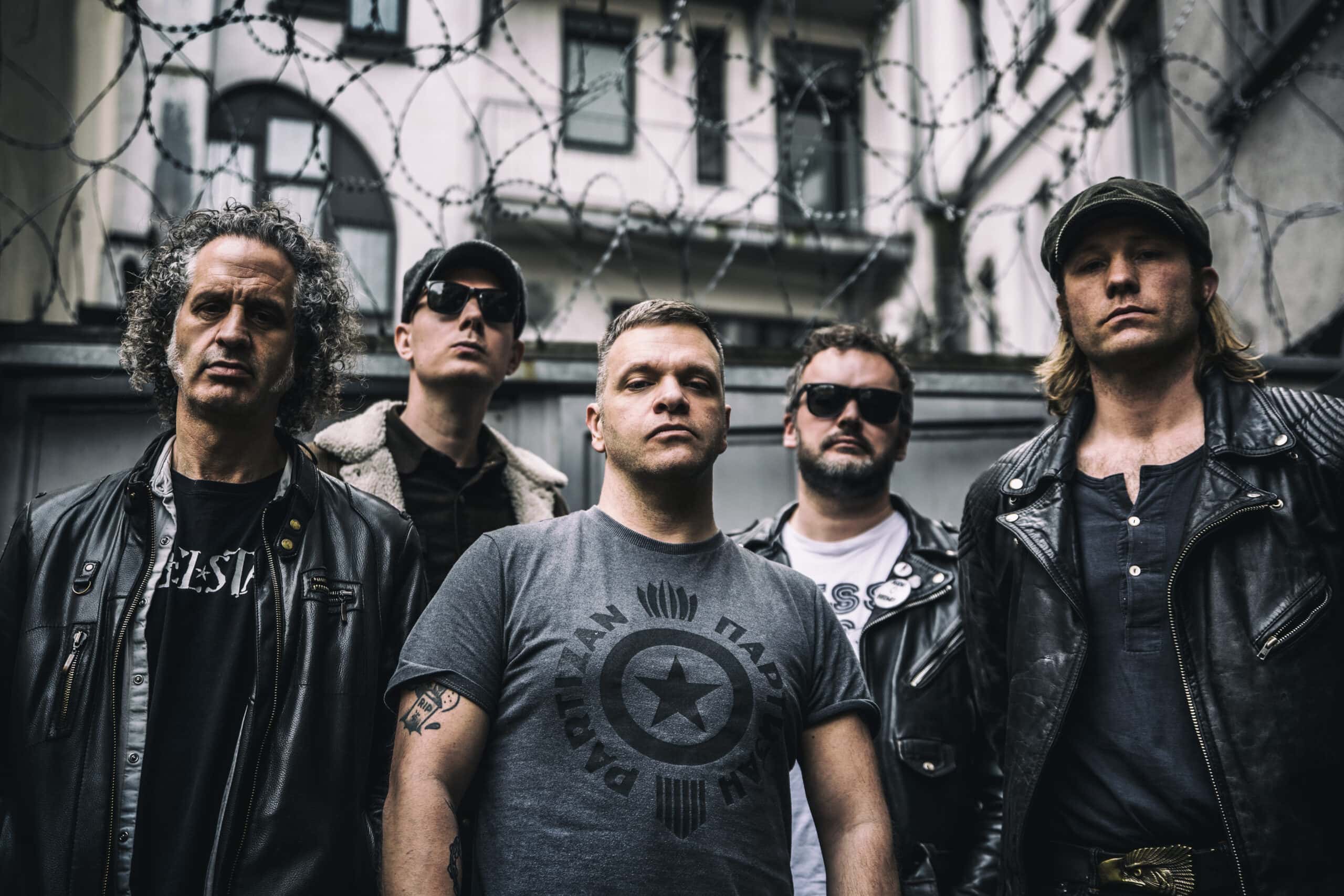
Savage Beat blend a wide range of influences in their music, drawing from styles such as punk, rock’n’roll, and Oi!. Their sound is anything but boring — on the contrary, they can lead the listener straight through the defense like a Ballon d’Or winner in top form. They’ve been active on the scene for quite some time and are now releasing a brand-new album.
We spoke with Rogier and Gilian about what shaped them, how they see today’s music world and the entire interview naturally revolves around their sense of humor and their distinctive outlook on life.
This likable crew has delivered an album that will undoubtedly rank among the year’s best — and we’re only just opening March. Ladies and gentlemen, this is Savage Beat from Amsterdam.

Savage Beat’s music combines influences of rock’n’roll, glam, garage rock, Oi!, and ’70s American punk. What was the original plan when the band was formed, and how much has your vision regarding the band’s musical direction changed over time?
Rogier: The original plan was to do a band influenced by 70ies punk and Oi! with a dash of rock and roll thrown in for good measure. We started adding more rock and roll and a little bit of glam to the mix, but in general the ideas behind the music remain more or less the same.
What bands were your members involved in before Savage Beat? Have you managed to keep a stable lineup, or have there been changes throughout the band’s existence?
Rogier: Our members have a lot of experience in a lot of different bands such as The Shining, The Works, The Anomalys, Heros & Zeros, The Phantom Four, Armistice, Wanderlust, The Tony Slug Experience and tons more. We have had a lot of guitarists in the band over the years. However, the line-up has been quite stable over the past three years.
I’m really curious how you got into music and what influenced you. What were the key moments that shaped you, and which bands and styles influenced you on your musical journey? Which records changed your life when you were teenagers?
Rogier: We all grew up in the 80ies and 90ies on a steady diet of punk, hardcore, Oi!, garage rock and rock and roll. For me (Rogier) the biggest key moment was when my father gave me his record collection which consisted of around 200 punk records. These records became more or less the basis for our sound. I mean how can you go wrong with The Saints, Ramones, Motorhead, The Clash, Sex Pistols, Speedtwins, Angelic Upstarts, Stiff Little Fingers, Stooges, MC5 and so on. It’s the best music ever made.
Gilian: Seeing my school mate, who I cheated off during math class, suddenly playing bass in a hardcore band at night and jumping off the stage crowdsurfing while playing in a moshpit when I was 14 was very influential. That and hearing Minor Threat for the first time were definitely game changers. A few years later it was going to a garage rock ‘n roll dive bar called The Diepte and learning about all things punk before punk. This made me broaden my musical horizon and I started digging back all the way back to country and blues music.
What’s your relationship with punk, Oi!, and hardcore as musical influences? How do you perceive this part of the underground scene, and how has it influenced you throughout your life?
Rogier: As mentioned before all of us grew up in the punk/hardcore/oi scene and we are still actively participating in it as well. This shit’s in our blood. I met my wife through punk, land a teaching job through people in the scene… DIY ethics taught us to go out there and do stuff and it has taken us around the world over the last 20 odd years. Couldnt have done it without the underground.

Do you have any surprising influences outside of Oi!/punk (reggae, soul, hardcore, metal, anything else…)? What do you listen to in the van while on tour?
Rogier: All sorts of stuff. Sometimes a little metal, blues, soul, retarded 90ies house. You name it.
Gilian: I play in another band called The Phantom Four and we play a mix of instrumental surf, cumbia, middle eastern folk, afrobeat music. I’m also a vinyl DJ and besides all the rock ‘n roll / punk stuff II also spin a lot of tropical music like ska, rocksteady, roots reggae, but also soul, rhythm ‘n blues and country.
I feel like Oi! still belongs to your main musical roots. What does Oi! mean to you today as a subculture? Is it primarily about the music, the community, identity, or something else?
Rogier: It certainly has a place in our sound. I mean, it’s not that we’re skinheads but we have a lot of friends in that scene and we do like a nice pair of docs of a fancy polo sometimes. We’re basically a bunch of herberts by now having fun playing out and drinking with all the great people in the bands we play with and the people we meet on tour. It’s so great to meet people around the world who share the same ideals and taste. I can almost always see friends wherever I go. And that goes for all of us. I mean. Seeing our singer Marko’s holiday pictures drinking with Jamie of Tear Up is just funny as shit, but it’s also a result of being a part of this thing.
Has punk/Oi! fundamentally changed you on a personal level? Is it an attitude and a way of doing things for you, or just a music style? How important is DIY ethics to you?
Rogier: Very. Go out and do it. Start a band, a label, a fanzine, book a show, visit shows when you can, buy records, merch. If we want this to go on we gotta support each other. It made me who i am today and i wouldn’t have it any other way.
Throughout your existence, you’ve collaborated with several significant labels, such as Longshot Music, Crossbar Records, Rebellion Records, TKO Records, and Wap Shoo Wap (the label run by your guitarist Gilian). How important is working with a label to you, and what are your experiences with these labels?
Rogier: It’s a great honour for us we have gotten to work with these labels and call people like Mike Longshot or Wouter Rebellion or Mark Rainy friends. They have made our band more known and went out of their way to release our stuff because they thought it was good. Espically Mike and Wouter have been there from the start and we can’t thank them enough. These labels are of great importance in keeping our scene alive and active so working with them is great. Our experience with all those people has been nothing but great. It is hard work and that sometimes goes unnoticed. Our new LP is out on Longshot, Wap Shoo Wap Records and Mendeku Diskak. Unfortunately, Mendeku is on hiatus because Eduard needed a break. It’s a tough job and we gotta celebrate the people doing it.
Gilian: I started Wap Shoo Wap Records to give something back to the scene after playing and touring in bands myself all around the world for the past 25 years. I had some of the best times of my life during that period, A large part of why this was possible, was because of exposure through independent record labels that I was on with by bands at the time. With Wap Shoo Wap Records we primarily focus on releasing young and upcoming local punk and rock ‘n roll artists and promote their music to help them get out there to go and play as much as they can. I think it’s important to keep the scene alive this way, because we’re all aging and if there’s no new young blood, the scene will slowly die.
Does the vinyl revival of recent years have the potential to attract new fans, or is it mainly a matter for older collectors? Do you think aspects of the physical format (like cover artwork, printed lyrics, etc.) are an important part of a record?
Gilian: There was definitely a vinyl boom during Covid and that’s exactly when I started my record label. I guess that was good timing by accident, but since then I can already see a bit of stagnation. It’s a tricky market, with rising production prices and inflation, but we try to keep prices as low as possible, but it can be quite an investment for young kids. But still I think selling vinyl is very important for bands to be able to get some money besides t-shirts and (usually) low gig fees. Beside the fact that I think the format is cool as hell and the only way to DJ in my opinion, I really think it’s a way to survive for underground bands. Because any income from streaming services sure as hell don’t pay the rent of our rehearsal room.
How important is it for you to belong to the underground and to do things your own way? Is that a crucial part of your identity, or not necessarily the most essential thing?
Rogier: We come from the underground and we belong to it. Sometimes we play bigger shows, sometimes a bar or something. Both are great to do. We belong underground though.
Gilian: We don’t compromise our sound in search for more attention. Trends come and go. A few years ago it was egg-punk, now it’s Oi!, next year it might be something else. We’ll just keep on doing what we do: play rock ‘n roll.
Do you think it’s harder to maintain authenticity today when everything is instantly visible on social media? How has the digital era changed the approach of bands and fans toward music? What’s your relationship with digital platforms?
Gilian: I think social media is a necessary evil. I hate it, but as a band or record label you just have to be part of it I guess. I just see it as modern way of handing out flyers, putting a poster on a wall and or reading a zine, like we did back in the day. And I do have to say it’s sometimes easier to get connected with bookers and promoters abroad, like-minded bands or find out about some obscure, but really good garage-punk band in Micronesia. But other than that, it’s pure dogshit. Well, except for the funny cat memes.

In March, you’re releasing the album Bright Lights, Tall Shadows. How do you see it in the context of your development, and could you briefly introduce it to us?
Rogier: We’re very proud of the record. It’s got 10 songs and i suppose it’s the next logical step in our development. Gillian and David also wrote songs this time, so the sounds also changed a little here and there. I think that keeps things fresh. A song like The Side Hustle is a bit different, and it just adds to the flavour. So I’d sugget people dive into it and find out what they think of it.
Gilian: This is the first Savage Beat release I also wrote a couple of songs for since I joined the band. It had been over 10 years since I wrote a punk / rock ‘n roll song, so I was eager to get back at it. It’s a more varied album then previous releases maybe, but I think the signature Savage Beat sound rings through in all of them. The songs I write are maybe a bit more primitive than the band’s previous output and written with a bit of a “less is more” attitude. But I think all in all there’s a nice balance and it works well as a whole.
What is the main idea behind the new album — is it a personal statement, a commentary on the scene, or more a reflection of a specific stage in your life?
Rogier. It’s both personal and political at the same time. We’re not getting any younger, and doing this shit does take its toll on us. But we just won’t quit even if it sometimes is a bit hard on our livers or general state of being. On the other hand, there’s enough shit to be pissed about so in true punk fashion there’s a bunch of pissed off songs too.
Gilian: The album title and track “Bright Lightts, Tall Shadows” has a personal and a more broader world-view aspect. Through history the people in charge in the world have always acted like being the bringers of light with messianic esteem, but they usually bring a lot of misery upon a lot of people. On a personal level the highest highs, can come with some very low lows in my experience. The album cover is a photo of a main street in Amsterdam in the early 1970’s. I think that photo reflects this idea pretty good as well. Even though I wasn’t even born yet then, I look back at that period of my hometown and growing up here myself during the 80’s and 90’s with a sense of, maybe sometimes false, nostalgia. Because things in many ways have become better now, compared to then… but in some ways also worse.
Does the energy of the new record differ from your previous material in terms of lyrical themes? What topics or moments inspire you when writing lyrics?
Rogier: There’s enough shit to be pissed off about. Whether it’s Trump or my aching back… I’m furious all the same, haha.
Gilian: Rogier is very good at writing about those broader themes. I’d never be able to do that. I wrote the lyrics The Side Hustle on a very personal level. It was inspired by doing my record label next to my ‘real’ 9 to 5 job that pays the bills. It isn’t always easy and demands sacrificing a few things. But it’s all for the love of rock and roll in the end.
The new album is coming out at a time when Oi! and various genre mixes and fusions are highly visible again. Do you feel part of a new wave, or do you think you’re following your own path completely outside of trends?
Rogier: We’re mixing it up. Although we’ll promise to stay away of the new wave nonsense, we’re hearing more and more. We’ll stick to the first Blitz LP thank you…
Gilian: The Oi! craze is definitely at an all time high right now, but personally I don’t consider Savage Beat an Oi! band. There’s hints of it in the big sing-a-long choruses and the in-your-face energy and attitude of our songs, but we’re basically just a rock ‘n roll band. But we do share the stage with a lot of Oi! bands and I think it’s really cool that people who are a part of that scene pick up on our ‘street boogie’ as well.
What is your songwriting process like? Is it more of a collective effort, or do you have a leader who sets the direction while the others contribute their ideas?
Rogier: We have various songwriters. Usually someone brings a riff or a songs and we finish it in the studio. I usually write a lot of the lyrics but mostly is a group effort.
You recently released a great video for the song Unhinged. How important do you think visual presentation is for a band in the digital era? Do you think visuals and music videos play a crucial role today in reaching new fans?
Gilian: It’s the first true music video for Savage Beat after being a band for 10 years. In this day and age I think it surely helps to have some kind of visual representation of your music and I think director Rene Nuijens did a great job with that in this video. It can definitely play a role in reaching new fans and maybe getting booked for a bigger festivals. I’m a concert promoter myself and have been booking shows in the Amsterdam area for more than 10 years and it’s just easier to sell tickets when you’ve also got a cool music video to use to promote your show. Bookers at venues don’t always accept just a link to your album on Spotify nowadays as well.
You’re from Amsterdam, a major European city. How do you perceive its music scene? What are the key places for rock’n’roll there — clubs, bars, record stores, important meeting spots for musicians?
Gilian: The punk scene in Amsterdam in the late 90’s and early 2000s was booming. There was a squat and show on every corner basically. After a squatting ban and the scene basically age-ing, (old farts going to old farts play) suddenly Covid happened and a boom of new young punk bands exploded in The Netherlands. I think the scene over here is younger and bigger than anywhere else in Europe right now, which is pretty cool. Venue wise it’s a bit of a shit show unfortunately here in Amsterdam. There’s a serious lack of small to medium-sized venues or live music bars, because of on-going gentrification and stricter rules. But if you’re in town, be sure to check out these bars and venues: Occii, Skatecafe, Checkpoint Charlie, The Minds, Cafe Soundgarden and Maloe Melo. And in the city of Haarlem, just a stone’s throw away from Amsterdam, there’s a really cool venue called Slachthuis and a lively local scene. We’ve played there many times and it’s always great.
How do you balance music with regular working life? Is it difficult to combine playing in a band with everyday responsibilities?
Rogier: Jobs, kids, mortgages and all that stuff gets in the way of rock and roll but then again, we’re all older. We do what we can but no more month-long tours for me.
Which bands do you feel a close affinity with? Who are your go-to partners for touring or organizing joint events?
Rogier: we love bands like Crown Court, The Covids, Lion’s Law, Rixe, Squelette, No Brains, Claimed Choice, No Heart, Toy Tiger, Collaps, Killer Kin, Nashville Pussy, Nine Pound Hammer and tons more. We wish we’d have more time to play shows with all of ‘em but there is some stuff in the pipeline.
Do you have any pre-show rituals? Do you prefer club shows, or is festival energy and bigger stages more exciting for you?
Rogier: Nah, it’s all the same. Playing out is a lot of fun.
Gilian: Before a festival or club show we always do a 5-minute long group hug ending with us repeating our mantra “We Three Chord Disciples, Shall Bring The Boogie good” three times. Then it’s time for a quick massage by our personal Shiatsu massage therapist who goes with us everywhere on tour, followed by short yoga session. Just kidding of course. I usually have a few beers and then plug my guitar into my amp and say “let’s go”.

How do you perceive the current scene in the USA versus Europe? Do you see differences in mentality, energy, or approach?
Rogier: There’s a ton of great bands everywhere it seems. I think both contintents have a lot of great stuff going on and the scene seems more alive than before the pandemic. Lots of active labels, more records than ever.
Gilian: I think underground-wise European bands are much more on the radar in the US than ever before. I have the feeling it was always a bit more the other way around, say 20 years ago. I see it with my record label as well. More than a quarter of people who buy records from me were from the US until that orange goblin in the White House started started his tariff bullshit.
What bands are you listening to these days? Which projects have caught your attention in recent years or currently?
Rogier: Of the more recent stuff I love Claimed Choice, Collaps, Killer Kin, Automatic Lovers, Les Lullies, Fuck Fuck Fuck. Bad Terms, No Heart, Ultra Sect, Boss, Lost Legion, Crown Court, Castillo, Mess, The Dogs, the Detained, Buzzers, Slugger, The Covids, No Time, Mala Vista, Videoflip, Beton Arme, Puffer, Traumatizer, Angstmaler. Dodsrit, Exploator…the list is endless…
Gilian: There’s a really cool new local band that we’re gonna release on Wap Shoo Wap Records called Sick Shooters. It’s extremely catchy but raw garage rock ‘n roll. Their debut album “Super Sonic Rock Saga” will drop on March 19., so check it out!

Are today’s young fans different from those ten years ago? Is the new generation more open-minded, or more sensitive?
Rogier: I just see a lot of young people enjoying themselves the way the think is fun. Thats how it’s supposed to be.
Gilian: There’s maybe a bit more sensitivity or however you may call it, but it doesn’t bother me that much. The fact that the scene has become younger and more diverse is much more important to me than all the nitpicking.
Singer Marko has Balkan roots — has that influenced the band or its sound in any way? Do you have a special relationship with certain places around the world where you’ve played or where you have friends or fans?
Rogier: We love Madrid, Paris, Berlin, Vancouver, London, Essen, Amsterdam, Eindhoven, Belgrade, shit we love to go anywhere this shit will take us.
What do you enjoy most about the current scene — and what bothers you?
Rogier: I love that there’s young people again. Sometimes stuff gets too political, and people sometimes forget that they have more in common than differences. That bothers me sometimes. It’s a fucked-up world, why should we fight within the underground. Sheesh, preaching unity at 44…but there’s something to be said for setting aside differences and having each other’s back.
Gilian: What Rogier said. Sectarian bullshit never helped anybody. I think there’s a bigger, common enemy that seems to be growing in numbers all over the world. Let’s set aside all the bullshit and focus on that. Or else it’s game over.
After years on the scene, what keeps you motivated? What’s harder — staying together as a band, or staying true to yourself when things occasionally fall into routine?
Rogier: Music and adventure keep me motivated. I think we still are becoming better songwriters so why quit while we’re ahead.
Gilian: Personally, I think it’s harder to stay together as a band. When you’re young, it just seems so effortless and easy to do. Being older and having more responsibilities in life can distract from making music very quickly. But in a way I think it’s more focused now, because those hours that you do have in the rehearsal room, you better make em count.
When you look back one day, what would you like Savage Beat to be remembered for?
Rogier: I’d like Savage Beat to be remembered as a great band consisting of good people.
The last words are yours. Is there anything you’d like to say that I didn’t ask about? Your moment.
Both: Cheers Jara, keep up the good work! It’s zines like this making the underground world go round, so thank you for doing that.
Discography:
Tomorrow (Might Never Come) 7″ (Wap Shoo Wap Records 2023)
Instagram: https://1url.cz/Se1YJ
Facebook: https://1url.cz/de1Y1
Bandcamp: https://1url.cz/je1Yr