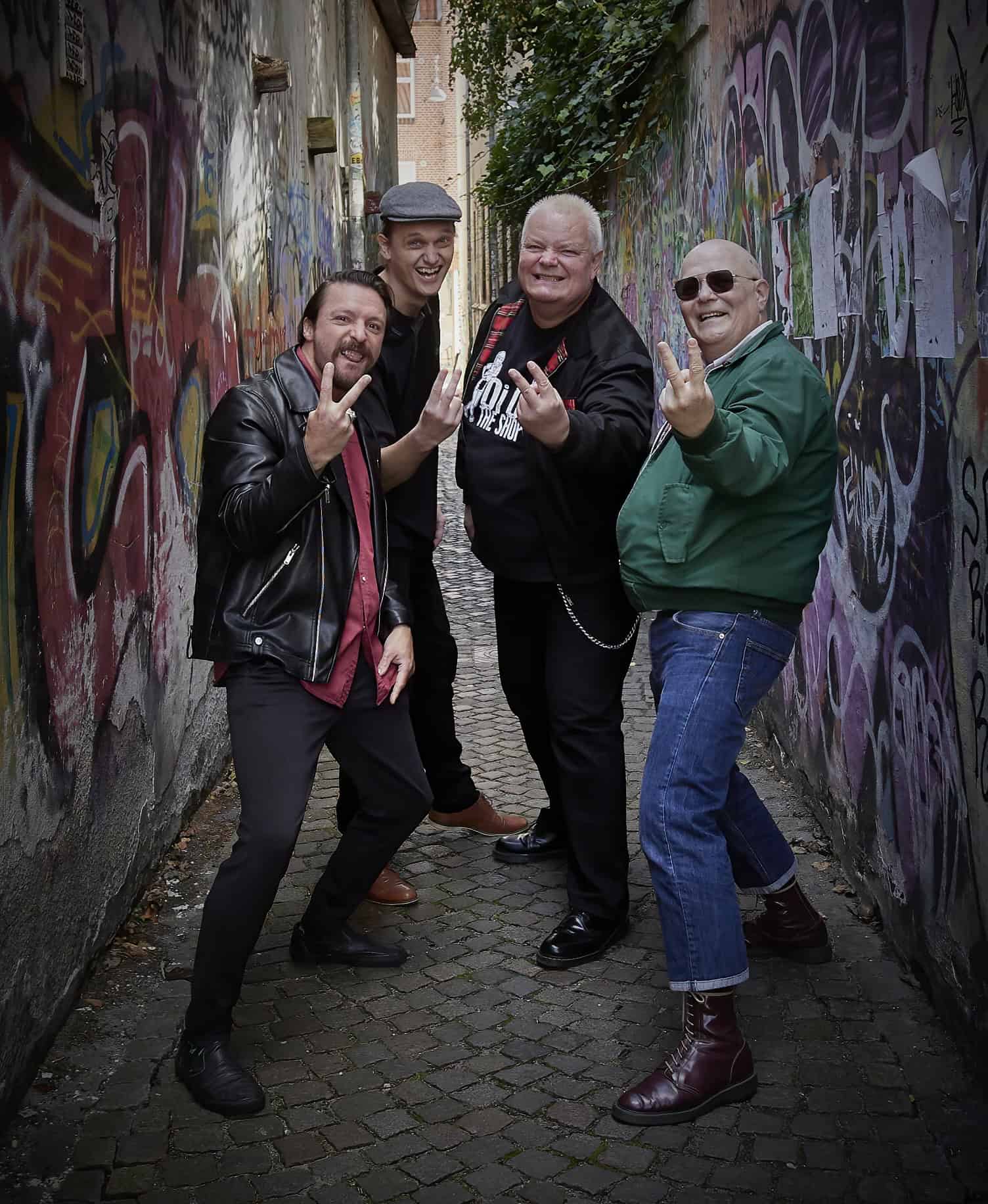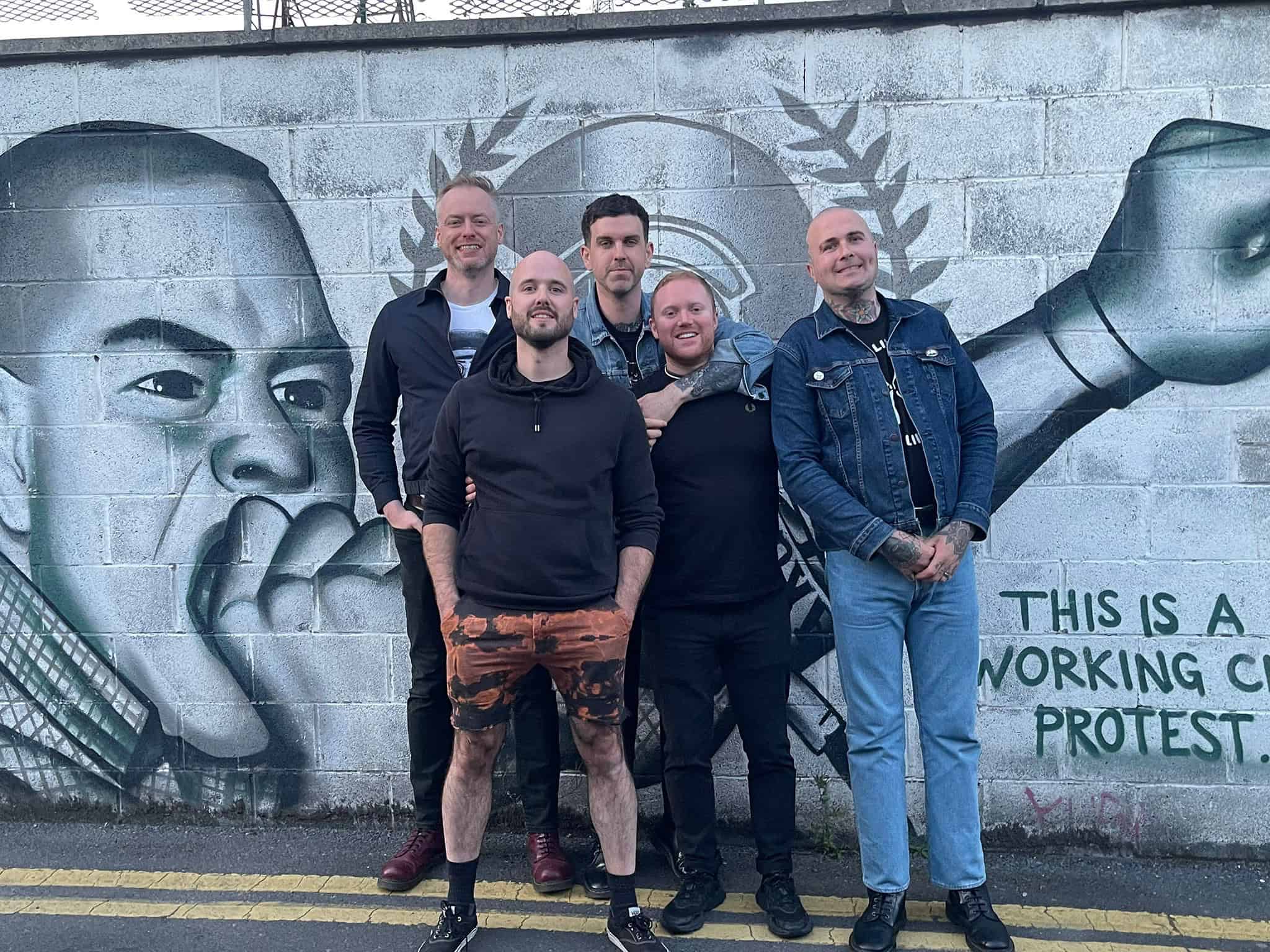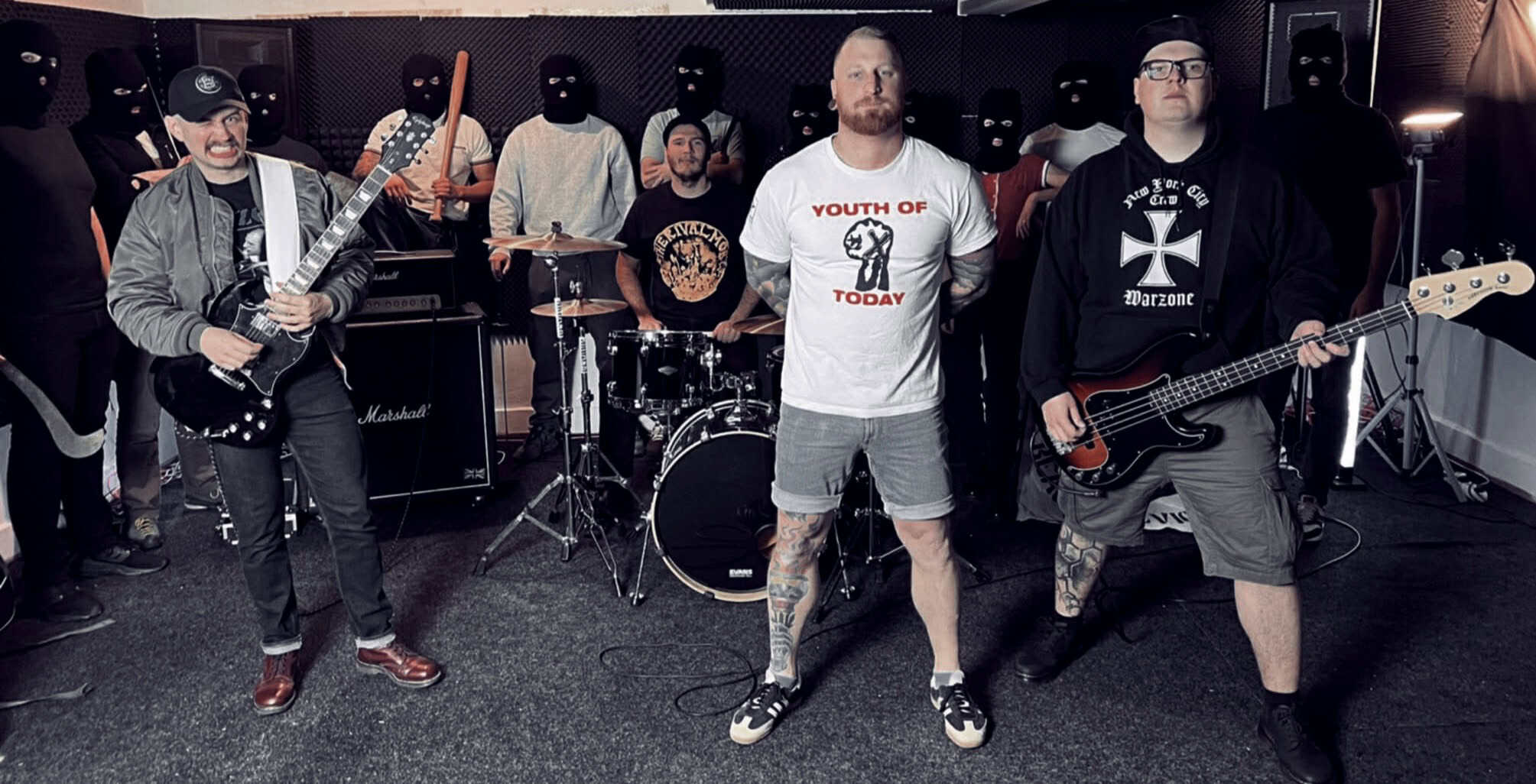

The idea for the band was born back in 2008, but Remdik didn’t materialize until 14 years later. What happened in the meantime? And what was the final impulse that made you say, „It’s now or never“?
Martin: Before that, I briefly sang in a band together with Peťo and Rasťo. The guys didn’t invite me to join Remdik until the first album was already out, so I joined the band in October 2023.
Rasťo: I think we can call it a sort of prehistoric idea of the guys. I wasn’t in touch with them at the time. They’ll definitely tell you more about it. Many years later, the band Geto – where I played along with Peter and Martin – died, and that created the space for Remdik.
Tony Valian: I had a few other bands, but something was always missing, and after a while, I just stopped enjoying it. Then a midlife crisis hit, and with it, a long – dormant desire woke up to start a „proper“ band, not just a project. And specifically with people who are on a similar wave, not just musically, but humanly. Somehow, like magic, it clicked. And I’m grateful for that because I know it’s not something you can take for granted.
Peter: Tony and I have known each other since my very first hardcore punk days. We played together, then each of us played elsewhere, but that connection and the shared hunger to make music was always there. Over the years, we listened to a massive amount of music; it shaped us, and naturally, a need grew inside us to get something of our own out there. The final impulse was very simple – we realized that if we don’t do it now, we probably never will. So we just went for it.
In your biography, you write that you are a family. What exactly does that mean to you?
Martin: We are a family of non-blood brothers. We are united by shared opinions, a worldview, and a similar taste in music. We understand each other on many levels, which isn’t a given even in many regular families.
Rasťo: It means that the line between the concepts of friendship and family gets blurred when you share a significant part of your life together.
Tony Valian: We also came to exist thanks to my brother, who is a skinhead and sang on the first album. To a large extent, he set the direction of the band in terms of genre, but also a broader purpose, which isn’t supposed to be „just“ about playing gigs and practicing. The family character is an ideal we want to aim for internally within the band, but also externally with the people at the gigs. Remdik has no ambition to be a band just for itself; we want to create it together with the people.
Peter: For us, it means something much deeper than just a band. I’ve known the guys for years; basically, we grew up on the same music, and similar things shaped us. We know we can rely on each other.
How does the dynamics differ in a band where there are no blood brothers? Is there more tolerance, or on the contrary, tougher demands?
Martin: It’s not about some strict demands. Rather, we always try to push new things forward so that we grow as a band and don’t stagnate. We all have the same, natural approach to it, so it works.
Rasťo: The dynamic is very natural. We choose our own pace and talk through every step. We all just try to do what we can contribute best.
Tony Valian: It’s tough, uncompromising, and hard to swallow! I highly recommend it to everyone.
Peter: Everyone in the band knows their place, and thanks to that, it has a clear momentum.
What was it like growing up in Žilina around 2008 from a subcultural perspective? Was it tough on the streets back then?
Martin: I come from a village near Žilina, but even we experienced some interesting times. All it took was coming to the neighboring village, and a fight was basically guaranteed. Pure hatred just because you weren’t local. Add a bunch of village nazis to that, and our entertainment was sorted.
Rasťo: I started going to gigs in 2007. From today’s perspective, I was kind of spoiled by the amount of events happening in the city. Often you had to choose which gig to go to. There were significantly more people around heavy music than today, but that’s just evolution. And was it dangerous? Probably not. I think the truly dangerous era was experienced by a slightly older generation.
Tony Valian: It was awesome, and I love reminiscing about the years 2006 and beyond when I started going to shows. Back in the day, our city used to have a lot of gigs in great clubs, packed with young „orthodox punx.“ It was simply alive and extremely infectious. In the streets, around the clubs, before and after punk shows, it was wild in every possible way! In one word—brilliant.
Peter: Growing up in Žilina around 2008 was quite intense. I played football and also went to matches where clashes were a completely regular thing, so I actually had that „tougher“ world right in front of my eyes. At the same time, I was learning to play bass, practicing with a band, and going to gigs. That whole period was a mix. But it was exactly this combination of football, music, and the streets that determined what I do today.

If I understood correctly, Remdik is not just a band, but also a crew with various other activities. Can you tell us more about that?
Martin: We are trying to build a crew that, through its approach, motivates people to have a positive outlook on life. We want to organize benefit events and provide real help where it’s needed. It’s not just about music, but about trying to build a community.
Rasťo: We have people around us who help us incredibly, and we like to point out that the band isn’t in this alone. It doesn’t work without support.
Tony Valian: Sure, as a crew, we do at least one event a year and other less legal activities about which it is dignified and proper to remain silent.
Peter: For me, Remdik is mainly a bunch of people pulling together. The band is just one part—around us are friends who handle graphics, merch, tech, benefits… and they do it from the heart. To me, the crew is a community that sees the world through a similar lens and supports each other.
What keeps you hooked on hardcore, Oi!, and punk even after all these years when you are no longer „teenage rebels“?
Martin: For me, it’s a lifelong thing. I still enjoy the music and, most of all, the global community of people that this style connects.
Rasťo: That feeling in your chest when the music hits you.
Tony Valian: Making music and everything around it gives me energy and feeds my creative spirit. For me, it’s a charge for life and also a form of mental hygiene—a certain need that partly helps me live a better quality life.
Peter: What keeps me hooked is mainly the energy this music has. For me, it’s a valve and at the same time a space where I can be completely myself.
In the lyrics of Manifest rómskych skinheadov (Manifesto of Roma Skinheads), you call for „killing prejudices.“ What were the biggest prejudices you had to smash yourself within the scene (or outside of it)?
Martin: When I was younger, I remember instantly pigeonholing a colleague at a new job. At first glance, he seemed like a total asshole, which over time turned out to be a complete mistake. Today, of course, that doesn’t happen to me anymore. I’ve never judged people by their ethnicity, race, or religion. We are individuals, and that’s how we must approach each other. You can judge only after you truly get to know the person.
Rasťo: I’ll give a positive example. I once got a guy from South Sudan into my team at work, and I was surprised by how well he was accepted into the group and how he excelled in many ways, despite the language barrier and everything. It proved to me that personal experience is more important to people than some internet talk.
Tony Valian: I don’t remember ever dealing with or harboring prejudices towards anyone. I have demons on other fronts that I fight with.
Peter: I’ve never judged people by their appearance, origin, or where they come from. Instead, I had to smash the idea that the opinions of those around you mean anything. I try to take people as they are, not based on what someone else thinks of them.
And one more question brought to mind by the song Manifest rómskych skinheadov—are people from minorities actually involved in your local subcultural scene?
Martin: I don’t know of any who are involved around here. This style of music and subculture are completely outside their world.
Rasťo: Probably yes, but I can’t think of anyone in my immediate circle.
Tony Valian: As far as I know, from the Roma minority, when it comes to „hardcore punk,“ not really yet… But we’re working on it, haha. I think that creating a safe space for everyone without distinction is part of any healthy subculture; if we’re failing at that, then maybe we’re making a mistake somewhere.
„Skinhead games for every family. (Skinheadské hry do každé rodiny.)“ How do you perceive the role of violence in the subculture? Is it a last resort of defense for you, or a legitimate tool to restore order on the street?
Martin: For me, it’s clear. If you witness a physical or verbal attack, you’re supposed to speak up or step in. You shouldn’t be the aggressor, but if necessary, you must know how to protect someone weaker. You can’t just go hide somewhere.
Rasťo: We mainly use violence in lyrics as a metaphor. Surely nobody thinks we walk down the street just handing out slaps to people… :D.
Tony Valian: I think that in „civilian“ life, as well as in „subcultural“ life, no matter how it sounds, violence should always contain a hint of fun and joy. If it doesn’t, it’s destructive and stupid. Defense is a legitimate thing in any case.
Peter: For me, violence was never a goal or a tool. Rather, a last resort when there’s really nowhere left to back down. Using force only makes sense when you’re protecting yourself or someone weaker—otherwise, it’s just stupidity.
How important is the visual aspect of things to you? Stylish clothes, boots, braces… is it a uniform, or armor?
Martin: For me, values come first. The visual side is just an aesthetic accessory by which we differentiate ourselves on the outside.
Rasťo: When it comes to fashion, I like subtle, minimalist hints. If someone wears certain brands in a certain way, you see a pin, a band t-shirt, and the like, you roughly know. Personally, I’m not really into those outfits straight out of a textbook.
Tony Valian: Personally, I like the „casual style“—sportswear, kicks, a cap. Curiously, it’s becoming more and more interesting to me. But I guess I always liked looking a certain way… In my opinion, it’s a smaller part of a bigger package surrounding running a band and listening to music.
Peter: I like it when a person looks sharp, and I see the outfit as a natural part of what we do and what we listen to.
In the lyrics of Zahoď svoju uniformu (Throw Away Your Uniform), you attack uniforms. Where is the line for you between subcultural pride and an empty pose?
Martin: I’ll give a real-life example. When I was about 17, I was at a gig. Outside the club, a totally wasted punk was lying on the ground in the rain. I tried to wake him up and carry him inside. A crew of his mates was standing nearby, so I asked them for help. Their reaction was, „leave him alone, you don’t know what punk is!“ Right then, I told myself that if this is punk, then no thank you. You can be dressed however you want, but if you are empty of values inside, it’s just a uniform.
Rasťo: Authenticity, I guess, but the internal kind. We have to look for that line within ourselves.
Tony Valian: The lyrics are mainly about a superficial perception of things—about human masks and pretenses that people become addicted to. The boundary of anything is determined by working with your own ego. Being proud but not basing your whole identity on it—that’s the important task. Concrete attitudes and the actions resulting from them are always the ultimate reality check.
Peter: I see it similarly to Tony.
The track Jediná šanca (The Only Chance) reacts to the murder of a mother of a Roma family. How much did this event shake Žilina, and have you had any reactions to the song from locals?
Martin: It happened in August 2000 (the murder of Anastázia Balážová). I was seven years old at the time, so I can’t exactly describe the atmosphere back then, but since the mayor of Žilina at the time spread heavy anti-Roma rhetoric, I think that paradoxically, it didn’t even affect most locals back then. The perpetrators got laughable sentences and even threatened the family, until the family eventually emigrated to Belgium out of fear, where they live to this day. It’s a sad and cruel reflection of the society at that time.
Rasťo: That event took place in 2000, which means way before we could actively perceive these events. Honestly, I don’t even know if the residents of Žilina even remember it at all. And maybe that’s exactly why we are reviving this story.
Tony Valian: At the time it happened, I think it was talked about quite a lot among people. As far as I know, similar attacks haven’t happened in the city since then. I don’t know of any extra reactions; most of us don’t cross paths with the locals other than our own crew.

Skinheadské hry (Skinhead Games) contains a very specific line about „cheering for Russia.“ Why was it important for you to shout this out to the world in 2024?
Martin: Because since February 2022, Russia has been murdering our neighbors. In Slovakia, we currently have a very strong pro-Russian government and an equally minded voter base. We felt the need to clearly distance ourselves from that.
Rasťo: At least since February 24, 2022, this opposition to the Russian regime is a basic human value in my eyes. If you disagree with that, you are either a fool, a bad person, or very likely an enemy. I emphasize that this applies to the Russian regime, not principally to Russians as people. And why? Because common sense! And because it’s crucial for our future so that we don’t end up behind an imaginary wall that our parents‘ generation remembers even physically.
Tony Valian: It’s a reaction to our wider surroundings, which are partly infected by Russian propaganda. I encounter people standing up for Russia regularly at work or anywhere else. It’s twisted and sad.
Peter: In 2024, it was important to call things out clearly because there was a lot of propaganda felt around us. For me, it’s more about a fundamental stance than about politics.
What is „Kulturblog“ for those who aren’t from Slovakia, and why does it deserve a „wire in the eye“?
Martin: Kulturblog is a disinformation and extremist platform that started as part of the far-right ĽSNS party. When a faction of members broke away and founded the Republika party, Kulturblog aligned with them.
Rasťo: If I’m not mistaken, it’s a now-defunct conspiracy internet video blog backed by people from the circles of the far-right ĽSNS and Republika parties (candidates, parliamentary assistants, etc.), mainly around Milan Mazurek. They played at being conservative, but in reality, it was completely brown [fascist]. The environment or circle they come from harks back to the WWII Slovak State, Jozef Tiso, etc.
Tony Valian: It’s an „internet project“ that presents a world we don’t want to live in. The people around it or involved in it are blinded to the point that they blind others, creating a pseudo-alternative driven by fear and nonsense. We need to speak out against this while there’s still time, and do so in a provocative way that aims to stir minds and emotions.
Peter: For me, Kulturblog is an example of how easily people can be misled. It’s not a world I can identify with, and that’s why it makes sense to speak up against it.
Lyrics like Mečom proti tankom (With a Sword Against Tanks) seem almost Don Quixote-like. Do you ever feel naive in your fight, or do you believe in a real victory?
Martin: That song is about the fact that in life, you need to fight under all circumstances and with all available means. We must not succumb and give up, because the moment we give up is when we truly lose. No matter what the fight is.
Rasťo: Lyrics like this are meant to be food for the soul.
Tony Valian: I believe that if each of us does just a little bit for victory, we are capable of achieving more together than we think. Human potential is insanely huge. I believe in it.
Peter: The title of the song makes it seem that way, and of course, going head-first against a brick wall isn’t the solution, but when a person stops believing they can influence anything, they lose before they even start. You always value a hard-fought thing more—whether it’s an internal struggle with yourself or anything else. That song is simply meant to encourage action, not resignation.
Some of you are SxE (Straight Edge). How does this complement the classic Oi! world, which is traditionally associated with beer and pubs?
Martin: I never gravitated towards that traditional Oi! which is all about beer and football. For me, it was always about something deeper. Although the path to Straight Edge took longer for me, I eventually found it and I feel at home there.
Rasťo: This aspect of beer and football never interested me, and I was always more drawn to the American scene, where this exact thing isn’t as typical as it is in the English one. As for SxE or abstinence—one example for all—the song „You Versus You“ by Noi!se is, according to singer Matt Henson, about his battle with alcohol addiction and subsequent sobriety.
Tony Valian: It goes together fantastically; it fits like a glove. We draw inspiration mainly from the 80s skinhead-hardcore wave in the US, where SxE and Oi! complemented each other. I think that classic UK Oi! and the substance use associated with it always passed right by us.
Peter: The two naturally fit together. It’s a way to keep a clear head in an environment that is often chaotic. I want to be present here for the people around me, not lost somewhere in a fog.
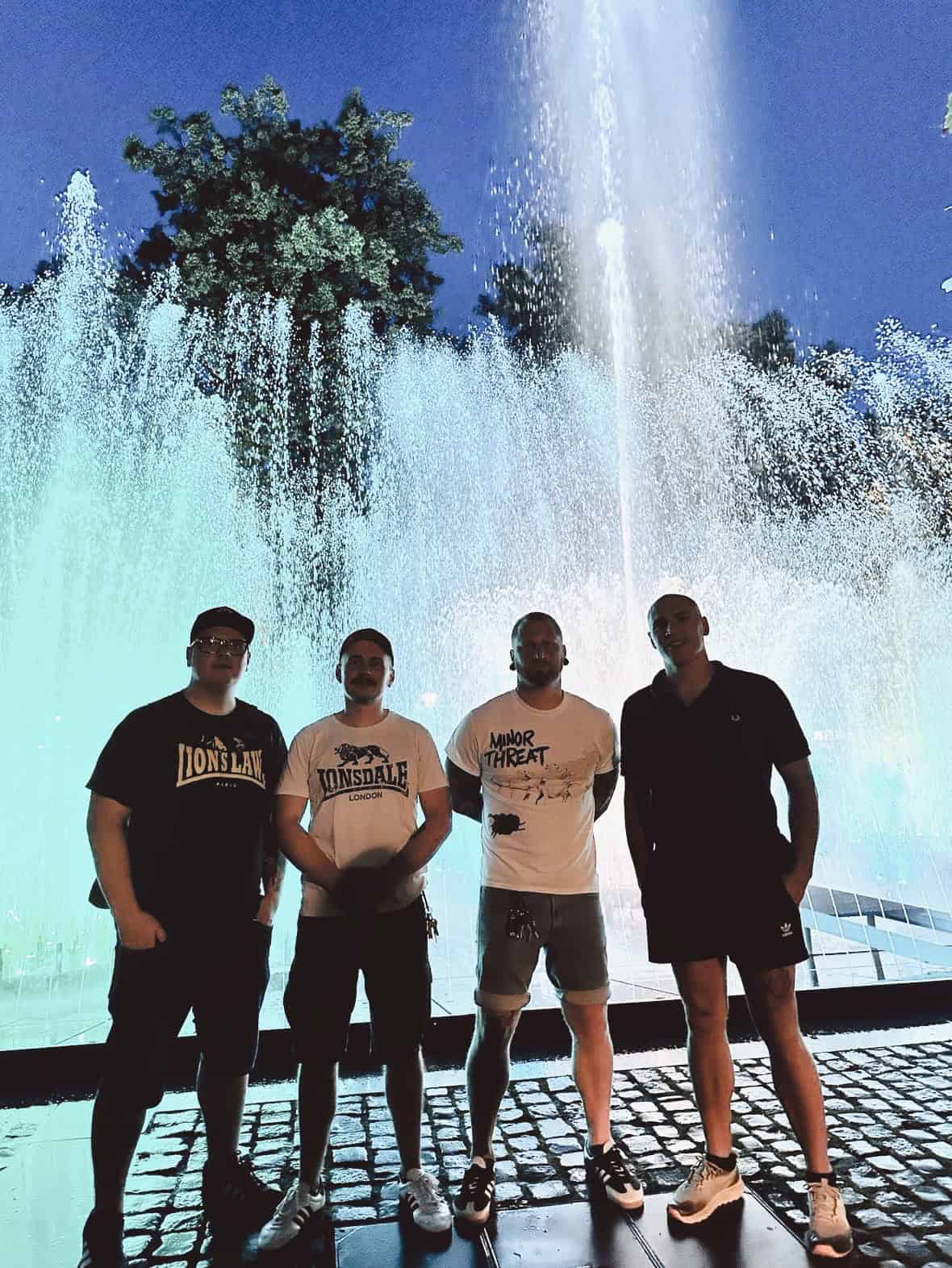
„We need to work on ourselves.“ Why should a skinhead/hardcorist be in good physical shape? Is it part of your message?
Martin: In our lyrics, we try to promote a positive approach to one’s own body. It’s part of our lifestyle. We believe that discipline and working on yourself will take you much further in life than drugs and alcohol.
Rasťo: I can only preach about this once I actually have results… 😀
Tony Valian: Generally in hardcore, and in skinhead culture too, to some extent, there was pressure on yourself and demanding the maximum from yourself. That includes fitness, sports, and discipline, which along with the music create great opportunities to utilize human potential. I think that being healthy, in good shape, and having a clear mind are prerequisites for a better quality of life and relationships, which have a huge impact on a person’s happiness. It is definitely one of the core messages of our crew.
Peter: When a person feels good in their own body, it reflects in everything else. The music, the energy on stage, and everyday life all work better when you have strength, stamina, and discipline. It’s not about a cult of performance; rather, it’s about wanting to be present, reliable, and capable of taking care of myself and the people around me. And since I work as a physiotherapist, I see plenty of negative examples of body neglect every single day.
In the lyrics of Pár tvrdých pästí (A Few Hard Fists), you criticize „slaves of trends.“ What trends annoy you the most in today’s HC, Oi!, and punk scene?
Martin: It annoys me when people are incapable of having a normal dialogue about differing views. As soon as you have a different opinion on an issue, the labeling and condemnation start instantly. Besides that, I hate the trend of promoting self-destruction and the fact that today it’s fashionable to play the victim and be constantly offended. In my opinion, a subculture should toughen a person up, not teach them to look for excuses as to why something can’t be done.
Rasťo: There’s a lot :D. Personally, I don’t care for ideologies as such. I want to support sensible and ethical human values, not regimes.
Tony Valian: I feel like we like to put ourselves in the role of victims. From such positions, it’s hard to communicate with others and even harder to find common values and directions, which can often be to the detriment of the cause.
Peter: I’m annoyed by the constant negativity and pacifism in an extreme form—meaning when even natural, healthy aggression in music, sports, or on stage gets criticized. When any scene becomes a space where people just compete over who can be more „anti-“ something, it loses its meaning. For me, a scene should have energy, not constant tension. I feel like society has been „riding a depressive wave“ for a long time, and HC punk should be a space where things are done differently and where you can step outside this established gloomy current. Even though it often isn’t the case…
Is hardcore a path to self-discipline for you, or a way to blow off steam? Or can you combine both?
Martin: In my case, it’s definitely a combination of both. Hardcore gives me a certain discipline, but at the same time, it’s the best release valve for the pressure that builds up inside a person.
Rasťo: I’ll repeat myself and say again that it’s about that feeling in your chest. When your hands start shaking because a band you love is hitting the stage. Or when you’re shouting the same lyrics with a random stranger… and similar pathetic things 😀
Tony Valian: Definitely both. Hardcore isn’t a path for me, but one of many means to live my life with better quality. The self-discipline connected to hardcore through regular training and keeping a good diet, or total abstinence, can be beneficial for me. Just like letting out emotions through music.
Peter: Definitely a combination of both.
To me, you seem like an unexpected, fresh revelation within the Slovak scene. What does „authenticity“ mean to you?
Martin: Doing things differently from the majority. That means playing music that isn’t all that popular here, and bringing up themes in lyrics that nobody else is addressing. And of course, doing it mainly because we enjoy it and it fulfills us, not because we want to appeal to someone.
Rasťo: Doing things so that we like them. That’s the main thing. Because everything you do, you do first and foremost for yourself. And if other people latch onto it too, then that’s a very pleasant bonus.
Tony Valian: I’ll answer a bit broadly and a bit differently… Being authentic is always a challenge for me. Getting closer to myself, to the core of my being, and answering the question of who I am is a lifelong task. A person has a lot of deceptive layers about themselves, and working your way toward the true Self—as C.G. Jung used to talk about back in the day—is a process that costs me something. The band, relationships, compromises, shattered illusions can all be helpful in the whole process of discovering one’s authentic Self.
Peter: For me, authenticity is about a person remaining who they truly are both on stage and off it. No acting like something just because some trend expects it from you. When we play, I want to leave my energy and truth there, complete with mistakes and imperfections.
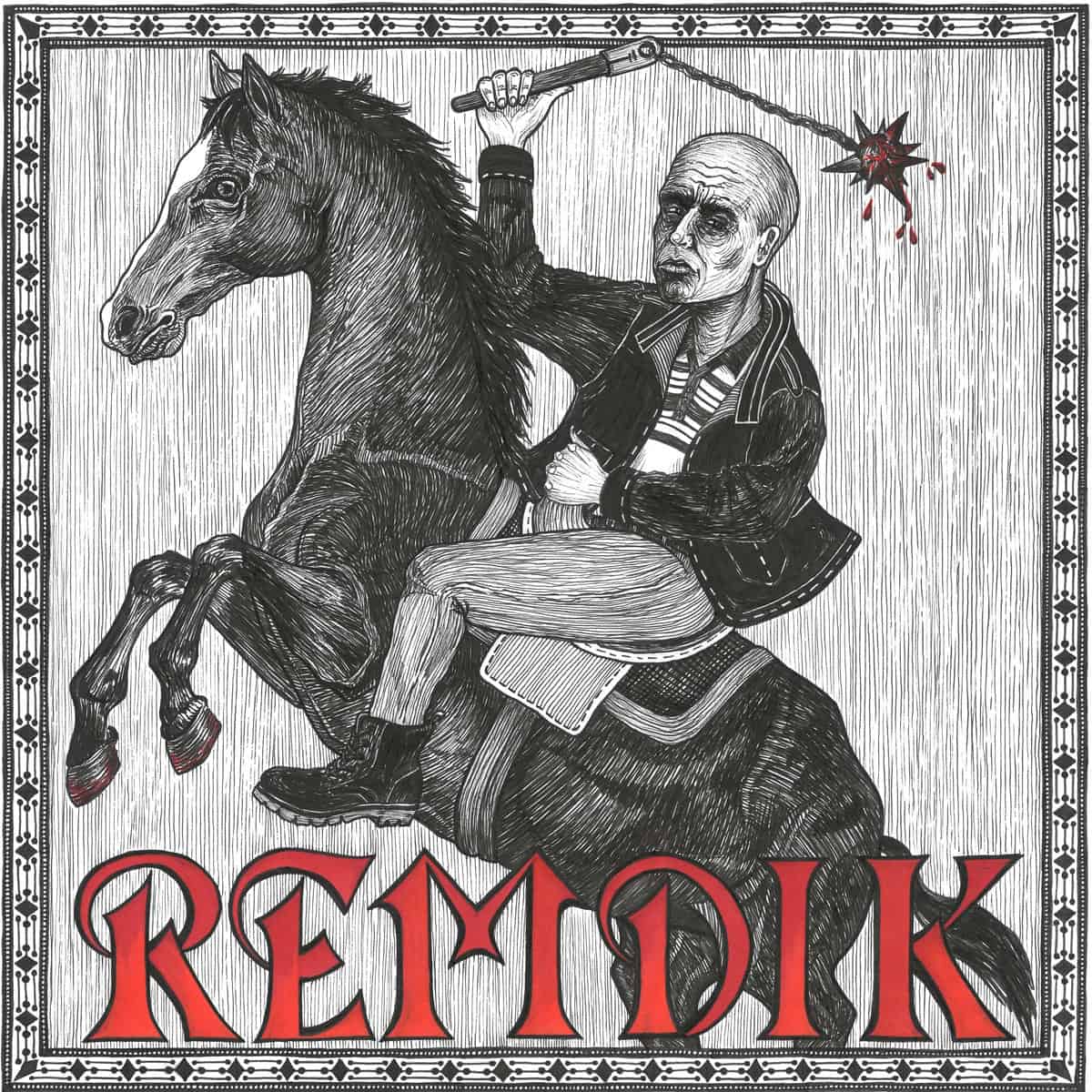
Are you afraid for the future of Slovakia, or does the situation rather motivate you to be more active?
Martin: The current situation honestly pisses me off, but I’m not a pessimist. I believe a better future awaits us, but it won’t come on its own. You have to be active and do something. Nothing is achieved by smart-talking over a beer.
Rasťo: Of course I’m afraid, but not in a defeatist way. I admit that I quite torture myself by following all kinds of political events, but I just can’t help it :D. I need to know what’s happening. We are in a situation where a significant part of the population is completely brainwashed. Where have we gotten to, that we are debating whether the Earth is round?!?!? That is completely insane… It blows your mind. And if anyone thinks we still enjoy talking about politics—no, we don’t, but we have to. We can’t not talk about it. I don’t want to live in an unfree country and I don’t want to be ashamed of where I come from. And when I hear talk about being apolitical and similar crap, my blood pressure spikes! They probably don’t realize what’s at stake here…
Tony Valian: I don’t have fear of the future; rather, it can sometimes make me sad to see the potential that we waste as individuals but also as a society. It motivates me to make things connected to the band and music higher quality and more relevant.
Peter: I believe that Slovakia’s future will be fine. Fortunately, the guys always catch me up on current events. There’s an awful lot of negative information in the air, and for me, I have to dose it so it doesn’t consume me.
How do you view the generation roughly around your parents‘ age, which often falls for the disinformation you sing about in Do oka drát? Can they still be reasoned with?
Martin: Communicating with them about politics is extremely difficult because they often can’t admit the other side’s truth. Among the older generation, there’s a prevailing nostalgic optimism for communism. The current political establishment has been exploiting this to their advantage for a long time. They organize pathetic International Women’s Day or May Day celebrations where they buy seniors‘ votes with cheap jokes, carnations, goulash, and borovička [Slovak pine brandy]. Sadly, the elderly are grateful for that kind of attention.
Rasťo: I’ve met people who can no longer be reasoned with. They have identified so heavily with this worldview we’re talking about and criticizing here that there’s no going back. Even sociologists say that it would require such self-reflection and the collapse of their own internal world that it’s highly unlikely. I hope that while they are loud, they are a minority.
Tony Valian: Sure you can, and it’s fun. It’s worse when young people let themselves be fed by the content of disinformation websites of all kinds. That can be sad and tragic at times.
Peter: In my family, I have it set up so that as soon as politics is discussed longer than what is acceptable to me, I walk away. I have my own opinion and I no longer have the nerves to keep explaining something over and over that the other side doesn’t want to or can’t accept. I’d rather protect my own head and energy.
Is music still a tool to fight the system, or is it just a „pleasant soundtrack to a lost war“?
Martin: As long as music can piss someone off, make them think, or provoke them to action, it still functions as a tool of struggle. If we believed it was just a soundtrack to a lost war, there would be no point in doing it.
Rasťo: Criticizing the system definitely still makes sense. That’s exactly what our song „Razie na policajné stanice“ (Raids on Police Stations) is about. In that song, however, we don’t just talk about the police as such—where we now hear about a war within the police, the former police president is indicted for abuse of power, obstructing criminal proceedings, etc.—but about the entire state apparatus. In my opinion, though, it shouldn’t be a fight for destruction, but for reform. After all, we want institutions to serve and help people, not to cease to exist. Right? …
Tony Valian: In the very essence of creating music, there is a hidden passion for doing things differently. Belonging to a subculture naturally encourages going against the grain, in any era and under any circumstances. For me, it’s more important to fight FOR specific things than AGAINST. To offer a different alternative, because being „the most contra“ doesn’t appeal to me anymore.
Peter: If music can remind people that they don’t have to „ride the same depressive wave“ as the rest of society, then it still has meaning. And if it jumpstarts someone to make a change, even a small one, then it works.
If you had the chance to change one thing in Slovakia right now, what would it be?
Martin: For people to stop thinking that someone else is responsible for their ruined lives. With this single realization, I think a whole lot of things would change.
Rasťo: I’d say that Slovak society should gain at least a bit more self-respect and stop viewing itself as inferior or subservient.
Tony Valian: I would mandate the sale of organic kombucha across all railway station buffets, and I’d want to see more kids on playgrounds and under balconies in housing estates. But those are two things already…
Peter: For a shorter workweek to be introduced globally. People should have more time for themselves, for family, for exercise, for music. Less burnout, more life.

Both of your records have a very raw sound. Was that the intention from the start, or did it just turn out that way and you said ok, this is good?
Martin: We have a clear idea of how Remdik should sound. That raw sound belongs to our music, and so far we are successfully fulfilling this vision.
Rasťo: Of course we wanted a raw sound. In this music, you need it to have balls. We also definitely place emphasis on intelligible lyrics and we aren’t fans of intentionally lo-fi, fuzzy recordings.
Tony Valian: Everything was intentional, and at the same time, everything happened spontaneously. That’s exactly how it was then, and it won’t be that way again.
Peter: It was always quick, maximum two or three takes per track. We want to do it the way we think it should be done in HC punk. We are no instrumentalists. We prefer simplicity, volume, and energy over perfectionism.
In the lyrics, you mention Oi Polloi and Warzone. Which of these two styles (anarcho-punk vs. NYHC) is closer to your heart?
Martin: For me, it’s definitely Warzone.
Rasťo: Definitely NYHC! Ever since I heard and saw the video for „Agnostic Front – For My Family“ as a teenager, I’ve been stuck :D. I’m also a massive fan of Warzone. I have As One tattooed as a nod to their song. That was the foundation on which I built and discovered other HC bands.
Tony Valian: Since the end of my puberty, definitely NYHC.
Peter: Definitely more NYHC. But try playing Oi Polloi – Take Back the Land and Agnostic Front – Victim in Pain. Both have a drive toward the goal like Jaromír Jágr in his best years.
What does a gig at Kominár Pub look like? Is it a safe place for everyone, or do „skinhead games“ have to happen there occasionally?
Martin: Gigs at Kominár Pub were our attempt at creating our own space where we could put on an event a few times a year. Currently, this project is dormant and waiting to be woken up. We’ll see what time brings.
Rasťo: Unfortunately, the scene in Žilina is completely miserable. I hope the sine wave turns upward again and people start coming to shows.
Tony Valian: Every place we play is safe because we are playing there.
What does DIY mean to you? Is it a necessity or a conscious choice?
Martin: It’s not a strict necessity for us, but when we can do things ourselves, we simply do them that way. It’s then much easier for us to communicate and react to things that need adjusting.
Rasťo: I’ve never really thought about this question specifically. I guess it’s a natural part of the scene.
Tony Valian: I think that for Remdik, it’s a choice. We have plenty of opportunities to do things differently, but a partial DIY approach protects us and doesn’t put us in positions that aren’t natural to us. We rely on our family and try to do things around the band as much as possible within the family circle. This is our DIY approach.
Peter: DIY to me doesn’t mean doing everything completely on your own. It’s about having control over what we do, so that it remains authentic.
Is there any band in Slovakia that you flat out wouldn’t share a stage with because of their stances?
Martin: I don’t know if it’s about a specific band. It’s more about the venues or types of events where we wouldn’t play because it would be completely outside of what we want to express and represent as a band.
Rasťo: Of course, yes. We definitely wouldn’t play with the current lineup of Zóna A, and we try to avoid bands that are willing to play with them. We also look more generally at whether to play with bands that play for a different audience than what would be comfortable for us. But that’s more from a pragmatic standpoint, whether it’s worth investing our time into, etc. This opens up space to accuse us of a double standard—and be my guest, of course we have a double standard.
Tony Valian: Any band that glorifies and bases itself on self-destruction or on sketchy interpretations of nihilistic approaches to humanity is a question mark for me. I won’t name names, so those I forget don’t accidentally get offended.
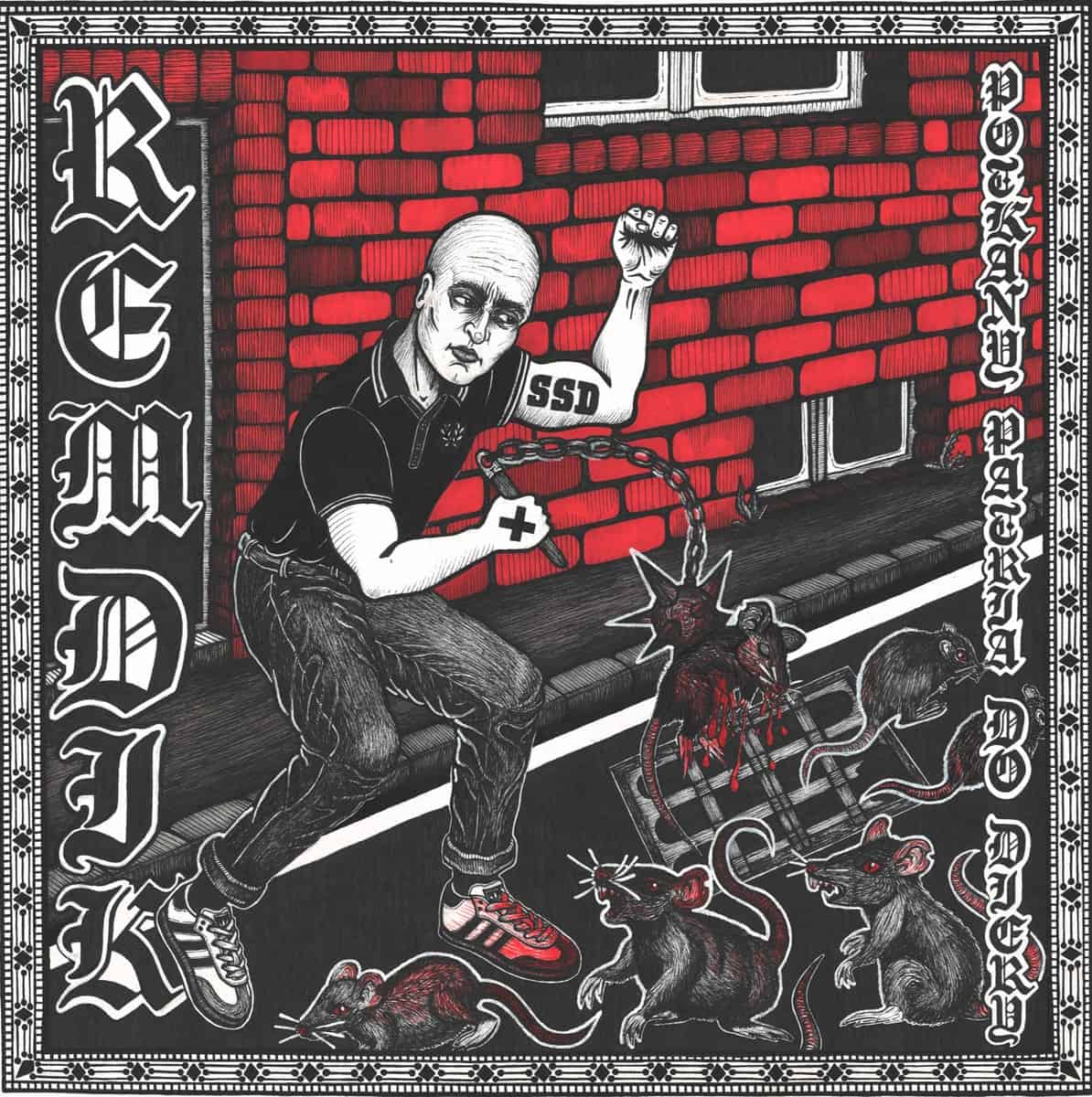
And now the crucial question: on May 1st, your new record is coming out. The world is currently in a spasm, society is more divided than ever, and the streets are full of anxiety. Here comes a grenade thrown into this silence. Tell us as much as possible about the new record. How is Remdik different on this album and how is it still the same? Feel free to stretch it out, go song by song if you want and tell us what it’s about. Or take it in a completely different way, it’s up to you…
Martin: Those who have already heard it know what it’s all about. And those who don’t know should listen to it and judge for themselves. For my part, I can only say that each of us has moved a step further in the band again, and you can clearly hear it on the album. Nothing more needs to be added, just go play it.
Rasťo: The guys will definitely write more here. I’m really happy that we managed to release our latest creation on vinyl. It has a slightly more exclusive feel than a cassette :D. Personally, the question often echoes in my head whether we’ll deliver what’s expected, but the people will decide that. Now a different kind of tension begins, the one about how the live shows will turn out :D. Personally, I’d be glad if people, while listening, appreciate the work we aren’t behind, namely: the quality of the recording, the artwork, the graphic design, etc. Because the band is more than just the four of us.
Tony Valian: The new record is mainly partly about our lives and partly about the lives of those who have, to some extent, become a part of our lives. You could also say it’s about ideals, but also about harsh reality; it’s about humor, but also about the reality of today’s challenges. I’d actually be more curious about your opinion on it. So let’s hear it!
Peter: For me, this record is mainly about the energy we put into it. It’s direct and honest. Every song came together differently… sometimes the lyrics came first, other times the music. We really enjoyed the time spent together creating new things. Every song carries a certain message, and whether it pushes someone out of their comfort zone, makes them laugh, or speaks to them in some other way, is up to the listener.
One last question that didn’t fit in at first. A classic of mine: Have you ever wanted to be asked a question that nobody has asked you yet? Now is the time… Give it to us, ask it yourself, and answer it right away.
Martin: Since I drank alcohol and smoked for several years, maybe someone could ask: What did Straight Edge actually give me and why the change? It gave me discipline, a much more positive approach to my own body, and most of all, a clear head. Fortunately, my relationship with alcohol wasn’t at a point where I had to quit due to addiction, but that decision incredibly liberated me. The same goes for cigarettes. When you constantly crave something and your brain demands it, you are basically a slave. For me, SxE is a path to not being a slave to my own weaknesses, and to being a positive example in this regard for my kids and maybe even those around me.
Rasťo: Maybe you’d be interested in how I got into playing bass… I had a cousin, Miro, who was 17 years older than me and sadly is no longer with us. When I was a very young kid visiting them, Miro used to let me strum his acoustic guitar. He liked Bon Jovi, played stuff by The Cranberries in a revival band… so somewhere in the back of my childhood mind, it was stored that doing something like that was possible. Later, when I started actively perceiving music, the bass guitar spoke to me. And it was this exact cousin, Miro, who gifted me his old Jolana Diamant Bass guitar, which significantly influenced my path. I’d love to pay tribute to him with this!
Tony Valian: What music do you like to listen to most during a workout? Why, the complete disco discography of Conservative Military Image, of course.
Peter: Which football team do I support? Manchester United. I don’t know if it’s love or self-torture, but it has held onto me for years. It’s a club where you go through the entire emotional spectrum.
So we are basically at the end. The last word is yours. What didn’t make it into the lyrics that should have?
Martin: What hasn’t made it into the lyrics yet will definitely be in the next ones!
Rasťo: Thanks for this extensive interview and thanks for doing what you do.
Tony Valian: What was meant to be said was said. Thanks for doing this!
Peter: Thanks for the interview.
DISCOGRAPHY:
Remdik (Casette, 161 Strikes Records, 2023)
Pouličná Hymna (Casette, 161 Strikes Records, 2024)
Alive from the Collosseum (DIY, 2025)