

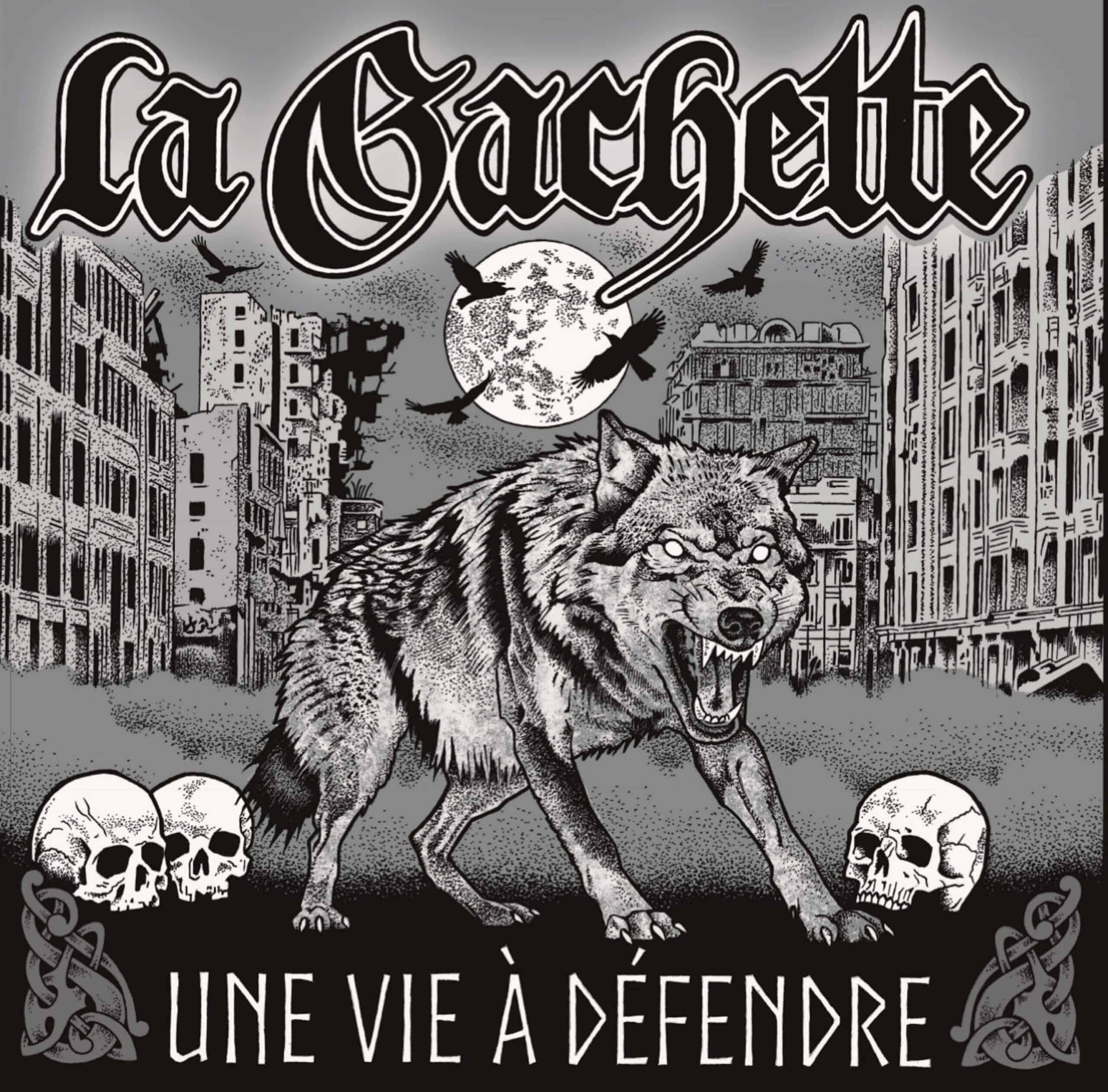
La Gachette from Quebec have released a new record on the German label Randale Records. If I’m counting correctly, this is already their ninth full-length album. The band released their first demo back in 1998, so we’re slowly approaching a respectable thirty years of existence. That’s enough time for some bands to change styles three times, break up, reunite, and then break up all over again.
One important detail is that all the songs are sung entirely in French, which gives the whole album an even stronger atmosphere and a very distinctive character. French fits this style perfectly — it can sound harsh, melodic, and dramatic all at once, and La Gachette take full advantage of that.
Next comes Ca N’Ira Pas (This Won’t Work), taking aim at the assholes within the scene — you know, the kind of people who shake your hand, smile at you, and immediately start plotting their little dirty games the moment you turn around. Yeah, we all know someone like that. The song also features an absolutely killer chorus. Freuder (The Joyful One) is built mainly around beautifully intertwined guitar melodies, and the first side closes with Le Serment (The Oath). This is where one of the strongest moments of the whole album appears. A deeply personal, relationship-driven, and poetically written song that stands far outside the usual genre clichés. That’s exactly what I love — when a band manages to step beyond the shadow of the genre, do things their own way, and leave a genuine piece of themselves in the music. It doesn’t feel forced or artificial, but human and believable.
Side B continues with Boomerang (Boomerang). Lyrically, it deals with extremism, tyranny, hatred, and misunderstanding, all wrapped in an almost mythical atmosphere. A dark song, but musically absolutely fantastic. Easily my personal favorite on the album. Historical themes appear in Louisbourg 1758 (Louisbourg 1758), inspired by the battle between the British and the French during the Seven Years’ War, when the French unsuccessfully defended the fortress of Louisbourg. La Familia (The Family) shifts back toward subcultural territory — embracing skinhead identity, pride, and brotherhood. The album closes with Appelle La Police (Call the Police), which openly mocks punks screaming slogans about anarchy and resistance against the system, only to have their finger ready on the phone the second things get serious.
Based on previous La Gachette releases, I expected something leaning more toward punk rock, but this album is much more streetpunk-oriented, combative, and tightly structured. Musically, it’s played with real power, featuring a thick sound, mid-tempo pacing, and a huge emphasis on memorable choruses. Thematically, the album is also much darker than I expected — definitely in a good way, though. What I appreciate most are the lyrics and the themes the band focuses on. This isn’t some teenage record about who drank too many beers at a show and what happened on the way home. It’s an album built on life experience, personal convictions, and stories that actually carry weight.
Musically, I think this will appeal to fans of projects like Exilli — heavy sound, emotional delivery, and strong choruses. At the same time, La Gachette still maintain their own identity and a unique storytelling style that keeps the album from sounding like a copy of anything else.

